Compare robot dogs for sale in 2026 across education, research, inspection, security and industrial use cases. This buying guide covers current AI Robot Supplier prices, leading quadruped models, developer access, LiDAR and autonomy options, wheeled versus legged designs, payload, runtime, terrain capability and the practical factors that determine which robot dog is right for a real deployment.
AI Robot Supplier currently lists a substantial quadruped robot catalog with Unitree, AGIBOT, DEEP Robotics and other platforms ranging from compact research robots to heavy industrial systems. Buyers searching for robot dogs for sale should therefore compare more than appearance or headline speed: the exact model, software access, sensing, payload, environmental protection and included configuration matter far more.
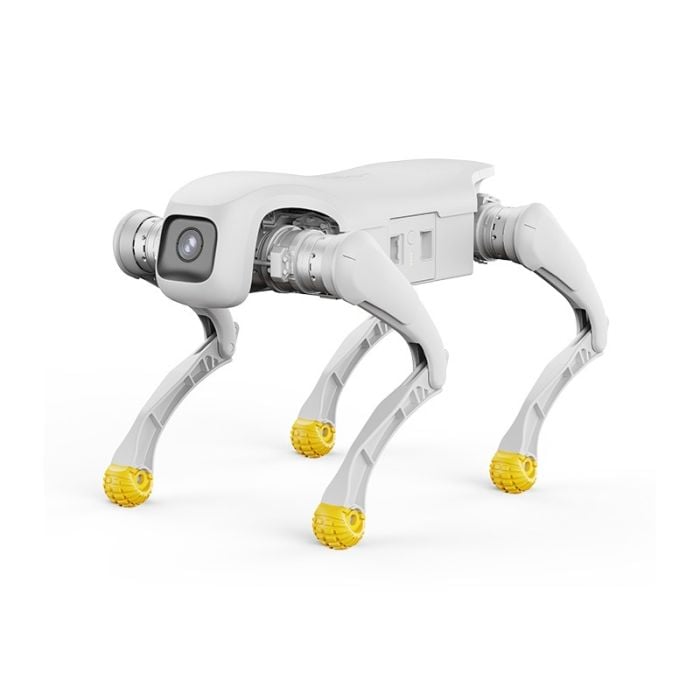
This page acts as the commercial comparison hub above the individual quadruped product pages. Use it to compare price ranges and model classes, then open the exact product page to confirm configuration, current stock, warranty, accessories and destination-specific delivery terms before ordering.
Robot Dog Prices in 2026: Quick Answer
There is no single robot dog price. Current AI Robot Supplier listings show compact professional and education quadrupeds below $4,000, research platforms around $3,500–$12,000, advanced wheeled quadrupeds in the $10,000–$30,000 range, and heavy industrial systems above $35,000. Some enterprise robots are quotation-based because payload, sensors, autonomy packages and integration change the final system.
For buyers comparing robot dogs for sale, current September 2026 references include the AgiBot D1 Pro at about $1,920, AgiBot D1 EDU at $3,648, DEEP Robotics Lite3 Venture at $3,597, Lite3 Pro at $5,997, AgiBot D1 Ultra at $6,838, Unitree Go2-W Standard at $7,800, Unitree Go2 EDU and Go2 ENT at $7,923, DEEP Robotics Lite3 LiDAR at $8,700, AgiBot D1 Ultra-W at $12,963, AgiBot D1 Max at $28,800, GALILEO S1-W at $35,997, AgiBot D1 MaxPro at $41,664, Unitree B2-W at $53,340 and Unitree B2 at $60,000.
Those are live catalog references rather than universal manufacturer prices. When comparing robot dogs for sale, confirm what is included because final cost can change with batteries, controllers, developer licenses, LiDAR, thermal cameras, communication modules, payload mounts, freight, insurance, taxes, duties, commissioning and support.
Robot Dogs for Sale: 2026 Price Comparison
The table below compares representative complete quadruped robots currently listed on AI Robot Supplier. It intentionally includes education, research, wheeled and industrial models so buyers can see why two robot dogs for sale that look similar can occupy very different price tiers.
| Robot dog | Current price | Class | Best suited for |
|---|---|---|---|
| AgiBot D1 Pro | $1,920 | Compact quadruped | Education, demos, R&D, light inspection |
| AgiBot D1 EDU | $3,648 | Education quadruped | SDK-based teaching, ROS labs, embodied-AI research |
| DEEP Robotics Lite3 Venture | $3,597 | Developer quadruped | Field trials, payload integration, research |
| DEEP Robotics Lite3 Pro | $5,997 | Research quadruped | ROS, perception and obstacle-aware development |
| AgiBot D1 Ultra | $6,838 | Rugged compact quadruped | Inspection, security, field robotics, open-SDK work |
| Unitree Go2-W Standard | $7,800 | Wheeled quadruped | Hybrid rolling/legged mobility and research |
| Unitree Go2 EDU Standard | $7,923 | Education quadruped | University research, navigation and legged robotics |
| Unitree Go2 ENT | $7,923 | Professional quadruped | Inspection, teleoperation and enterprise pilots |
| DEEP Robotics Lite3 LiDAR | $8,700 | LiDAR research quadruped | SLAM, mapping and autonomous navigation |
| AgiBot D1 Ultra-W | $12,963 | Wheeled professional quadruped | Inspection, research and mixed-terrain mobility |
| AgiBot D1 Max | $28,800 | High-speed wheeled quadruped | Large facilities, patrol and logistics |
| GALILEO S1-W | $35,997 | Heavy wheeled quadruped | Industrial payload and field deployment |
| AgiBot D1 MaxPro | $41,664 | Heavy-duty legged quadruped | Industrial field missions and payload work |
| Unitree B2-W | $53,340 | Industrial wheeled quadruped | Large-site inspection and high-speed mixed terrain |
| Unitree B2 | $60,000 | Industrial quadruped | Heavy-duty inspection and rugged field deployment |
Prices were checked against current AI Robot Supplier listings in September 2026. Always verify the exact product page and written quotation because configuration, availability and included accessories can change.
Key Robot Dog Specifications Compared
Price alone does not tell you whether a quadruped fits a mission. Buyers comparing robot dogs for sale should look at weight, payload, speed, runtime, obstacle capability, sensing, software access and environmental protection together.
| Model | Weight / size class | Mobility | Runtime / range | Development / sensing |
|---|---|---|---|---|
| AgiBot D1 Pro | Compact, about 15 kg class | Up to ~3.7 m/s; ~16 cm stairs; ~30° slopes | About 1–2 hours depending on duty cycle | RL locomotion; sensor expansion; EDU sibling adds SDK focus |
| AgiBot D1 Ultra | 63 × 36 × 42 cm standing | Up to 3.7 m/s; ≥30° slopes; 16 cm stairs; 35 cm jump | Up to 6 km unloaded / 4 km with 5 kg load | Open SDK; LiDAR/depth/RTK/4G-5G expansion; IP54 |
| Unitree Go2 EDU | About 15 kg with battery | Up to about 3.7 m/s; ~16 cm obstacle; ~40° slope | Commonly quoted around 2–4 hours by EDU package | Unitree SDK; camera/LiDAR packages; education-oriented interfaces |
| Lite3 Venture | 12.2 kg; 610 × 370 × 445 mm | 40° slope; 18 cm obstacle | 1.5–2 hours; up to 4 km | Ethernet ×2; external power; visual following and obstacle stop |
| Lite3 Pro | 12.9 kg; 610 × 370 × 450 mm | 40° slope; 18 cm obstacle | 1.5–2 hours; up to 3.4 km | ROS1/ROS2; SDK/APIs; Jetson Xavier NX perception host |
| Lite3 LiDAR | 13.5 kg; 610 × 370 × 496 mm | 40° slope; 18 cm obstacle | 1.5–2 hours; about 2.7 km | LiDAR, auto navigation, obstacle avoidance, ROS and development SDK |
| GALILEO S1-W | Large industrial class | 0–6 m/s listed; ≥30° slope | Configuration-specific | Ethernet; industrial payload integration; high-load platform |
As an external benchmark, Boston Dynamics lists Spot at 33.8 kg with battery, 1.6 m/s maximum nominal speed, ±30° slope capability, 300 mm step height, IP54 protection and about 90 minutes average runtime. That makes Spot useful as a reference point when comparing compact research quadrupeds with mature industrial inspection systems.
For official manufacturer specifications, see the Boston Dynamics Spot specifications and Unitree’s official Go2 product page.
Shop Selected Robot Dogs
The product grid below is curated around complete quadruped robots rather than batteries, cameras or other accessories. It is designed to keep this commercial hub connected directly to the individual products buyers can evaluate next.
-
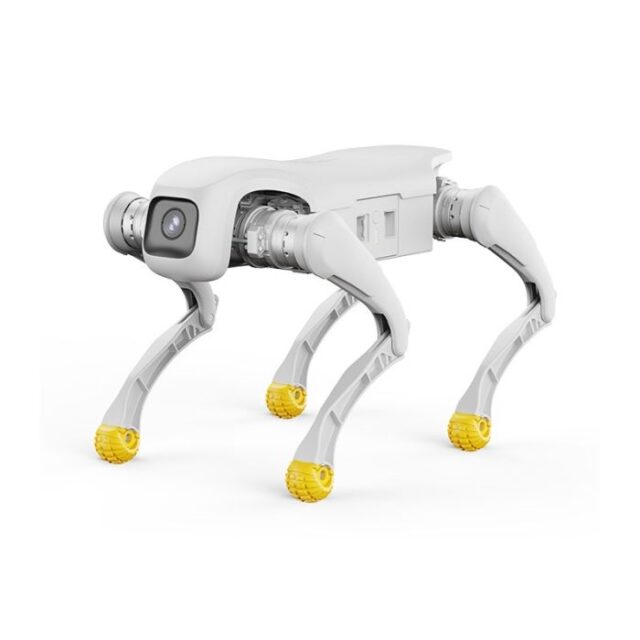 Add to Cart — $3,648.00
-
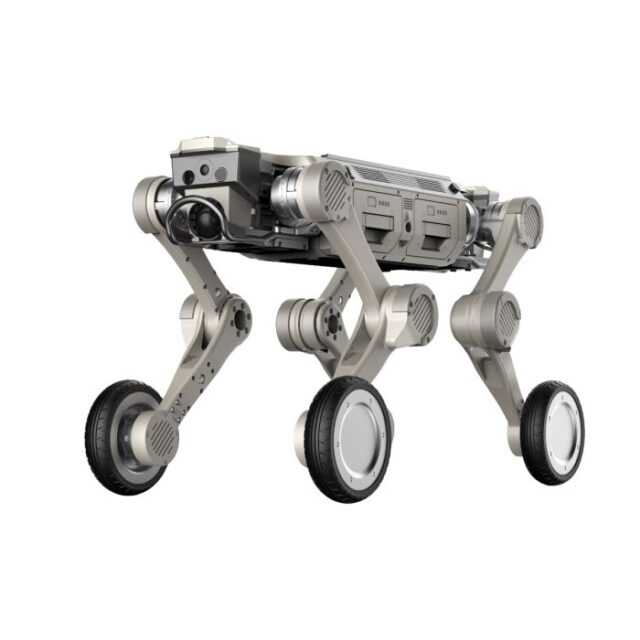 Add to Cart — $28,800.00
-
 Add to Cart — $41,664.00
-
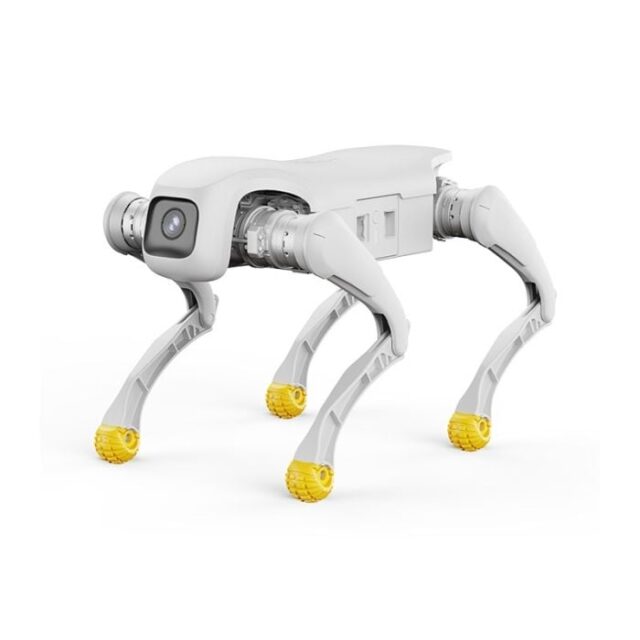 Add to Cart — $1,920.00
-
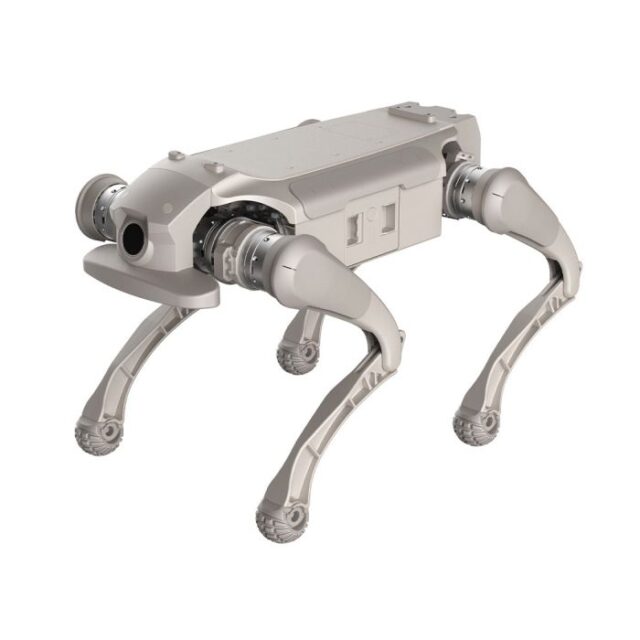 Add to Cart — $6,837.88
-
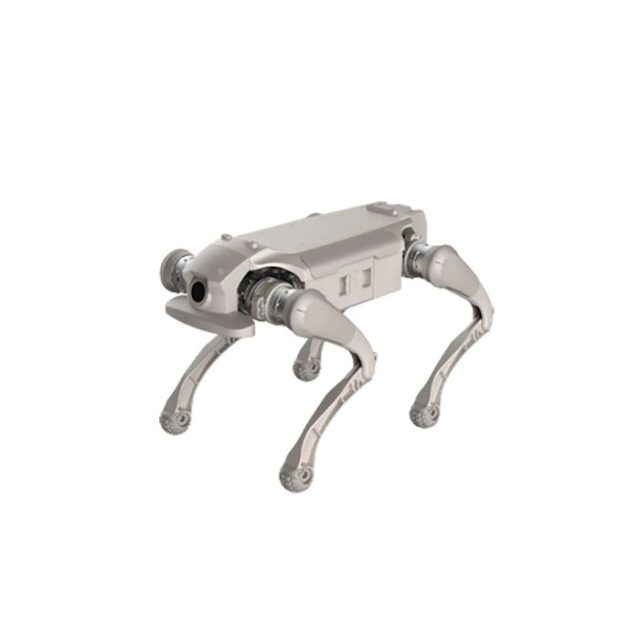 Add to Cart — $12,963.49
-
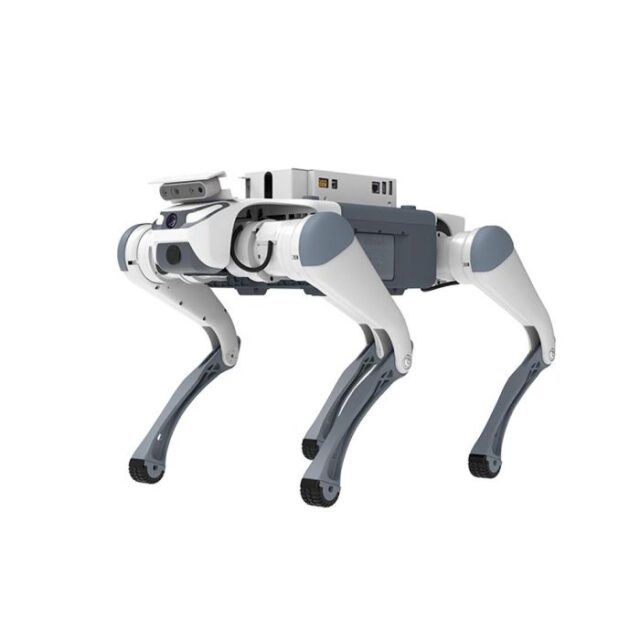
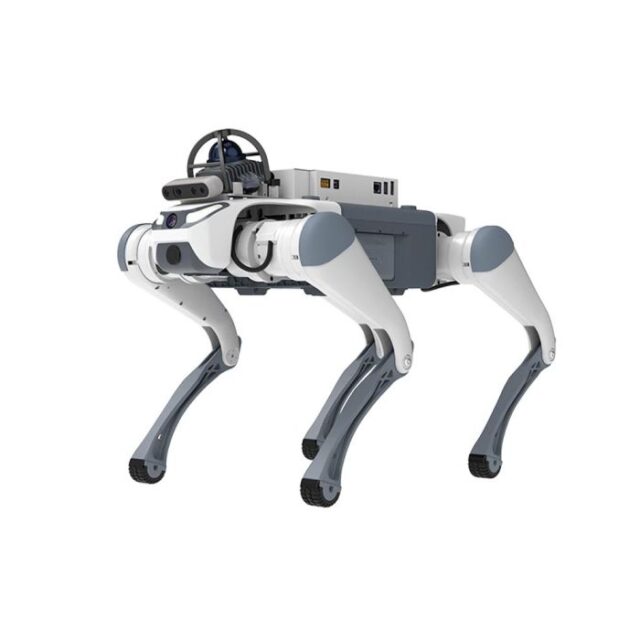 DEEP ROBOTICSAdd to Cart — $8,700.00
Deep Robotics Lite3 LIDAR Quadruped Robot Dog
-
 DEEP ROBOTICSAdd to Cart — $5,997.00
Deep Robotics Lite3 Pro Quadruped Robot Dog
-
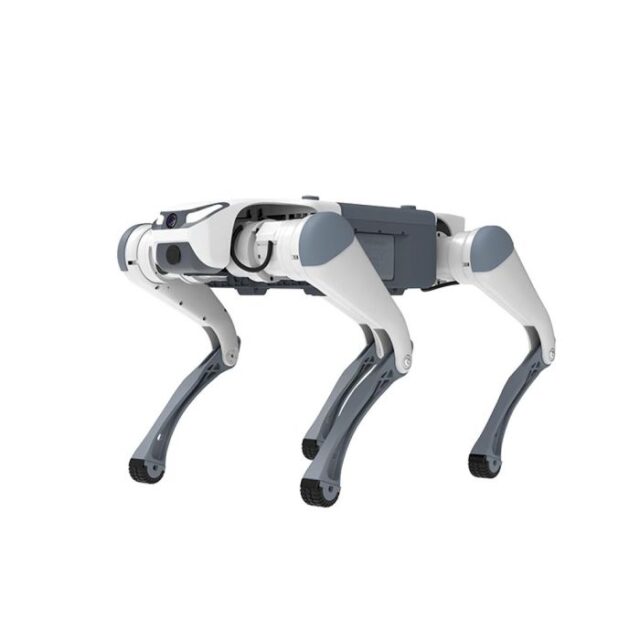 DEEP ROBOTICSAdd to Cart — $3,597.00
Deep Robotics Lite3 Venture Quadruped Robot Dog
-
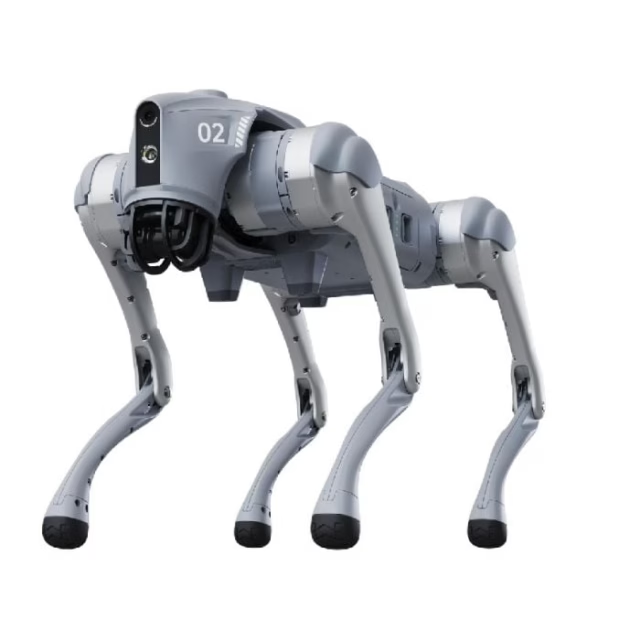 UNITREE ROBOTICSAdd to Cart — $7,923.00
Unitree Go2 Edu Standard Quadruped Robot
-
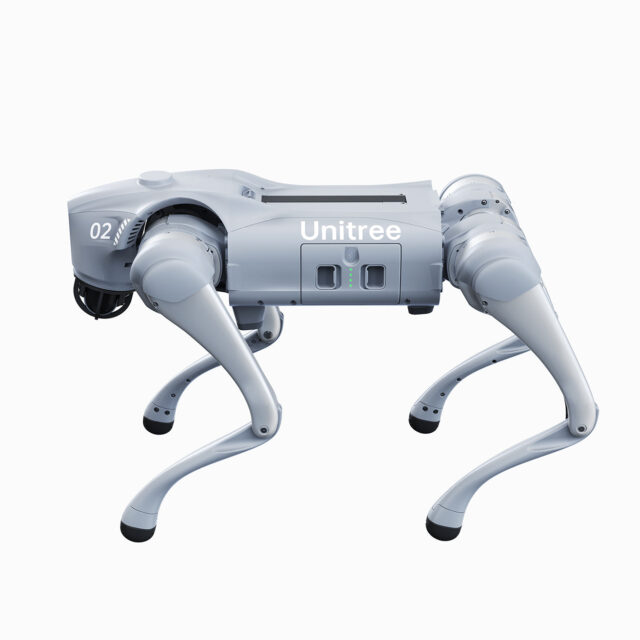 UNITREE ROBOTICSAdd to Cart — $7,923.00
Unitree Go2 Ent Quadruped Robot
-
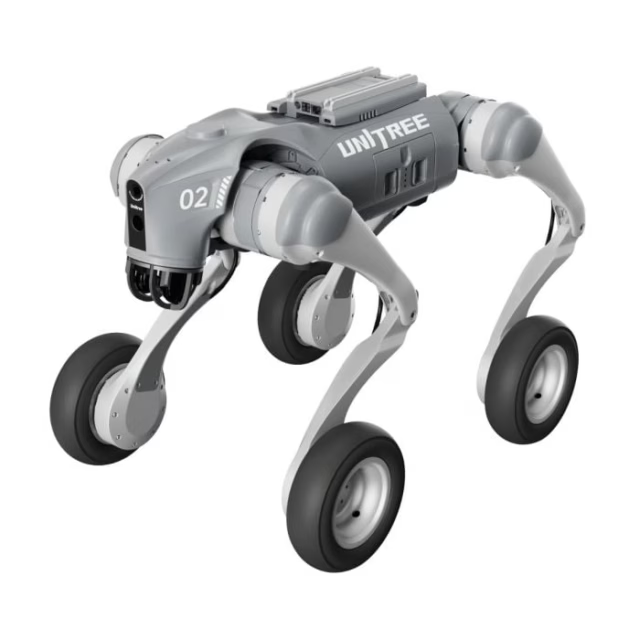 UNITREE ROBOTICSAdd to Cart — $7,800.00
Unitree Go2-W Standard Wheeled Quadruped Robot Dog (Go2-W-U1)
Best Robot Dogs by Use Case
For universities and robotics research
Universities comparing robot dogs for sale should prioritize SDK access, ROS compatibility, sensor interfaces, simulation support and documentation. Unitree Go2 EDU, AgiBot D1 EDU, DEEP Robotics Lite3 Pro and Lite3 LiDAR are stronger research choices than closed consumer configurations because they are positioned around development and expansion.
For locomotion and control research, a lighter robot with well-documented state and command interfaces may be more valuable than a larger industrial robot. For perception and autonomy research, LiDAR, depth cameras, onboard compute and ROS tooling become much more important.
For inspection and industrial patrol
Inspection buyers comparing robot dogs for sale should focus on ingress protection, terrain capability, payload, runtime, communications and sensor integration. AgiBot D1 Ultra, Unitree Go2 ENT, Unitree B2/B2-W and larger industrial platforms are more relevant than demonstration-oriented robots when the mission involves repeated patrols, stairs, uneven surfaces or outdoor exposure.
The robot should also be evaluated as part of an inspection system. Thermal cameras, acoustic sensors, gas detection, LiDAR, 4G/5G links, data storage and remote monitoring software can matter as much as the quadruped chassis itself.
For security and remote observation
Security deployments often benefit from remote teleoperation, autonomous route execution, low-light or thermal sensing, cellular communication and the ability to traverse stairs or curbs. Buyers should distinguish supervised patrol from fully autonomous security claims and confirm what the exact sensor package can actually detect.
For demonstrations and STEM education
AgiBot D1 Pro is one of the lowest-priced current examples and combines dynamic movement with an accessible form factor for demonstrations. AgiBot D1 EDU and compact Unitree or DEEP Robotics configurations are better when the robot must support student programming rather than simply perform preconfigured motions.
For large facilities and fast indoor movement
Wheeled quadrupeds deserve special attention. AgiBot D1 Max is listed around 8 m/s on flat surfaces in the current product documentation, while Unitree Go2-W and B2-W use hybrid wheel-leg designs to combine rolling efficiency with leg movement. These systems can be attractive for large factories, warehouses and campuses where most travel occurs on smooth floors but the route still includes thresholds, ramps or obstacles.
Legged Robot Dog vs Wheeled Quadruped
| Factor | Legged robot dog | Wheeled quadruped |
|---|---|---|
| Uneven terrain | Excellent when gait and clearance are sufficient | Good, but wheel geometry can influence obstacle handling |
| Stairs | Natural strength of quadruped locomotion | Can still climb using legs, but model-specific |
| Flat-floor efficiency | Lower than rolling at comparable speed | Usually better |
| Top speed on smooth floors | Generally lower | Often higher |
| Energy use per meter on flat ground | Higher | Potentially lower |
| Best fit | Inspection, rough terrain, research | Large facilities, logistics, patrol, mixed terrain |
Buyers comparing robot dogs for sale should choose locomotion according to the route. A purely legged robot is often better for stairs, rubble and highly irregular surfaces. A wheeled quadruped can be more efficient where most of the mission happens on concrete floors, roads or warehouse aisles but the robot still needs leg articulation for occasional terrain transitions.
Unitree Robot Dogs: Go2, Go2-W and B2
Unitree is one of the best-known robot-dog manufacturers and spans multiple classes. The official Go2 family starts from a much lower consumer price, while EDU and enterprise configurations cost more because they target developers and professional use. AI Robot Supplier currently lists Go2 EDU Standard and Go2 ENT at $7,923 and Go2-W Standard at $7,800.
Go2 is a compact platform for education, development and lighter professional use. Go2-W shifts the mobility strategy by adding powered wheels. B2 and B2-W move into industrial territory with much higher payload and field-deployment expectations. Buyers looking at robot dogs for sale under the Unitree brand should therefore compare within the correct family rather than treating all Unitree quadrupeds as substitutes.
For a broader comparison of Unitree humanoids and quadrupeds, see our Unitree Robot Prices & Models 2026 hub.
DEEP Robotics Lite3: Venture vs Pro vs LiDAR
Among research-focused robot dogs for sale, DEEP Robotics separates the Lite3 family into different development and sensing tiers. Venture is a compact integration-friendly configuration with dual Ethernet and external power options. Pro adds stronger perception and development capability. LiDAR is the most navigation-oriented option in this comparison, with published features including forward obstacle avoidance and auto navigation.
The current AI Robot Supplier prices are $3,597 for Lite3 Venture, $5,997 for Lite3 Pro and $8,700 for Lite3 LiDAR. That price ladder is useful because it shows how perception hardware and autonomy tooling can change the cost of a research robot even when the mechanical platform is closely related.
Lite3 Venture is published at 12.2 kg with 4.5 kg payload, 40° slope capability, 18 cm obstacle clearance and 1.5–2 hours of operation. Lite3 Pro is 12.9 kg with a 4 kg payload and similar mobility, while Lite3 LiDAR is 13.5 kg and shifts more of the package toward mapping and navigation.
AgiBot D1 Family: Pro, EDU, Ultra and Max
The AgiBot D1 family covers unusually broad price and capability tiers within the market for robot dogs for sale. D1 Pro at $1,920 is a low-cost agile platform for demonstrations, education and development pilots. D1 EDU at $3,648 adds education-oriented SDK positioning. D1 Ultra at $6,838 moves toward professional field use with IP54 protection, open SDK support and standardized payload interfaces.
D1 Ultra-W adds wheels at $12,963. D1 Max increases the emphasis on high-speed wheeled mobility and is listed at $28,800. D1 MaxPro, at $41,664, is positioned as a much heavier field platform with higher payload and endurance expectations.
This is a good example of why a simple search for robot dogs for sale can be misleading. A D1 Pro and a D1 MaxPro share a family name, but they solve very different engineering problems.
What Determines Robot Dog Price?
The chassis is only one component of the final system. A professional robot dog price can increase substantially when the deployment requires additional sensors, developer access, environmental protection or project integration.
- Mechanical size and joint torque: heavier robots with larger actuators and higher payload generally cost more.
- Developer access: EDU and research configurations can include SDKs, APIs, ROS support and low-level interfaces.
- LiDAR and cameras: mapping and autonomous navigation often require more advanced perception hardware.
- Onboard compute: Jetson or other AI modules add cost and determine what can run locally.
- Environmental protection: IP-rated systems designed for dust, water or industrial environments require additional engineering.
- Wheeled locomotion: hybrid wheel-leg platforms add mechanical and control complexity but can improve flat-ground efficiency.
- Payload interfaces: power outputs, Ethernet, USB, UART, mounting rails and standardized payload frames matter for professional integration.
- Batteries and charging: spare batteries, high-capacity packs and charging infrastructure affect deployment cost.
- Mission sensors: thermal, acoustic, gas, RTK, 4G/5G and specialized inspection sensors can exceed the cost of the base robot.
- Software and commissioning: route setup, autonomy, dashboards, fleet management and integration may need separate engineering.
How to Choose the Right Robot Dog
Before comparing brands, define the mission. Buyers evaluating robot dogs for sale should write down the route, terrain, payload, sensing objective, runtime requirement, communications environment and level of autonomy required.
- Terrain: stairs, gravel, mud, ramps, grass, industrial flooring or debris.
- Payload: include the weight of cameras, LiDAR, thermal sensors, radios and mounts.
- Runtime: use the expected mission load, not only the maximum unloaded laboratory figure.
- Autonomy: separate teleoperation, route following, obstacle avoidance and true autonomous mission execution.
- Software: confirm SDK/API access, ROS support, simulation resources and licensing.
- Communications: Wi-Fi, Ethernet, 4G/5G, private networks and dead-zone behavior.
- Environment: check IP rating and operating temperature where the robot will work outdoors or around dust/water.
- Safety: plan emergency stop, recovery, human interaction and supervised test procedures.
- Service: confirm spare parts, batteries, warranty and repair process.
- Total cost: include freight, duties, insurance, accessories and integration.
Robot Dog vs AMR vs UGV
A quadruped is not automatically the best mobile robot. For smooth warehouse floors and repetitive transport, an AMR may be cheaper and more efficient. For outdoor heavy payloads on relatively open terrain, a wheeled or tracked UGV may provide better endurance and payload capacity.
Robot dogs become especially valuable when the route contains stairs, narrow passages, broken surfaces, curbs or terrain transitions where conventional wheels become unreliable. That mobility advantage is the real reason professional buyers consider quadrupeds—not because they resemble animals.
Buying Robot Dogs Internationally
International buyers searching for robot dogs for sale should confirm the exact model, quantity, destination, battery configuration and intended application before payment. Lithium batteries, shipping weight, crate dimensions and regional import requirements can change freight options.
For professional procurement, the written commercial offer should identify the robot model, included controller, charger, batteries, sensors, software access, warranty and shipping responsibilities. High-value inspection systems should also document any mission payload, mounting hardware, communication modules and commissioning work.
Frequently Asked Questions About Robot Dogs
How much does a robot dog cost in 2026?
Current robot dogs for sale span from roughly $1,900 for compact platforms such as AgiBot D1 Pro to more than $50,000 for heavy industrial systems such as Unitree B2 and B2-W. Research and education models commonly fall between about $3,500 and $12,000, depending on sensors and developer access.
What are the cheapest robot dogs for sale?
Among current AI Robot Supplier listings, AgiBot D1 Pro is about $1,920, DEEP Robotics Lite3 Venture about $3,597 and AgiBot D1 EDU about $3,648. The best low-cost option depends on whether you need only mobility and demonstrations or full developer access.
Which robot dog is best for university research?
Unitree Go2 EDU, AgiBot D1 EDU, DEEP Robotics Lite3 Pro and Lite3 LiDAR are strong candidates because they are positioned around development workflows. Choose according to required SDK access, ROS, sensing, payload and autonomy research goals.
Which robot dog is best for industrial inspection?
AgiBot D1 Ultra, Unitree Go2 ENT, Unitree B2/B2-W and heavier industrial quadrupeds are more relevant for inspection. The correct choice depends on IP rating, terrain, payload, runtime, sensors, communications and the required duty cycle.
What is the difference between Go2 and Go2-W?
Go2 is a conventional legged quadruped. Go2-W adds powered wheels, allowing more efficient rolling on smooth surfaces while retaining leg articulation for obstacles and mixed terrain. Buyers should compare mobility strategy, developer configuration and payload rather than price alone.
Do robot dogs support ROS?
Many research-oriented models do, but support is configuration-specific. DEEP Robotics Lite3 documentation describes ROS1/ROS2 workflows, while Unitree and AgiBot provide developer tooling on specific EDU or open-SDK configurations. Confirm the exact software package before ordering.
Can a robot dog climb stairs?
Many quadrupeds can climb stairs or step over obstacles, but the supported step height and slope vary by model. Go2 EDU listings reference roughly 16 cm obstacles, Lite3 around 18 cm, and Boston Dynamics Spot lists a 300 mm maximum step height.
Can robot dogs carry thermal cameras or LiDAR?
Yes, many professional quadrupeds provide payload mounting and power/data interfaces for LiDAR, depth cameras, thermal imaging, RTK and communication modules. Always verify payload weight, power demand and interface compatibility.
Are robot dogs autonomous?
Capability varies. Some systems support only teleoperation and basic obstacle avoidance, while higher configurations provide mapping, navigation and autonomous route execution. Buyers should ask exactly which functions are included in the quoted hardware and software package.
Can robot dogs be shipped internationally?
Many models can be supplied internationally subject to the destination, battery transport rules, freight limits and commercial terms. Confirm shipping, insurance, duties, taxes and warranty for the exact destination before order approval.
Explore Robot Dogs and Related Buying Guides
- Browse all quadruped robots
- AgiBot D1 Pro
- AgiBot D1 Ultra
- Unitree Go2 EDU Standard
- Unitree Go2-W Standard
- DEEP Robotics Lite3 Pro
- DEEP Robotics Lite3 LiDAR
- Unitree B2-W
- Unitree Robot Prices & Models 2026
- Humanoid Robots for Sale & Prices 2026
Request a Robot Dog Quote
Need help comparing robot dogs for sale for a specific project? Send the model or application you are evaluating, required quantity, destination country, terrain, payload and sensing requirements. For development projects, also specify whether you require SDK/ROS access, LiDAR, thermal imaging, cellular connectivity, additional onboard compute or a wheeled quadruped configuration.