Best GPU for Inference: A Business Buyer’s Guide
 •
Workstation Hardware Research
•
Updated October 24, 2026
•
7 min read
Performance intelligence for workstation buyers.
Choose the best GPU for inference by matching model size, latency, memory, power, and support requirements to your organization's deployment plan at scale.
Selecting the best GPU for inference is not a matter of buying the newest accelerator with the highest headline performance. For a business deployment, the right choice is the GPU that serves your model at the required latency and throughput, fits the available power and cooling envelope, and can be sourced in a confirmed configuration with workable warranty and delivery terms.
Inference hardware decisions become expensive when teams size only for a benchmark. A GPU may perform exceptionally on a short synthetic test yet be poorly matched to a production workload with long contexts, concurrent users, vision pipelines, strict response-time targets, or limited rack capacity. The practical question is: what does each deployed model need per request, per stream, and per site?
What Defines the Best GPU for Inference?
Inference is the process of running a trained model to generate an output: a response from a language model, a defect classification from a vision system, a route decision for a mobile robot, or a sensor interpretation at the edge. Unlike training, inference often prioritizes predictable response time, memory capacity, operating cost, and density over raw peak compute.
For generative AI, memory is frequently the first constraint. Model weights must fit in GPU memory, along with the KV cache created as users submit longer prompts or more concurrent requests. A card that can load a model may still fail to serve it economically once context length and user concurrency increase. This is why a 48 GB or 80 GB GPU can be more suitable than a faster-looking lower-memory option.
For computer vision, robotics, and industrial analytics, latency and physical deployment constraints may matter more. An edge system processing multiple camera feeds needs sustained real-time performance, reliable video decode support, a manageable thermal profile, and an integration path that fits the host appliance. A data center accelerator with exceptional language-model throughput is not automatically the correct answer for an AMR, inspection station, or distributed security installation.
The best choice therefore depends on four linked variables: model architecture and precision, required throughput and latency, memory and interconnect needs, and the operating environment.
GPU Classes for Common Inference Deployments
The following categories provide a practical starting point for procurement discussions. Actual suitability should be confirmed against the specific model, quantization method, batch size, context length, and serving software.
| Deployment requirement | Suitable GPU class | Typical procurement consideration | | — | — | — | | Small vision models, edge analytics, robotics | NVIDIA L4-class or embedded edge platforms | Prioritize power, thermal design, video pipelines, and lifecycle availability. | | Cost-conscious general inference | NVIDIA L4 or RTX 6000 Ada-class | Balance memory capacity, server compatibility, and software support. | | High-memory enterprise AI serving | NVIDIA L40S, A100 80 GB, or H100-class | Confirm memory, cooling, chassis support, and accelerator form factor. | | Large language models at high concurrency | H200-class, H100-class, or newer data center accelerators | Evaluate total memory, multi-GPU topology, networking, and rack power. |
L4-Class GPUs for Efficient Edge and Video Inference
The NVIDIA L4 is commonly considered for video analytics, computer vision, recommendation workloads, and smaller language-model inference where energy efficiency matters. Its relatively low power draw can make it attractive for dense server configurations and distributed deployments that cannot support high-wattage accelerators.
It is not the default answer for every AI workload. Its 24 GB memory capacity can limit larger models, long context windows, and high levels of concurrent generation. For a facility analytics platform running object detection across video streams, however, it can be a commercially sensible choice because the infrastructure cost per deployed stream may be more important than maximum token generation speed.
RTX 6000 Ada-Class GPUs for Flexible Professional Deployments
A 48 GB professional GPU such as the RTX 6000 Ada Generation can be a strong option for engineering groups, research labs, private AI pilots, digital twin workloads, and moderate-scale inference servers. The memory capacity supports a wider range of models than 24 GB hardware, while the platform can be easier to deploy than the highest-power data center accelerators.
Buyers should distinguish between workstation and data center use cases. A workstation-class GPU may be appropriate for a lab, design department, or single-node internal application, but a 24/7 production server requires careful validation of chassis airflow, power connectors, driver policy, redundancy expectations, and support coverage. The lowest acquisition price is not necessarily the lowest operational risk.
L40S, A100, and H100 for Data Center Inference
For organizations serving larger models or consolidating AI workloads in a data center, NVIDIA L40S, A100 80 GB, and H100-class accelerators remain relevant options, each with different strengths. The L40S can provide a practical balance for certain enterprise inference and graphics-intensive workloads. The A100 80 GB remains useful in established environments with compatible software and infrastructure. H100-class hardware is generally selected when tensor performance, high-throughput serving, and advanced multi-GPU configurations justify the premium.
An H100 is not automatically the best GPU for inference if the application is a modest retrieval-augmented generation assistant with limited users. In that case, a lower-cost GPU with sufficient memory may meet the service-level objective with a better cost per request. Conversely, under-sizing a public-facing or high-volume internal service can create queues, inconsistent latency, and unnecessary operational complexity.
H200-Class Accelerators for Memory-Intensive Serving
H200-class GPUs are especially relevant where high-bandwidth memory capacity is a limiting factor. Larger memory pools can improve the economics of serving large language models, longer contexts, and higher concurrency without splitting workloads across as many devices. Fewer GPUs may simplify deployment, although the platform can still require substantial rack power, cooling capacity, and capital approval.
This class of accelerator is generally a strategic infrastructure purchase rather than an ad hoc component buy. Confirm server qualification, network topology, power distribution, lead time, included accessories, and the exact GPU form factor before issuing a purchase order.
Size the GPU Around the Real Workload
A defensible procurement specification begins with measured workload data. For language models, record the model version, parameter count, weight precision, maximum context length, expected concurrent requests, target tokens per second, and acceptable time to first token. For vision applications, document camera count, resolution, frame rate, model type, preprocessing requirements, and maximum acceptable end-to-end delay.
Then test realistic traffic. Batch size is a useful lever for throughput, but increasing it may worsen latency. Quantization can reduce memory requirements and improve efficiency, but output quality and framework compatibility must be validated for the intended model. A 4-bit model may be entirely appropriate for document summarization while being unsuitable for a precision-sensitive technical workflow.
Also account for the host system. PCIe lane availability, CPU capacity, system RAM, storage performance, operating system support, and networking can all limit an otherwise capable GPU. Multi-GPU inference introduces another layer: the workload may need fast GPU-to-GPU communication, and poor topology can undermine expected scaling.
Evaluate Total Deployment Cost, Not Card Price
GPU pricing should be assessed alongside server cost, power consumption, cooling, software licensing, support, and expected utilization. A lower-cost accelerator that must be deployed in greater quantity can consume more rack space, management time, and network capacity. A higher-memory accelerator may cost more per unit but reduce the number of nodes needed for a service.
Availability also matters. Enterprise accelerators may be supplied as new hardware, configured systems, or supplier-confirmed inventory with different lead times and warranty structures. Procurement teams should request product-specific confirmation of condition, memory configuration, form factor, included accessories, warranty terms, delivery estimate, and any export or destination restrictions before approving a high-value order.
For international buyers, clarify the commercial terms early. The responsible party for import duties, local compliance requirements, commissioning, and return handling should be understood before shipment. These details are part of the deployment decision, not administrative afterthoughts.
Questions to Resolve Before Requesting a Quote
A quote request is more productive when it states the operating requirement rather than only naming a GPU. Include the intended application, model or models, expected user or stream volume, memory target, preferred server format, destination country, and required delivery window. If this is an expansion, provide the existing server and network environment so compatibility can be reviewed.
Ask whether the quoted configuration is physically available, whether it is new or refurbished, what warranty applies, and what is included. For bare GPUs, confirm that the host platform, thermal solution, power cabling, and support model are appropriate. For complete systems, request a documented bill of materials and clarify whether installation or commissioning assistance is required.
The right accelerator is the one that can be deployed and supported against a defined service target. Treat model testing, infrastructure validation, and supplier-confirmed configuration as one purchasing workflow, and the GPU decision becomes substantially easier to defend.
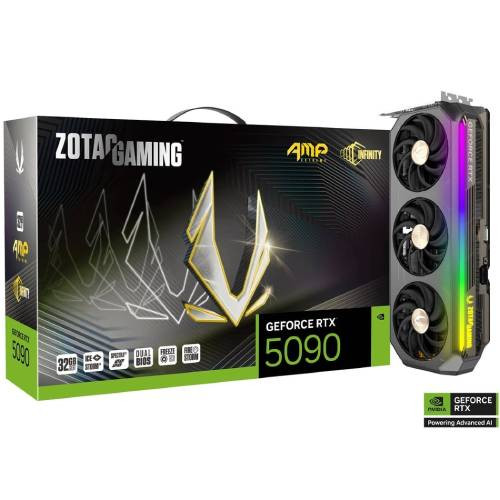 ZOTAC GAMING GeForce RTX 5090 AMP Extreme INFINITY
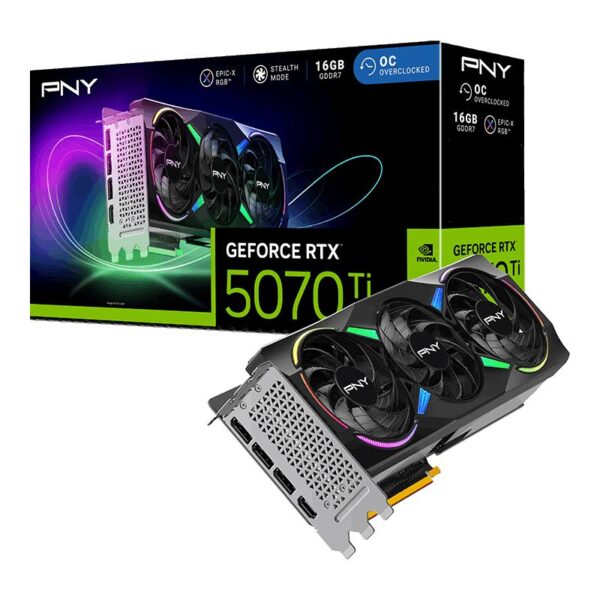 PNY GeForce RTX 5070 Ti 16GB ARGB EPIC-X RGB Overclocked Triple Fan
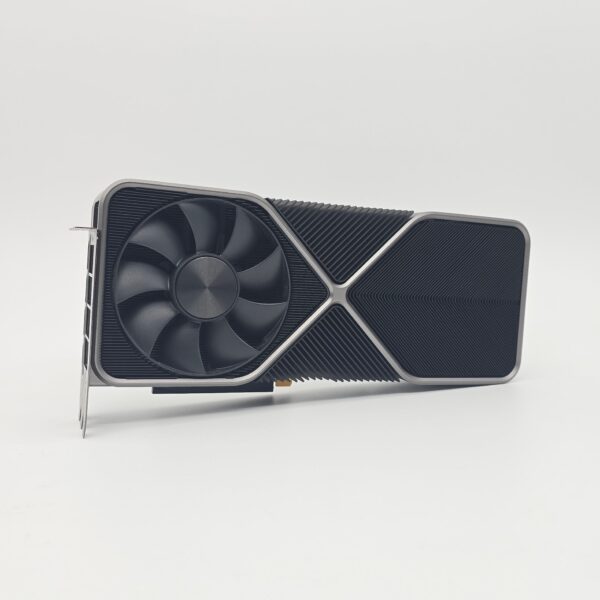 NVIDIA GeForce RTX 3090 Founders Edition 24GB
 Sapphire NITRO+ Radeon RX 7800 XT 16GB