AMRs
Explore warehouse robots for sale for autonomous material transport, goods-to-person picking, order fulfillment, pallet handling, sorting, production-line logistics and industrial delivery. This category brings together autonomous mobile robots (AMRs), picking robots, intralogistics robots and mobile warehouse automation systems for factories, distribution centers, fulfillment operations and logistics facilities.
AI Robot Supplier offers warehouse robots for sale from manufacturers including Geek+, SEER Robotics, PUDU Robotics, KEENON and other mobile-robotics suppliers. Available systems range from compact transport AMRs and picking robots to high-payload material-handling platforms, autonomous pallet movers, lifting robots and fleet-based warehouse automation systems.
Warehouse Robots for Sale & AMR Buying Guide 2026
Modern warehouse automation is not built around one type of robot. Different facilities may require autonomous mobile robots for transport, goods-to-person picking systems, pallet-moving AMRs, autonomous forklifts, sorting robots, lifting robots or fleet-management software connecting multiple robot types.
When comparing warehouse robots for sale, buyers should first define the exact workflow that needs automation. A robot designed to move totes between workstations solves a different problem from a pallet transport AMR, a goods-to-person picking robot or an autonomous forklift.
The correct system depends on payload, load type, aisle width, navigation method, pickup and drop-off interfaces, required throughput, charging strategy, fleet size, WMS or MES integration and whether the robot must work around people, forklifts or other mobile equipment.
What Is an Autonomous Mobile Robot?
An autonomous mobile robot, commonly called an AMR, is a mobile robotic platform that uses onboard sensing, localization and navigation software to move through a facility and perform transport or logistics tasks with limited direct human control.
Unlike many traditional guided systems that depend heavily on fixed tracks, embedded wires or predefined physical guidance infrastructure, modern AMRs can use technologies such as LiDAR, visual sensing, SLAM, QR-code localization and other navigation methods to understand their position and travel through changing environments.
This flexibility is one reason autonomous mobile robots are widely used in warehouses, factories, distribution centers, fulfillment operations and production logistics.
AMR vs AGV: What Is the Difference?
AMRs and AGVs are both used to automate material movement, but they are not identical.
Automated Guided Vehicles (AGVs) traditionally operate along predetermined routes using infrastructure such as magnetic tape, reflectors, wires or fixed navigation paths. This can work very well for repetitive processes where the route rarely changes.
Autonomous Mobile Robots (AMRs) are generally designed to navigate more flexibly using onboard sensors, maps and localization software. Depending on the system, an AMR can respond to obstacles, select alternate routes and operate in environments where layouts or traffic conditions change.
For buyers researching AMR robots for sale, the distinction matters because infrastructure requirements, commissioning time, fleet flexibility and integration costs can differ significantly between the two approaches.
Types of Warehouse Automation Robots
Goods-to-Person Picking Robots
Goods-to-person systems bring shelves, racks, totes or inventory containers toward human or automated picking stations. Instead of workers walking long distances through a warehouse, mobile robots transport inventory to the point where picking occurs.
This model is particularly relevant to e-commerce, retail distribution and high-SKU fulfillment operations where reducing worker travel can improve picking efficiency and consistency.
Geek+ P-series picking robots represented in our catalogue are examples of systems designed around warehouse picking and goods-to-person workflows.
Intralogistics Transport AMRs
Intralogistics AMRs move materials between storage areas, production lines, workstations, docks, staging areas and other points inside a facility.
These robots may transport totes, carts, racks, components, raw materials or finished goods. Payload requirements can vary from relatively light material movement to heavy industrial transport involving hundreds or thousands of kilograms.
Geek+ M-series and MP-series robots in the current catalogue illustrate this category, with configurations designed around different material-handling loads and warehouse workflows.
Picking Robots
Picking robots are used to support order fulfillment and inventory movement. Some systems transport racks or shelves to operators, while others work as part of automated tote, case or item-picking workflows.
When comparing warehouse robots for sale for picking, buyers should consider order profile, SKU count, inventory dimensions, pick rate, station design, storage density and the level of automation required at the picking station.
Sorting Robots
Sorting robots route parcels, totes, orders or individual items toward the correct destination. They are commonly considered for e-commerce fulfillment, parcel operations, distribution centers and other environments where large numbers of items must be directed to multiple destinations.
Geek+ S-series robots represented in this category are examples of autonomous sorting systems intended for flexible warehouse workflows.
RoboShuttle & High-Density Storage Robots
High-density warehouse systems can use mobile robots to retrieve totes or inventory from storage structures and deliver them to picking stations.
Geek+ describes its RoboShuttle concept as a tote-to-person system designed for high-SKU and high-throughput environments. This type of solution can be particularly useful where vertical storage density and rapid tote retrieval are priorities.
Pallet Transport Robots
Pallet-moving AMRs automate movement between receiving, storage, production, staging and dispatch areas. These systems require careful attention to pallet dimensions, load weight, pickup interfaces, floor condition and docking accuracy.
High-payload AMRs can reduce repetitive forklift or manual material-handling routes where the process is predictable enough to automate.
Autonomous Forklifts
Autonomous forklifts combine mobile navigation with fork-based pallet handling. They may be used for pallet pickup, put-away, transport, line feeding and warehouse replenishment.
SEER Robotics’ product ecosystem includes autonomous forklifts, pallet trucks, stacker forklifts, counterbalanced forklifts and reach-truck platforms alongside conventional mobile AMRs.
Buyers comparing autonomous forklifts should evaluate load weight, lift height, pallet type, aisle width, navigation accuracy, safety system, traffic environment and integration with warehouse operations.
Lifting Robots
Lifting AMRs travel underneath or alongside racks, carts or carriers and use an integrated lifting mechanism to move the load autonomously.
SEER Robotics offers base robots and lifting robots designed around SLAM navigation and integration with robot-management software. This approach can support flexible warehouse layouts and repetitive transport workflows without requiring every load to be transferred manually.
Industrial Delivery Robots
Industrial delivery AMRs move components, parts, containers and other materials between work areas. They can be useful in factories, warehouses, manufacturing lines and back-of-house commercial environments.
The PUDU T300, for example, is positioned as an industrial material-handling robot with configurations supporting substantial payloads, enterprise-system integration and cross-space operations such as elevator or access-control interaction.
Popular Warehouse Robot Brands
Geek+ Warehouse Robots
Geek+ develops robotic systems for warehouse fulfillment and intralogistics. Its portfolio covers several major warehouse automation categories, including picking robots, moving robots, sorting robots, forklift automation and RoboShuttle systems.
Current Geek+ products in the AI Robot Supplier AMR catalogue include M-series and MP-series intralogistics robots, P-series picking robots, RoboShuttle platforms and sorting robots.
Examples include systems such as Geek+ M200C, M2000C, M3000C, MP600R, MP1000R, MP1500R, P500R, P800R, P1200R, P40 RoboShuttle and S-series sorting robots.
For buyers comparing warehouse robots for sale, Geek+ provides useful coverage across goods-to-person, material transport, sorting and high-density fulfillment applications.
SEER Robotics AMRs
SEER Robotics develops mobile robot hardware, robot controllers and fleet-management software for industrial logistics.
Its robotics portfolio includes base robots, lifting robots, autonomous forklifts, pallet trucks, stacker forklifts, counterbalanced forklifts and other warehouse automation platforms.
SEER also develops robot-management and logistics software designed to coordinate mobile robot fleets, route assignments and warehouse tasks.
This combination makes SEER particularly relevant to buyers who need both autonomous mobile robots and the software infrastructure required to manage larger or more complex deployments.
PUDU Industrial AMRs
PUDU Robotics is represented in the category by mobile delivery and industrial transport systems, including the PUDU T300 family.
PUDU describes the T300 as an industrial material-handling AMR designed for heavy-load commercial and factory transport. The platform supports enterprise integration and can be configured for material movement, lifting, towing and related logistics workflows depending on version.
For warehouses or factories seeking a flexible transport platform rather than a large goods-to-person storage system, industrial delivery AMRs can provide a more targeted approach.
KEENON Mobile Robots
KEENON Robotics products in the wider mobile-robot catalogue include delivery, service and transport robots. Some configurations are relevant to internal logistics, enclosed delivery and commercial movement applications where autonomous navigation and repetitive delivery tasks are required.
Buyers should distinguish between warehouse-specific AMRs and service-delivery robots, because payload, navigation, durability and integration requirements can be very different.
Warehouse Robots by Application
E-Commerce Fulfillment
E-commerce warehouses often need to process large numbers of SKUs and orders while minimizing walking and manual transport. Goods-to-person systems, picking robots and sorting robots can support these workflows by moving inventory and orders between storage and fulfillment stations.
3PL & Distribution Centers
Third-party logistics facilities may serve multiple customers with changing inventory and throughput requirements. Flexible AMR fleets can be useful where automation must scale without redesigning the entire facility every time volumes or workflows change.
Manufacturing & Line Feeding
Factories use AMRs to move components, raw materials, work-in-progress and finished goods between storage and production areas.
For these applications, buyers should evaluate payload, route frequency, workstation interfaces, production scheduling, MES integration and whether the robot must interact with conveyors, lifts, doors or other automation equipment.
Pallet & Heavy Material Transport
High-payload autonomous mobile robots can reduce repetitive pallet movement and heavy material-handling routes. These deployments require careful evaluation of floor quality, aisle clearance, traffic interaction, pickup accuracy and load stability.
Sorting & Parcel Handling
Sorting robots can direct parcels or orders toward multiple destinations without requiring fixed conveyor infrastructure for every workflow.
This makes mobile sorting systems particularly relevant where order profiles change frequently or warehouse operators want the ability to expand or reconfigure capacity.
How to Choose an Autonomous Mobile Robot
Before purchasing warehouse robots for sale, document the real operational problem first. A robot should be selected around the workflow rather than choosing a model and trying to redesign the workflow around it.
1. Payload
Confirm the maximum real load the robot must transport, including racks, pallets, totes, fixtures and any top-mounted handling equipment.
2. Load Type
Determine whether the robot will carry shelves, totes, carts, pallets, racks, bins, components or custom fixtures. Different load types require different robot mechanisms and docking interfaces.
3. Navigation
Compare LiDAR SLAM, visual SLAM, QR-code navigation and other localization methods against the facility environment.
Navigation technology should match aisle width, traffic density, lighting, floor conditions and how frequently routes need to change.
4. Fleet Management
A single AMR may be relatively simple to deploy, but larger fleets require traffic management, task assignment, charging coordination and mission prioritization.
Before purchasing multiple AMR robots for sale, confirm what fleet-management software is included and how it scales as robot count increases.
5. WMS, WES, ERP & MES Integration
Warehouse robots rarely operate in isolation. Many deployments require integration with warehouse management systems, warehouse execution systems, ERP software, manufacturing execution systems or custom applications.
Confirm available APIs, connectors, communication protocols and the division of responsibility between robot vendor, system integrator and customer IT team.
6. Charging Strategy
Compare manual charging, automatic charging, opportunity charging and battery-swap options.
Fleet uptime depends not only on battery capacity but also on how intelligently charging is scheduled around workload.
7. Safety
Warehouse AMRs commonly share working areas with people, forklifts and other equipment. Buyers should review obstacle detection, emergency stopping, safety scanners, speed control and the safety standards applicable to the final deployment.
8. Facility Readiness
Evaluate floors, ramps, thresholds, narrow aisles, doors, elevators, wireless-network coverage, charging locations and pickup/drop stations before ordering the fleet.
9. Throughput
The correct robot count should be based on required tasks per hour, travel distance, queueing, charging and station capacity—not simply on warehouse floor area.
10. Service & Spare Parts
Industrial mobile robots become part of daily operations. Confirm maintenance procedures, replacement parts, remote support, documentation, software licensing and warranty before deployment.
Warehouse Robot Prices & Total Deployment Cost
There is no single meaningful warehouse robot price because an AMR project often includes much more than the mobile robot itself.
The total cost can include:
- AMR hardware
- lifting, conveyor, fork or rack-handling modules
- batteries and charging stations
- fleet-management software
- WMS, WES, ERP or MES integration
- pickup and drop-off stations
- doors, elevators or conveyor interfaces
- wireless-network or facility upgrades
- mapping and commissioning
- operator training
- maintenance and spare parts
- software subscriptions or licenses
For this reason, many professional warehouse robots for sale are quotation-based rather than sold at a universal list price. The written commercial offer should define the exact robot model, quantity, software, accessories, integration scope and support included.
AMR Robots for Small Warehouses vs Large Fleets
Small facilities do not necessarily need a large fleet immediately. A limited pilot can be used to validate travel routes, integration, throughput and operator interaction before expanding the deployment.
Large distribution centers may require dozens or hundreds of coordinated robots, multiple charging areas and deeper WMS/WES integration.
The scalable nature of AMRs is one of their most important advantages: capacity can often be expanded by adding robots and adjusting fleet software rather than rebuilding an entire fixed automation system.
Warehouse Robots vs Industrial Robot Arms
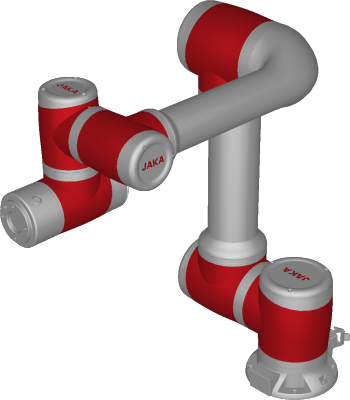
Warehouse AMRs provide mobility, while industrial robot arms provide manipulation at a fixed or semi-fixed workstation.
A mobile robot may transport a pallet to an assembly cell, while an industrial arm performs welding, machine tending, palletizing or component manipulation once the material arrives.
Many advanced automation projects combine both technologies. If your requirement involves fixed robotic manipulation rather than mobile transport, compare our Industrial Robots category.
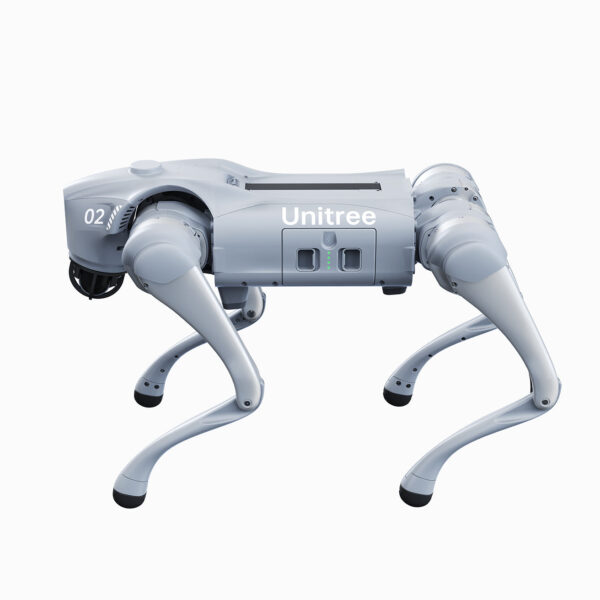
Warehouse Robots vs Robot Dogs
For smooth warehouse and factory floors, AMRs are generally more efficient than quadruped robots for repetitive transport because wheels provide efficient movement and can support larger loads.
Robot dogs become more useful where stairs, rough terrain, inspection routes or obstacles make conventional wheeled movement difficult.
For those environments, compare our Robot Dogs & Quadrupeds category.
Buy Warehouse Robots Internationally
AI Robot Supplier supports procurement of warehouse robots for sale for businesses, warehouses, factories, logistics operators, systems integrators and institutions.
Products may be available for direct purchase, supplier-confirmed sourcing, special order or project quotation depending on the individual listing.
Before ordering, confirm the exact robot model, configuration, payload, software, accessories, fleet-management requirements, integration scope, warranty and delivery destination.
AI Robot Supplier is operated by ARTI – Autonomous Robot Technology GmbH and acts as an independent equipment supplier and procurement platform. Unless expressly stated on a specific manufacturer or product page, we do not represent ourselves as an official or authorized distributor of the manufacturer.
Frequently Asked Questions About Warehouse Robots
What are the best warehouse robots for sale in 2026?
The best system depends on the workflow. Geek+ offers picking, transport, sorting and RoboShuttle solutions; SEER Robotics covers lifting robots, mobile bases and autonomous forklift systems; and PUDU offers industrial transport AMRs such as the T300. The correct platform depends on payload, throughput, facility layout and software integration.
What does AMR stand for?
AMR stands for Autonomous Mobile Robot. AMRs use onboard sensing, localization and navigation to move through warehouses, factories and other facilities with limited direct human guidance.
What is the difference between an AMR and an AGV?
Traditional AGVs generally follow defined guidance routes, while AMRs are designed to navigate more flexibly using onboard sensing and mapping technologies. The exact difference depends on the specific product and navigation architecture.
How much do warehouse robots cost?
Warehouse robot pricing varies by payload, robot type, software, accessories and integration. A complete project may also require charging infrastructure, fleet software, WMS/MES integration and site commissioning, so many commercial systems are sold by quotation.
Can AMRs work with a warehouse management system?
Many professional AMR systems offer APIs or software interfaces for connection to WMS, WES, ERP and MES systems. Compatibility and integration scope should be confirmed for the specific robot and software package.
Can autonomous mobile robots work around people?
Many AMRs are designed for mixed operational environments using safety sensors, obstacle detection and controlled navigation. The final deployment must still be engineered according to the facility, traffic pattern and applicable safety requirements.
Can AMRs use elevators and automatic doors?
Some AMR systems support integration with elevators, gates, doors and other IoT-controlled facility equipment. This capability depends on the robot, fleet software and site integration.
Can warehouse robots carry pallets?
Yes. Pallet-moving AMRs, lifting robots and autonomous forklifts can automate pallet transport. Buyers should confirm payload, pallet dimensions, lift mechanism, aisle width and pickup/drop requirements.
Are warehouse robots suitable for manufacturing?
Yes. AMRs are widely used for production-line feeding, work-in-progress movement, component transport and movement between warehouse and manufacturing areas.
How many AMRs does a warehouse need?
The required fleet size depends on task volume, route distance, robot speed, load handling time, charging, workstation capacity and peak throughput. A simulation or pilot deployment is often used to calculate the appropriate fleet size.
Browse the warehouse robots for sale below to compare autonomous mobile robots, picking robots, intralogistics AMRs, sorting systems and industrial delivery platforms. You can also return to our Robots for Sale parent category to compare humanoid robots, industrial robots, cobots and quadrupeds.
Featured Warehouse Robots & AMRs to Compare
Start with these selected autonomous mobile robots and warehouse automation platforms covering goods-to-person picking, intralogistics transport, high-density fulfillment, pallet movement and industrial delivery.
Geek+ Picking & Fulfillment Robots
-
Geek+ P500R Picking Robot
– goods-to-person AMR for small and medium warehouse picking, put-away and fulfillment workflows. -
Geek+ P800R Picking Robot
– flexible picking robot designed for multiple warehouse and fulfillment scenarios. -
Geek+ P1200R Picking Robot
– higher-capacity picking platform for warehouse automation and goods-to-person operations. -
Geek+ P40 RoboShuttle Robot
– high-density tote-to-person automation platform for storage and order fulfillment.
Geek+ Intralogistics AMRs
-
Geek+ M200C Intralogistics AMR
– autonomous transport robot for warehouse and factory material movement. -
Geek+ M2000C Intralogistics AMR
– heavier-duty intralogistics platform for automated internal transport. -
Geek+ M3000C Intralogistics AMR
– high-payload AMR for large material-handling and industrial logistics workflows. -
Geek+ MP600R Intralogistics AMR
– flexible autonomous platform for medium-payload warehouse transport. -
Geek+ MP1000R Intralogistics AMR
– intralogistics AMR for heavier warehouse and production-line material movement.
PUDU Industrial AMRs
-
PUDU T300 Standard
– industrial autonomous mobile robot for heavy-load indoor material transport with payloads up to 300 kg.
SEER Robotics Warehouse Automation
-
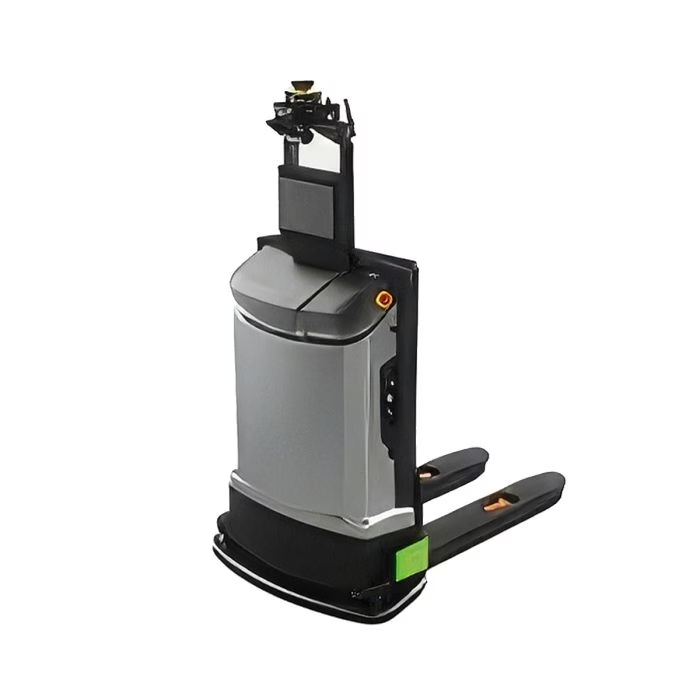
SEER Robotics OneFork 300
– autonomous pallet truck for warehouse pallet transport and intralogistics automation.
-

-

-

-
 SIASUN
 Axle Base Line Assisted Assembly Mobile Robot (Axle Base Line Assisted Assembly Mobile Robot)
Request a Quote -
 SIASUN
 Axle Final Line Assisted Assembly Mobile Robot (Axle Final Line Assisted Assembly Mobile Robot)
Request a Quote -
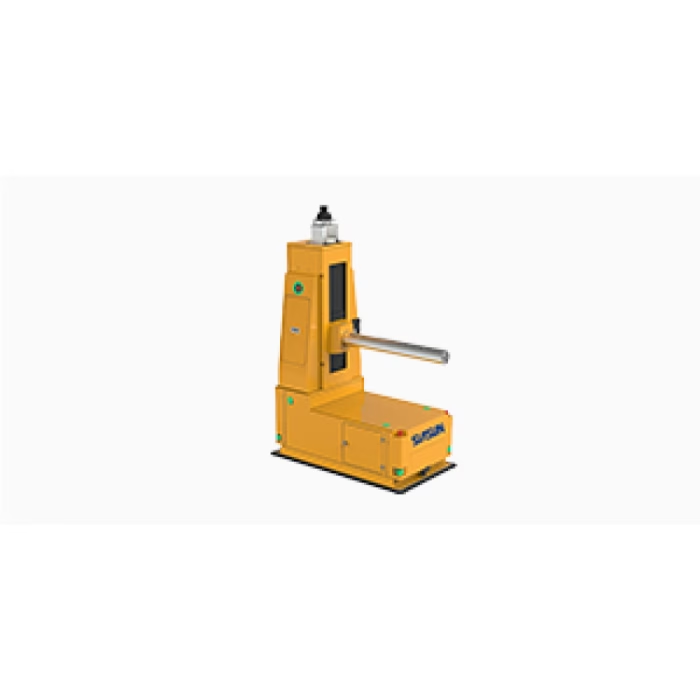 SIASUN
 Cantilever Shaft Conveyor Mobile Robot (Cantilever Shaft Conveyor Mobile Robot)
Request a Quote -
 SIASUN
 Central Gear Assisted Assembly Mobile Robot (Central Gear Assisted Assembly Mobile Robot)
Request a Quote -
 SIASUN
 Dual-Lift Automotive Assembly Mobile Robot (Dual-Lift Automotive Assembly Mobile Robot)
Request a Quote -
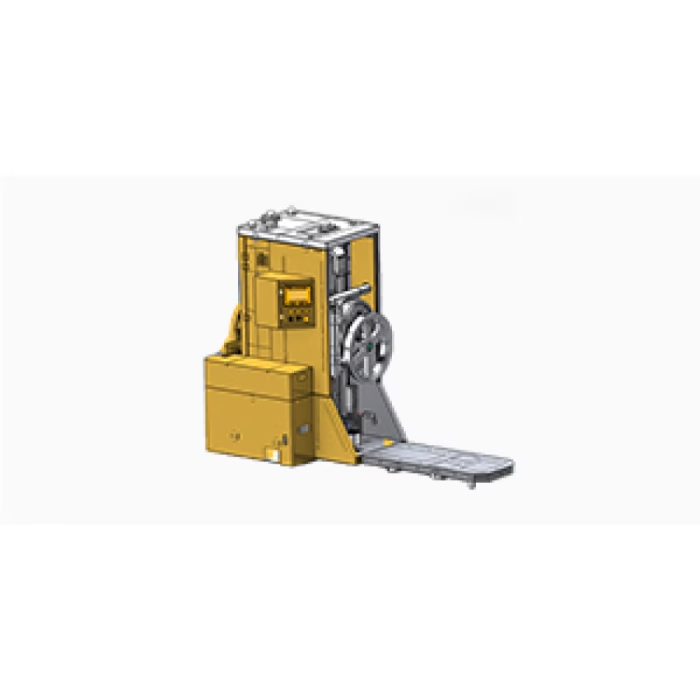 SIASUN
 Engine Assisted Assembly Mobile Robot (Engine Assisted Assembly Mobile Robot)
Request a Quote -

-
-
-
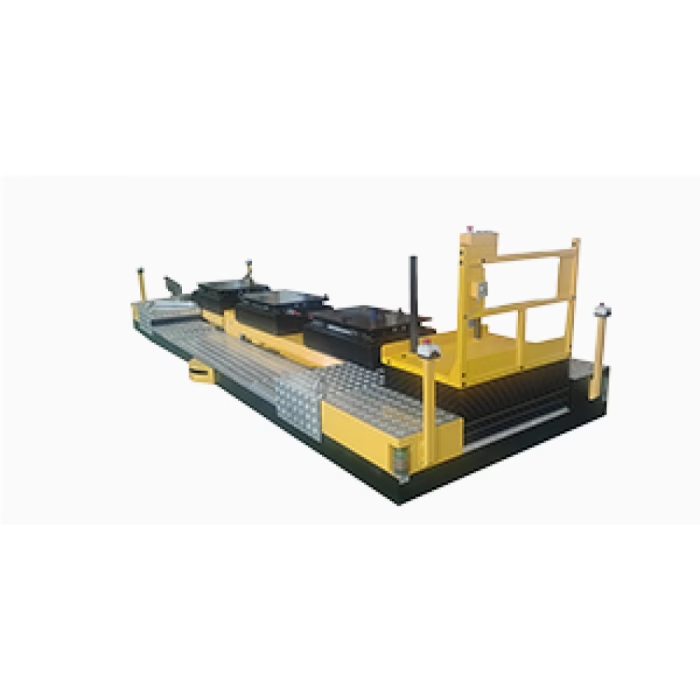 SIASUN
 Four-Lift Automotive Assembly Mobile Robot (Four-Lift Automotive Assembly Mobile Robot)
Request a Quote -

-
 SIASUN
 Front-End Module Assisted Assembly Mobile Robot (Front-End Module Assisted Assembly Mobile Robot)
Request a Quote -
-

-
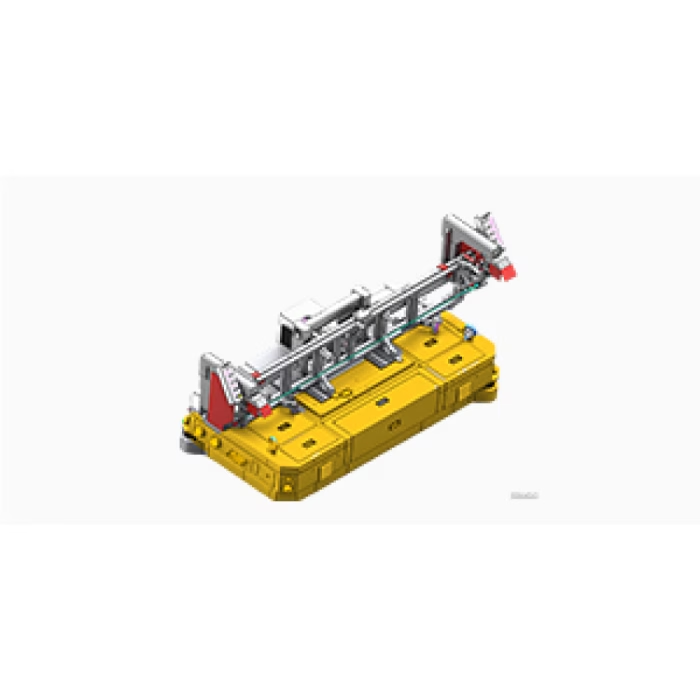 SIASUN
 Instrument Panel Line Assisted Assembly Mobile Robot (Instrument Panel Line Assisted Assembly Mobile Robot)
Request a Quote -
 SIASUN
 Interior & Finishing Line Assisted Assembly Mobile Robot (Interior & Finishing Line Assisted Assembly Mobile Robot)
Request a Quote -
-

-

-

-

Showing 120 of 127 products