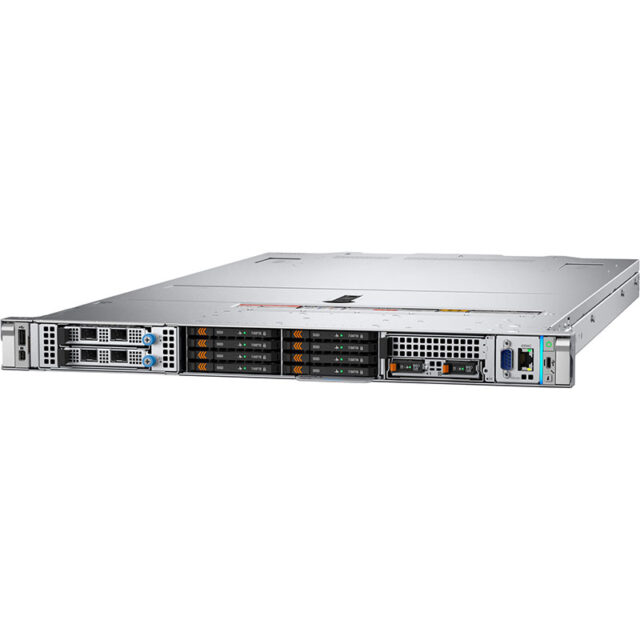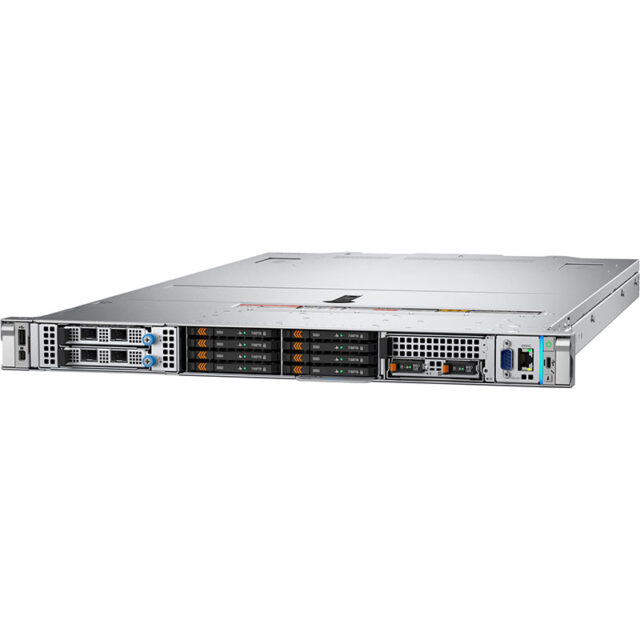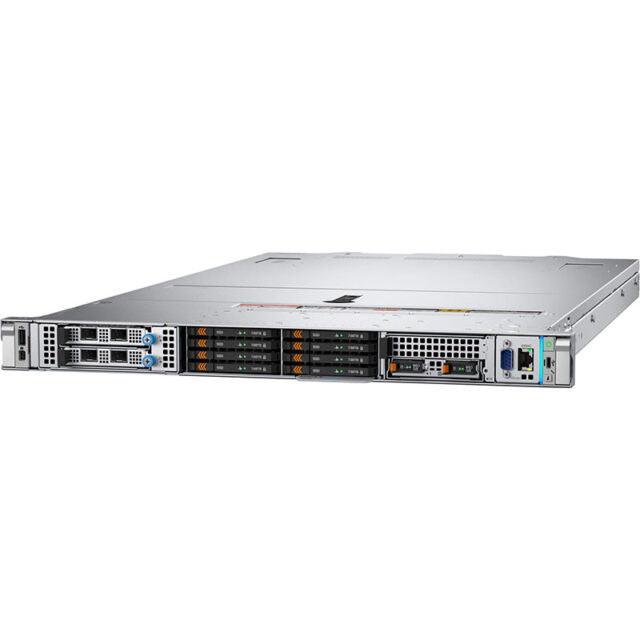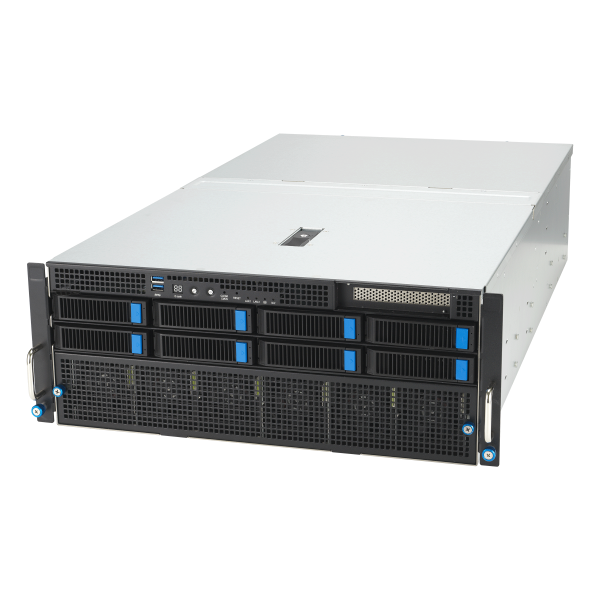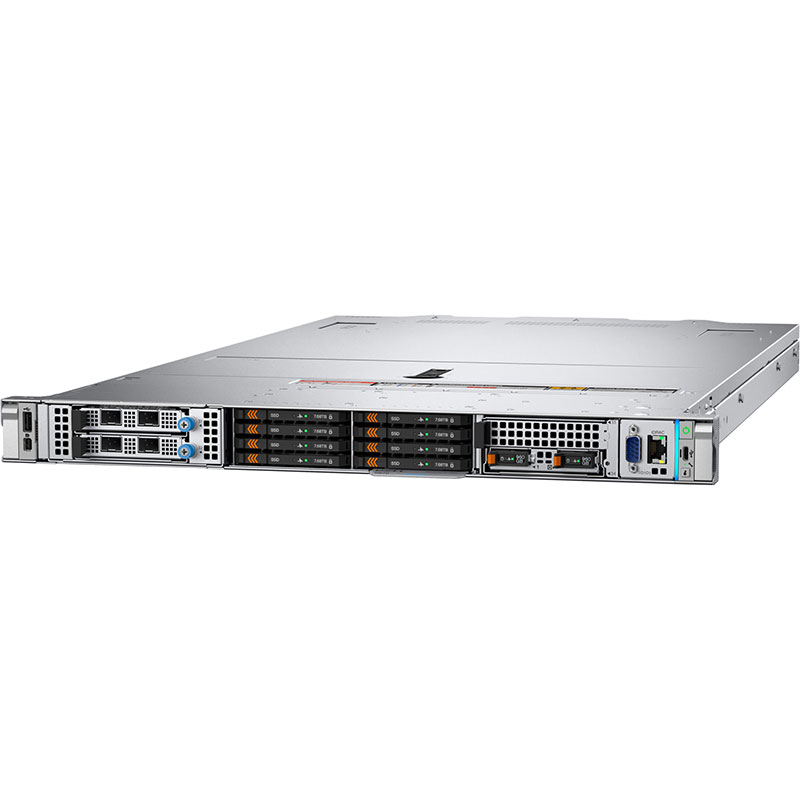
Dell Technologies PowerEdge R660xs
$7,500.00
Dell PowerEdge R660xs — The Dell PowerEdge R660xs is a streamlined 1U dual-socket Intel Xeon server for virtualization, cloud infrastructure and scale-out enterprise workloads. Dell currently lists support for up to two 5th Generation Xeon Scalable processors with up to 28 cores each or two 4th Generation Xeon Scalable processors with up to 32 cores each, together with 16 DDR5 DIMM slots and up to 1.5 TB RAM. This page is structured for buyers comparing Dell PowerEdge R660xs specifications, price, compatibility and the exact configuration required before a B2B order.
Explore Related
Related products, categories and research.
Dell PowerEdge R660xs: premium buying summary
The Dell PowerEdge R660xs is a streamlined 1U dual-socket Intel Xeon server for virtualization, cloud infrastructure and scale-out enterprise workloads. Dell currently lists support for up to two 5th Generation Xeon Scalable processors with up to 28 cores each or two 4th Generation Xeon Scalable processors with up to 32 cores each, together with 16 DDR5 DIMM slots and up to 1.5 TB RAM.
Key Dell PowerEdge R660xs specification highlights
- 1U dual-socket Intel Xeon platform.
- Up to two 5th Gen Xeon Scalable CPUs with up to 28 cores each; 4th Gen up to 32 cores each.
- 16 DDR5 DIMM slots, up to 1.5 TB RAM and up to 5200 MT/s.
- Up to 4 × 3.5-inch or 8/10 × 2.5-inch SAS/SATA/NVMe front-drive options.
- iDRAC9/OpenManage management and enterprise OS support.
- Multiple redundant PSU options from 600W to 1800W depending configuration.
Dell PowerEdge R660xs product overview
R660xs is not an AMD EPYC server and should not inherit the generic CPU language that was on the previous page. It is an Intel C741 / Xeon platform. The “xs” model is aimed at a more efficiency-focused configuration envelope than the full R660: fewer DIMM slots and a lower maximum memory ceiling, while retaining dual-socket 1U density and flexible storage for mainstream enterprise workloads.
Dell PowerEdge R660xs price, cost and quotation considerations
PowerEdge R660xs cost depends on processor pair, memory, drive/backplane choice, RAID/HBA, networking, PSU class and service. Because the platform is often considered as a value/density alternative to R660, quotes should be normalized to the same memory, storage, NIC and support level before comparing price.
Core features and capabilities
- 16 DDR5 DIMM slots with up to 1.5 TB RAM.
- Flexible 3.5-inch and 2.5-inch SAS/SATA/NVMe drive layouts.
- BOSS-N1 boot subsystem and PERC/HBA controller options.
- Two redundant AC or DC power supplies.
- iDRAC9, Redfish API and OpenManage tools.
- Enterprise OS support including Windows Server, Red Hat Enterprise Linux, SUSE, Ubuntu Server LTS and VMware vSAN/ESXi.
Detailed Dell PowerEdge R660xs technical specifications
| Form factor | 1U rack server |
|---|---|
| Processors | Up to 2 × 5th Gen Intel Xeon Scalable with up to 28 cores each; or 4th Gen Xeon Scalable up to 32 cores each |
| Chipset | Intel C741 |
| Memory slots | 16 DDR5 DIMM slots |
| Maximum RAM | 1.5 TB |
| Memory speed | Up to 5200 MT/s |
| Front storage | Up to 4 × 3.5-inch SAS/SATA or 8/10 × 2.5-inch SAS/SATA/NVMe |
| Rear storage | Up to 2 × 2.5-inch SAS/SATA/NVMe in supported configurations |
| Width × height | 482 × 42.8 mm; 434 mm body width |
| Depth | Depending on backplane, ~626.42–677.1 mm ear-to-rear-wall and ~661.37–712.95 mm ear-to-PSU-handle |
| Maximum weight | 10 × 2.5-inch: 18.74 kg; 4 × 3.5-inch: 19.45 kg; 8 × 2.5-inch: 18.25 kg; no-backplane configuration: 15.38 kg |
| PSUs | Up to two redundant AC/DC PSUs; current manual lists options including 600W, 700W, 800W, 1100W, 1400W and 1800W depending input/configuration |
| Management | iDRAC9, Redfish and Dell OpenManage ecosystem |
Performance and use-case information
R660xs is designed for workloads that value 1U density and balanced compute/storage rather than maximum memory capacity. The lower core-count limits and 16-DIMM architecture distinguish it from R660. For virtualization, organizations should size VM density against actual CPU model, memory capacity and storage IOPS instead of assuming every R660xs provides the same consolidation ratio.
Compatibility, software, connectivity and site requirements
Confirm CPU generation, memory population, front/rear drive backplane, RAID/HBA, NIC/OCP cards, PSU and rack depth. Dell’s manual warns against unsupported PCIe devices, so adapters should be selected from validated options. Operating system/hypervisor compatibility and iDRAC licensing should be matched to the production environment.
Applications
- Virtualization
- Cloud infrastructure
- Scale-out applications
- Enterprise web/application servers
- General database services
- Storage-heavy 1U nodes
- Branch or regional data-center workloads
Comparison with closely related models
R660xs versus R660 is primarily a scale and configurability comparison. R660 offers 32 DIMM slots, up to 8 TB RAM and higher-core-count 5th Gen Xeon support, while R660xs has 16 DIMM slots, up to 1.5 TB RAM and a more restrained CPU envelope. R660xs can therefore be a better cost/density fit where workloads do not need the R660’s maximum memory and expansion headroom.
What is included?
Confirm processor count, DIMM population, drive backplane, drives, PERC/HBA, NICs, PSUs, rails, bezel, power cords, iDRAC entitlement and Dell service. The exact service tag/BOM should match the written quotation.
Important limitations and buyer considerations
- Intel Xeon platform; AMD EPYC specifications do not apply.
- 16-DIMM / 1.5 TB ceiling is materially lower than R660.
- Chassis depth and weight vary by drive configuration.
- Power supply selection must match the ordered hardware and input voltage.
- Use only validated expansion devices if support coverage matters.
- Warranty is tied to the purchased Dell service/support configuration.
Who should buy this exact model?
The Dell PowerEdge R660xs is a good choice for buyers who want dual-socket 1U density with mainstream virtualization and storage flexibility but do not require the R660’s 8 TB memory ceiling or highest-core-count configurations.
Authoritative technical and manufacturer resources
For this PowerEdge server, verify the current Dell configuration matrix, validated expansion devices and purchased support entitlement.
Dell PowerEdge R660xs technical quick answers
What is the Dell PowerEdge R660xs maximum RAM?
Dell lists up to 1.5 TB across 16 DDR5 DIMM slots.
What is the the R660xs server weight?
Maximum weight depends on backplane: Dell lists 18.74 kg for 10 × 2.5-inch, 19.45 kg for 4 × 3.5-inch, 18.25 kg for 8 × 2.5-inch and 15.38 kg for no-backplane.
Which processors does the R660xs server support?
Up to two 5th Gen Xeon Scalable CPUs with up to 28 cores each, or 4th Gen CPUs up to 32 cores each.
How is R660xs different from R660?
R660 has more memory slots/capacity and higher-end CPU/configuration headroom.
Detailed FAQs
Does the R660xs server use AMD EPYC?
No. Current Dell documentation specifies Intel Xeon Scalable processors.
How much storage does R660xs support?
Dell lists several front layouts up to 10 × 2.5-inch SAS/SATA/NVMe and optional rear drives; actual capacity depends on chosen drives.
How deep is the chassis?
Backplane-dependent depth ranges roughly from 626 to 677 mm to the rear wall and 661 to 713 mm to PSU handles.
What should be compared in an R660xs quote?
CPU, RAM, storage/backplane, RAID/HBA, networking, PSUs, rails, management entitlement and service.
When should I choose R660 instead?
Choose R660 when you need substantially more memory, higher supported CPU core counts or broader expansion/storage options.
Relevant internal links
Request a B2B quotation
For an R660xs quotation, provide CPU, memory, storage/backplane, networking, PSU, rails, hypervisor/OS and service requirements so the exact configuration can be priced consistently.