80GB GPU Memory
The PCIe A800 configuration covered here provides 80GB of accelerator memory, allowing substantially larger models and datasets to remain resident on the GPU than typical workstation or gaming cards.
$6,600.00
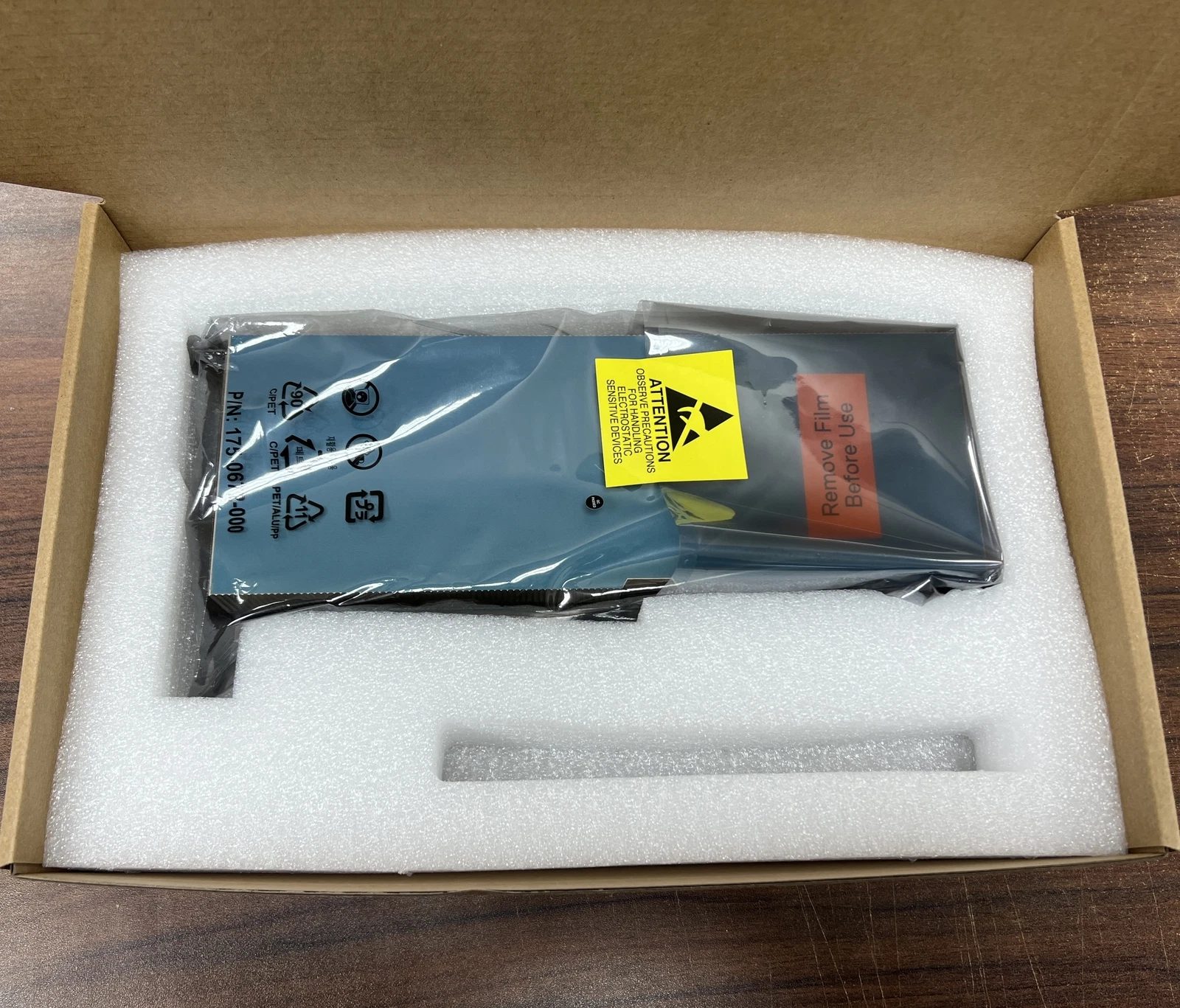
NVIDIA A800 80GB PCIe Tensor Core GPU is an enterprise accelerator built on NVIDIA Ampere for AI training, inference and HPC. It combines 80 GB HBM2e with high-bandwidth HBM2e memory bandwidth-class performance and a PCIe deployment format, making it suitable for dense AI, accelerated analytics and high-performance computing platforms.
Related products, categories and research.
80GB Ampere Data Center GPU Accelerator
The NVIDIA A800 80GB graphics card is an Ampere-generation PCIe data-center accelerator designed for AI training, inference, high-performance computing, scientific computing and GPU-accelerated data analytics. This exact version combines 80GB of HBM2e memory with approximately 1,935 GB/s memory bandwidth, PCI Express Gen4 connectivity, Multi-Instance GPU support and NVIDIA’s third-generation Tensor Core architecture.
For buyers searching for an A800 80GB HBM2e graphics card, it is important to distinguish this model from both the A800 40GB Active workstation GPU and the A800 80GB SXM configuration. This listing concerns the A800 PCIe 80GB accelerator.
The A800 80GB PCIe is a server-class compute accelerator rather than a conventional gaming graphics card. Before purchase, confirm the exact OEM or NVIDIA board identification, cooling configuration, condition, host-server compatibility, warranty, provenance and destination-specific shipping requirements.
Product overview
The NVIDIA A800 80GB PCIe is a professional accelerated-computing GPU built on the NVIDIA Ampere architecture. It was developed for data-center workloads requiring very large GPU memory, high memory bandwidth and strong Tensor Core performance.
The card provides 80GB HBM2e with approximately 1.935 TB/s of memory bandwidth. That capacity is particularly relevant to large AI models, memory-intensive scientific workloads, large batch sizes, GPU databases, recommendation systems and multi-user compute environments.
Unlike a consumer GeForce product, an A800 should be selected as part of a complete server platform. Physical slot space, airflow, power delivery, system firmware, operating system, NVIDIA driver and application compatibility should all be checked before installation.
NVIDIA continues to list the A800 PCIe 80GB in its AI Enterprise virtualization documentation, including MIG-backed and time-sliced vGPU configurations.
Do not confuse A800 PCIe 80GB with A800 40GB Active or A800 80GB SXM.
Check PCIe slot layout, airflow, power, BIOS, firmware and validated GPU support for the target server.
The written quotation should identify new, open-box, refurbished or other condition together with exact warranty and supplied scope.
Buyer terminology
Buyers commonly search for the A800 as an “80GB graphics card,” “80GB memory graphics card” or “80GB HBM2e graphics card.” Technically, the A800 PCIe 80GB is a data-center accelerator rather than a conventional display-focused graphics card.
The PCIe A800 configuration covered here provides 80GB of accelerator memory, allowing substantially larger models and datasets to remain resident on the GPU than typical workstation or gaming cards.
The manufacturer specification identifies the 80GB PCIe configuration as HBM2e, delivering approximately 1,935 GB/s of memory bandwidth.
The PCIe card is intended for server-class AI and HPC deployment. Do not assume conventional desktop display connectivity or consumer cooling requirements.
Core capabilities
Large high-bandwidth memory capacity supports memory-intensive AI training, inference, HPC and accelerated analytics workloads.
The PCIe 80GB configuration delivers approximately 1.935 TB/s of GPU memory bandwidth.
Ampere Tensor Cores accelerate TF32, FP16, BF16 and integer AI workloads and support structural sparsity.
The A800 80GB can be divided into as many as seven isolated GPU instances for workload consolidation and multi-user compute.
PCIe Gen4 provides up to approximately 64 GB/s aggregate interface bandwidth in the manufacturer specification.
Two compatible A800 PCIe accelerators can be linked through the supported NVIDIA NVLink bridge configuration at up to approximately 400 GB/s.
Error-correcting GPU memory is suited to professional environments where compute reliability and long-running workloads matter.
A800 operates within NVIDIA’s CUDA, cuDNN, TensorRT, NCCL and accelerated-computing software ecosystem.
The platform is designed for professional servers with appropriate airflow, power, firmware and management infrastructure.
Verified technical data
The following values prioritize NVIDIA’s A800 product documentation and current NVIDIA software-support documentation. Configuration-sensitive physical details should still be confirmed against the exact supplied board.
Specification transparency
A800 specification pages do not always agree on CUDA and Tensor core counts. Some OEM documentation lists figures that differ from device-level information reported for actual A800 PCIe 80GB hardware.
Rather than present a disputed core count as a purchase-critical specification, this page prioritizes NVIDIA’s manufacturer-published compute throughput, memory capacity, bandwidth, TDP, MIG and interconnect specifications.
If a project specifically depends on an exact silicon/core configuration, request the precise OEM part number and a device-information report for the supplied board before order approval.
AI & HPC performance
80GB of HBM2e provides significantly more model and KV-cache headroom than ordinary 24GB or 48GB accelerators, making A800 relevant to larger inference and training workloads.
TF32, BF16 and FP16 Tensor Core modes provide strong support for deep-learning training within NVIDIA’s CUDA software ecosystem.
Large VRAM capacity, Tensor Cores and INT8 acceleration support high-throughput inference and larger batch sizes.
FP64 capability and high memory bandwidth make the platform relevant to scientific simulation, engineering, modelling and research computing.
A800 can accelerate GPU analytics, vector workloads and large data-processing pipelines using NVIDIA’s accelerated software ecosystem.
MIG and NVIDIA AI Enterprise vGPU support allow administrators to partition or time-share accelerator capacity among workloads.
Virtualization
NVIDIA currently documents both MIG-backed and time-sliced virtual GPU configurations for the A800 PCIe 80GB.
MIG allows one physical GPU to be partitioned into isolated compute environments with dedicated GPU resources. This can improve utilization in research institutions, AI infrastructure, cloud environments and enterprise shared-compute systems.
Available profiles depend on the NVIDIA software/licensing stack and deployment environment, so vGPU requirements should be validated before procurement.
Closest-model comparison
A100 80GB PCIe is the most useful technical comparison because the two Ampere accelerators share very similar compute and memory specifications while differing materially in GPU-to-GPU interconnect bandwidth.
| Specification | NVIDIA A800 80GB PCIe | NVIDIA A100 80GB PCIe |
|---|---|---|
| Architecture | Ampere | Ampere |
| GPU memory | 80GB HBM2e | 80GB HBM2e |
| Memory bandwidth | 1,935 GB/s | 1,935 GB/s |
| FP32 | 19.5 TFLOPS | 19.5 TFLOPS |
| TF32 Tensor | 156 / 312 TFLOPS* | 156 / 312 TFLOPS* |
| FP16 / BF16 Tensor | 312 / 624 TFLOPS* | 312 / 624 TFLOPS* |
| TDP | 300 W | 300 W |
| MIG | Up to 7 × 10GB | Up to 7 × 10GB |
| PCIe | Gen4 / 64 GB/s | Gen4 / 64 GB/s |
| NVLink bridge bandwidth | 400 GB/s | 600 GB/s |
| Primary difference | Reduced inter-GPU link bandwidth | Higher NVLink bandwidth |
* Higher value uses structural sparsity where supported.
Consider A800 when an 80GB Ampere PCIe accelerator meets the workload and the reduced 400 GB/s NVLink bandwidth is acceptable.
A100 is the stronger comparison where maximum Ampere-generation GPU-to-GPU NVLink bandwidth is important.
For newer inference/training architectures, greater memory capacity or newer precision formats, compare H100, H200 and Blackwell accelerators.
Variant clarification
Do not mix the two models.
The A800 80GB PCIe covered on this page is a data-center accelerator with 80GB HBM2e and approximately 1,935 GB/s memory bandwidth.
The A800 40GB Active is a different actively cooled workstation-oriented product with 40GB memory and different power, cooling and bandwidth characteristics.
When evaluating a quotation, ensure the product label and exact model identify the 80GB PCIe configuration.
Server integration
A compatible physical x16 slot and appropriate PCIe topology are required for full deployment.
The host system must provide validated power delivery for the exact A800 board/OEM configuration.
Passive air-cooled variants depend on high-volume chassis airflow and should not be treated like ordinary actively cooled desktop GPUs.
Reference air-cooled PCIe configurations occupy two slots. Confirm adjacent-slot requirements and server riser design.
Check the target server vendor’s supported GPU matrix, BIOS, BMC, firmware and operating-system requirements.
If using two A800 GPUs with NVLink, confirm spacing, bridge type, CPU topology and system support before ordering.
Price & availability
The current AI Robot Supplier price is displayed above this product description.
There is no useful single global street price for the A800 80GB PCIe because listings differ significantly by condition, OEM channel, remaining inventory, warranty, geography and seller provenance.
Before comparing an NVIDIA A800 price, verify whether the offer is:
For multi-unit orders or destination-specific procurement, request a quotation confirming quantity, condition, exact model identification, warranty, availability and delivery terms.
High-value GPU verification
International procurement
Advanced data-center GPUs can be subject to export, re-export and transfer controls depending on product classification, origin, destination, end user and intended end use.
International availability should therefore be confirmed before payment rather than assuming that an A800 can be shipped unrestricted to every country or customer.
AI Robot Supplier buyers should provide the delivery country and, where required, company/end-use information so the order can be checked against applicable shipping and trade requirements.
Import VAT, duties, customs brokerage and local taxes may also apply according to destination and agreed delivery terms.
Supplied configuration
Package contents can differ according to NVIDIA/OEM channel and product condition. Only the written quotation and product listing should be treated as the definitive supplied scope.
Confirm exact board identity, cooling version and condition.
OEM or supplier documentation should match the exact hardware where available.
High-value accelerator hardware should be transported using appropriate antistatic and physical protection.
Do not assume an NVLink bridge is included unless explicitly stated in the quotation.
Required cables or adapters are server/OEM dependent and should be confirmed separately.
Warranty duration and service responsibility should be stated specifically for the supplied unit.
Authoritative resources
NVIDIA
Current NVIDIA documentation covering A800 PCIe 80GB MIG and virtual-GPU configurations.
OEM
OEM platform information covering A800 PCIe form factor, system deployment and A800/A100 interconnect differences.
NVIDIA
Current official A100 specification page for buyers comparing A800 with its closest Ampere counterpart.
EXPORT
Current BIS regulatory information for export, re-export and transfer compliance.
Procurement checklist
Buyer questions
Answers to common technical and commercial questions about the NVIDIA A800 80GB graphics card.
It is an Ampere-generation PCIe data-center accelerator with 80GB HBM2e memory designed for AI, HPC, inference, analytics and other accelerated-computing workloads.
The exact PCIe model covered here has 80GB of HBM2e GPU memory.
The manufacturer specification lists approximately 1,935 GB/s, or about 1.935 TB/s.
The current AI Robot Supplier price appears above this description. A800 market prices vary significantly according to condition, OEM origin, stock, warranty and geography, so exact configuration should be compared rather than price alone.
AI Robot Supplier lists the NVIDIA A800 PCIe 80GB for professional procurement. Buyers requiring multiple units or destination-specific delivery can request a written quotation.
Yes. NVIDIA’s A800 80GB PCIe specification identifies this configuration as 80GB HBM2e.
No. It is primarily a data-center compute accelerator for AI and HPC. Buyers should not treat it like a conventional GeForce gaming card or assume ordinary monitor/display connectivity.
Yes. The A800 PCIe uses PCI Express Gen4, with the manufacturer listing up to approximately 64 GB/s interface bandwidth.
NVIDIA lists 300 W maximum thermal design power for the PCIe 80GB configuration.
Yes. It supports Multi-Instance GPU and can be divided into as many as seven isolated GPU instances, with NVIDIA continuing to document current MIG-backed and time-sliced profiles.
Yes. Compatible PCIe A800 cards can use an NVIDIA NVLink bridge for two-GPU configurations, with up to approximately 400 GB/s manufacturer-rated interconnect bandwidth.
The PCIe models share closely matched Ampere compute, 80GB HBM2e, memory bandwidth and 300 W power specifications. A key difference is NVLink bridge bandwidth: approximately 400 GB/s for A800 versus 600 GB/s for A100.
They are different products. This listing is the 80GB PCIe data-center accelerator; the A800 40GB Active is a different actively cooled workstation-oriented configuration with half the GPU memory.
Yes. Its 80GB GPU memory makes it relevant to large-model inference and training workloads. Actual model fit depends on parameter count, precision, quantization, batch size, KV cache and software architecture.
It should not be assumed. The A800 PCIe is a server-class accelerator. Physical slot space, power, cooling, firmware and driver compatibility must be validated, and passive variants rely on server chassis airflow.
The data-center PCIe A800 should not be selected as a conventional display card. Confirm board-specific connectivity if display output is required.
NVIDIA documented dual-slot air-cooled PCIe configurations and single-slot liquid-cooled configurations. Confirm the exact supplied version before ordering.
Some OEM and reseller documents publish conflicting core counts. This page therefore prioritizes NVIDIA-published compute throughput, HBM2e capacity, memory bandwidth, TDP, MIG and interconnect specifications rather than presenting a disputed core count as definitive.
International shipment depends on origin, destination, end user, end use and applicable export/re-export rules. Shipment eligibility should be confirmed before order approval.
Warranty depends on the exact unit, supplier/OEM channel and condition. The final product listing or written quotation should state the applicable warranty before payment.
Enterprise AI accelerator procurement
Request a configuration-specific quotation with your quantity, destination, server model and intended workload. Exact condition, model identification, availability, warranty, shipping and commercial terms can be confirmed before order approval.
Tell us what you need — we respond within one business day.