UBTech Walker Tienkung Voice and Vision Humanoid Robot
$57,872.71
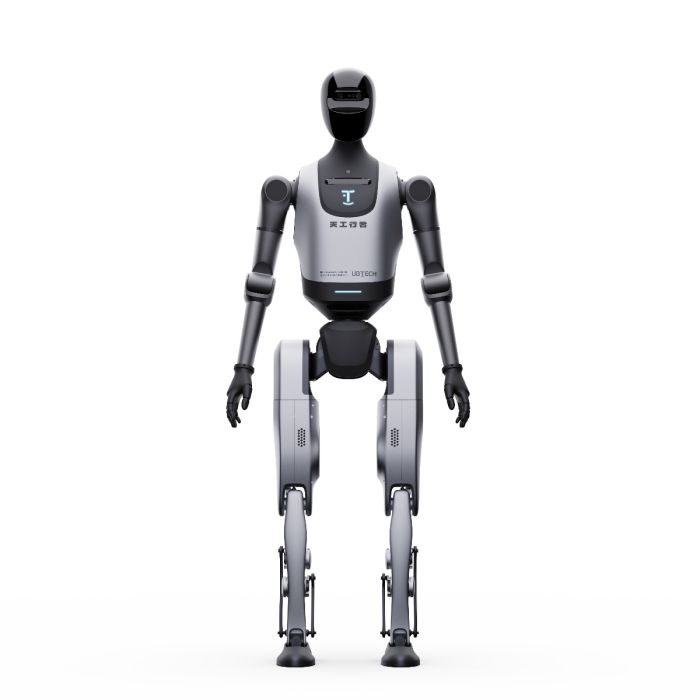
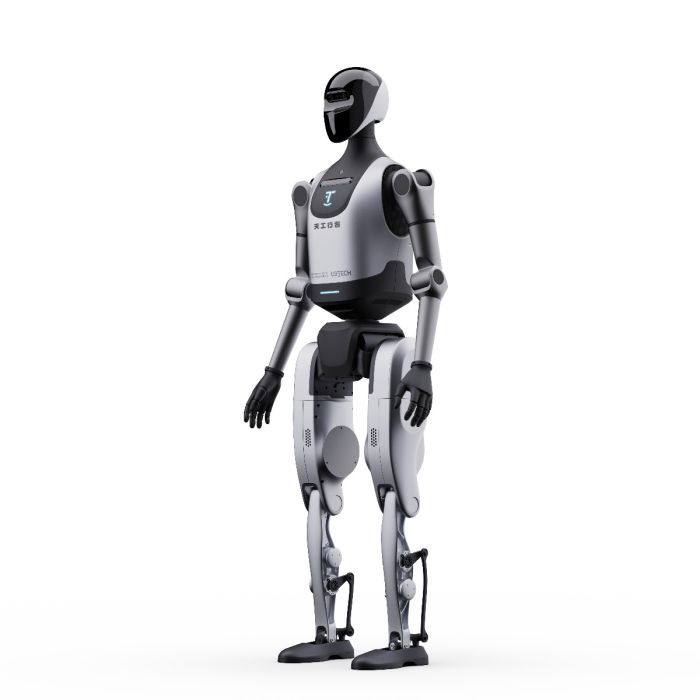
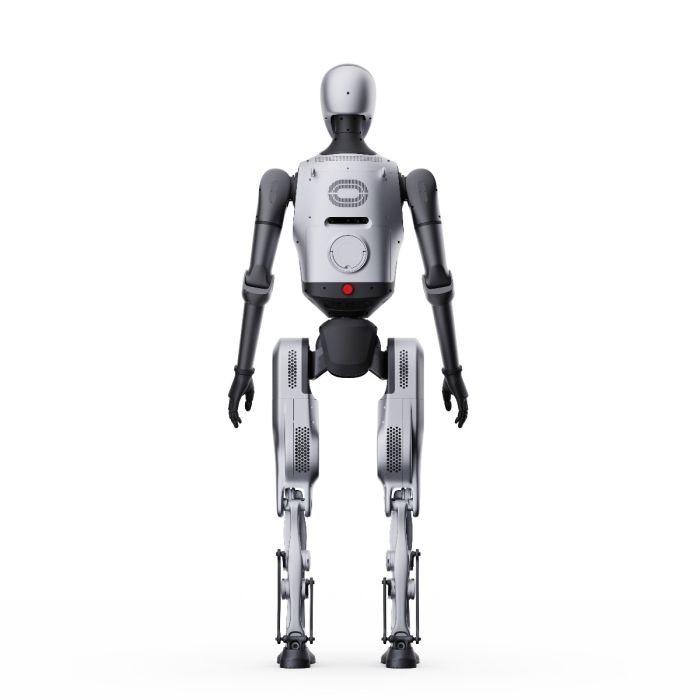
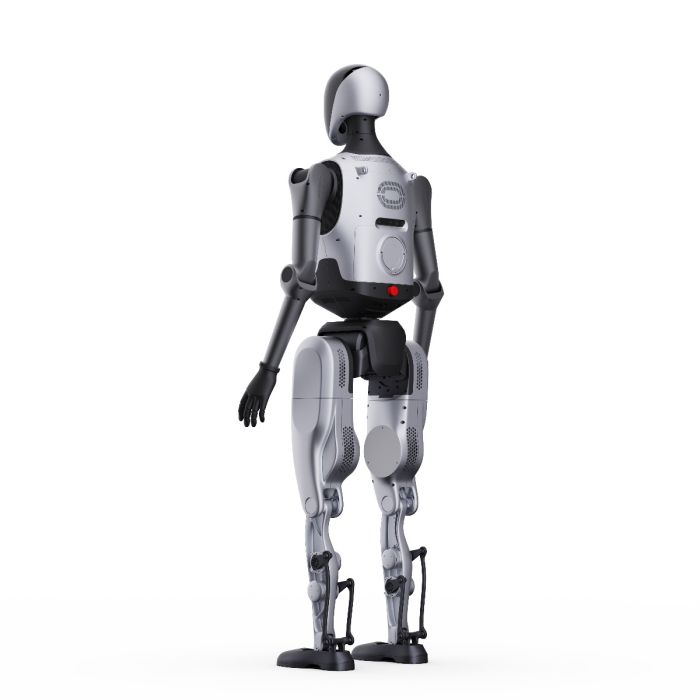
The Walker Tienkung VV is UBTECH’s Voice & Vision humanoid, identified as TK2201 in its documentation. The published configuration has 21 integrated joints, 1730 ± 10 mm height and 68 kg net weight. Its speech-development framework supports separate offline and online workflows.
Explore Related
Related products, categories and research.
UBTECH Walker Tienkung VV voice and vision humanoid
The UBTECH Walker Tienkung VV identifies UBTECH’s Voice & Vision variant, model TK2201. It is a full-size research and education humanoid with a configuration distinct from both the base Walker Tienkung and the Embodied Intelligence version.
Variant selection matters when developing an application. The available joints, computing and interfaces determine what a program can control and observe. Use the Voice & Vision documentation when planning this platform rather than assuming the capabilities of the more articulated EI model.
UBTECH Walker Tienkung VV humanoid specifications
| Product variant | Walker Tienkung · Voice & Vision |
|---|---|
| Documented model | TK2201 |
| Published height | 1730 ± 10 mm |
| Net weight | 68 kg |
| Integrated joints | 21: four per arm, one waist joint and six per leg |
| Documented arm span | 535 mm |
UBTECH’s comparison lists 42 joints for the TK2301 Embodied Intelligence variant and 20 for the TK2101 base variant. Those counts should not be transferred to this product. Match the robot identification and software revision to the relevant manual before choosing a development example.
UBTECH Walker Tienkung VV speech workflows
UBTECH’s tkvoice framework follows a speech-recognition, language-model and text-to-speech pipeline. Its documentation identifies an iFLYTEK RK3588 AIUI multimodal development kit for EI and VV platforms.
The offline branch connects locally deployed services and currently supports Chinese. The online branch uses Microsoft Azure speech services and an LLM service compatible with the OpenAI API. Language support in that branch depends on the selected external providers.
These are different deployment choices. Confirm the required software, service access and network arrangements before selecting one. A cloud-based demonstration should not be described as an offline multilingual feature, and access to a framework does not establish that external service charges are included.
UBTECH Walker Tienkung VV research robot development
Build a representative dialogue for the intended environment. Define the questions to handle, the information the application can use and the point at which a person assists. Evaluate recognition and playback with the speaker in the intended position and with realistic background noise.
Keep recognition, response generation and speech playback separate during troubleshooting. This makes it easier to identify whether a poor interaction comes from audio capture, the application’s information or the output stage. Document the selected service configuration alongside the software build.
UBTECH Walker Tienkung VV education robot applications
For a vision project, define the required observations and how they will be associated with robot actions. Camera access, image timing and application interfaces should be checked against the documentation for the delivered revision.
Begin with an observation task before combining perception with body movement. Record the scene, expected output and evaluation conditions so that results can be compared across runs. A product’s Voice & Vision designation does not establish compatibility with every third-party perception model.
UBTECH Walker Tienkung VV app compatibility
The documented Walker Tienkung Android app supports status monitoring, network configuration and robot operations. Its versioned guide specifies Android 10.0 or later and describes text broadcasting with Chinese, English or mixed Chinese-English input.
App language, text broadcasting and the tkvoice development framework are separate features. Check which workflow and software version a demonstration uses before making a language-support assumption. Agree the supplied documentation and development access when defining the project scope.
Buyer questions
Is this the 42-joint EI variant?
No. The manufacturer’s comparison identifies Voice & Vision as TK2201 with 21 integrated joints.
Does offline speech support every language?
No. The documented offline branch currently supports Chinese. The online branch’s language support depends on the connected providers.
Where can the configuration be checked?
Read UBTECH’s product composition comparison and tkvoice overview. Compare other humanoid platforms by exact variant and development task.
Related products
-
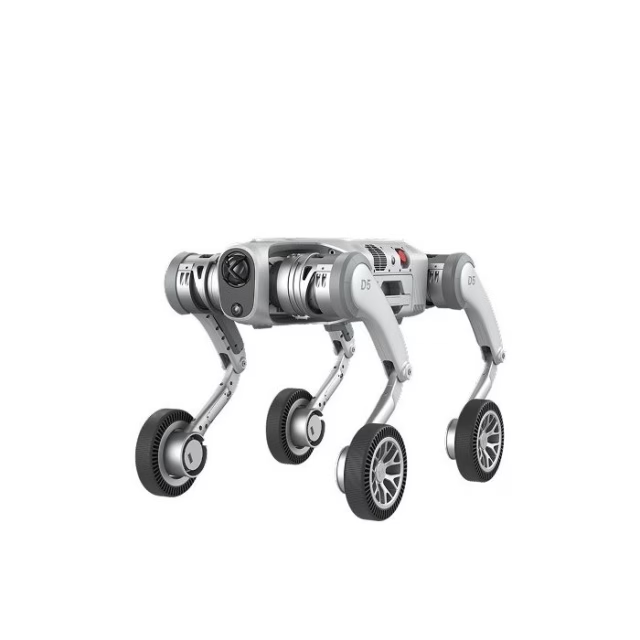 PUDU ROBOTICSAdd to Cart — $50,397.00
PUDU D5-W Wheeled Quadruped Robot Dog
-
-
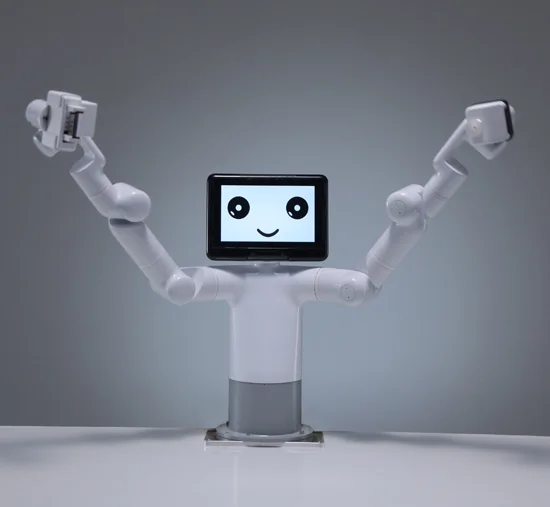 ELEPHANT ROBOTICSAdd to Cart — $7,199.40
Elephant Robotics Mercury Humanoid Robot B1 (4011300002)
-
Recently viewed
Add AI Robot Supplier as a preferred source on Google.