Warehouse Robots: What NAPA’s Hai Robotics Project Means for Buyers
 airobot_admin
•
Workstation Hardware Research
•
Updated October 25, 2026
•
13 min read
Performance intelligence for workstation buyers.
Warehouse automation / October 2026 analysis Warehouse robots: choose the system around the inventory and workflow Warehouse robots are part of a broader fulfillment system involving inventory, storage, transport, picking and dispatch. NAPA's recent selection of Hai Robotics and Hy-Tek Intralogistics provides a useful example of…
Warehouse automation / October 2026 analysis
Warehouse robots: choose the system around the inventory and workflow
Warehouse robots are part of a broader fulfillment system involving inventory, storage, transport, picking and dispatch. NAPA’s recent selection of Hai Robotics and Hy-Tek Intralogistics provides a useful example of why those functions need to be evaluated together.
This guide examines the announcement, separates different robot roles and explains eight checks before purchasing equipment or commissioning an automated storage project.
Read the news analysis Discuss your warehouse workflowWhat NAPA’s announcement says about warehouse robots
On 15 October 2026, Hai Robotics and Hy-Tek Intralogistics announced their selection for a NAPA Auto Parts flow-center automation project. The release describes a multi-robot solution using the HaiPick portfolio, with Hy-Tek acting as systems integrator.
The partners also described evaluating the technology at Hy-Tek’s Innovation Lab during the design process. Their stated project objectives include storage density, throughput and fulfillment accuracy.
Read the official Hai Robotics announcement.
The release establishes a selected solution and pre-deployment evaluation. It does not provide measured operating improvements from a completed NAPA installation.
For buyers of warehouse robots, the useful lesson is the connection between inventory requirements, system design and testing. The technology needs to fit the operation, including the items and exceptions that do not resemble the easiest demonstration.
Build the requirements before requesting equipment prices
Provide your inventory profile, order patterns, layout and current bottlenecks. Ask which functions the proposed automation covers and which remain manual.
Request warehouse robotics guidanceAutomated storage and retrieval: specify the complete system
Automated storage and retrieval concerns placing inventory into defined storage locations and bringing it back when needed. The equipment, containers, storage structure, software and workstations need to operate as a coordinated system.
Hai Robotics presents its HaiPick systems as goods-to-person storage and retrieval solutions. The appropriate configuration depends on the inventory and facility requirements rather than the robot count alone.
When evaluating warehouse robots, identify the storage unit. Is the system handling individual items, totes, cartons or another carrier? Confirm the permitted dimensions, load, condition and identification method for that unit.
Include replenishment as well as order retrieval. A system can appear productive while presenting stocked containers, yet require substantial work to receive goods, resolve discrepancies and restore depleted inventory.
Ask for a complete process drawing that shows receiving, storage, workstations, exceptions and dispatch handovers. This makes the limits of the quoted system easier to understand.
Goods-to-person automation: evaluate the workstation as well as the robot
Goods-to-person automation changes how inventory reaches an operator or another processing station. The business result depends on what happens after the container arrives, including identification, picking, confirmation and release.
A warehouse robots proposal should define the workstation task in detail. State whether the operator handles one order, several orders or a replenishment activity, and identify the checks required before the next container is requested.
Observe representative work rather than assuming a uniform processing time. A small, clearly labelled item can take less effort than a difficult-to-identify component or a product requiring special handling.
Measure waiting conditions separately. The workstation may wait for inventory, while a robot elsewhere waits for a free destination. Both can affect output, but they require different remedies.
Measure completed work
Use correctly confirmed order lines or another agreed output measure. Container presentations alone may not describe the work completed.
Keep exceptions visible
Record shortages, unreadable labels, damaged containers and manual reviews. Include the effort needed to resolve them.
Autonomous mobile robots: distinguish transport from storage
Autonomous mobile robots can support the movement of materials between defined locations. A transport task should be specified separately from inventory storage, retrieval and order processing.
The PUDU T300 Standard Industrial Delivery Robot is a transport-platform reference to evaluate against the required load, handover and route. PUDU lists the T300 within its official industrial delivery range.
The PUDU T150 industrial delivery robot is another configuration-specific transport enquiry. Confirm its exact supplied hardware and supported task before comparing it with a different model.
These warehouse robots should not be treated as direct substitutes for an integrated rack-based storage and retrieval system. The relevant comparison is which part of the process each proposal performs.
For a transport application, define who loads the carrier, confirms arrival and removes the goods. If those handovers remain manual, keep them in the operating model and acceptance test.
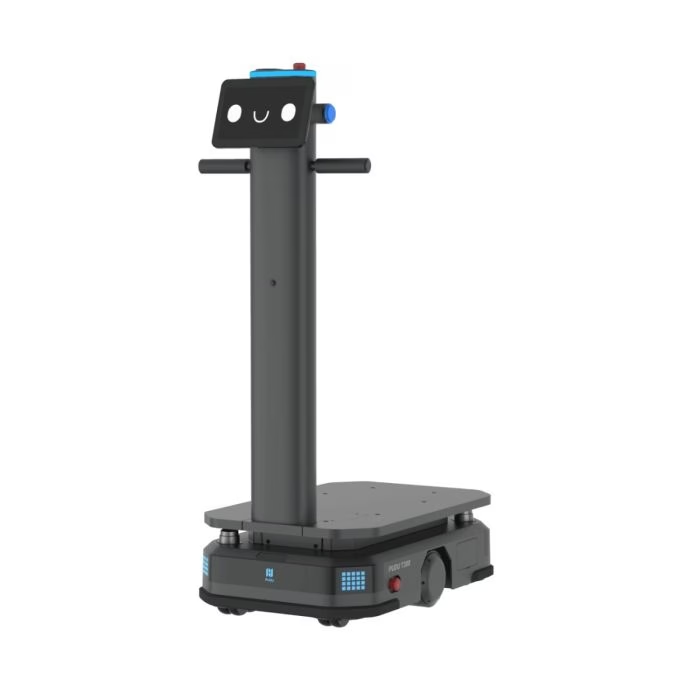
Unloading warehouse robots serve another part of the process
Inbound unloading is a separate automation task from storing inventory or transporting a loaded carrier. It can involve identifying cases inside a trailer or container and transferring them onto a receiving conveyor.
Boston Dynamics describes Stretch for this role on its official trailer-unloading page. The platform combines case handling with mobility for the intended unloading application.
Review the Boston Dynamics Stretch warehouse robot as a separately assessed inbound-equipment enquiry. Confirm freight eligibility, receiving layout, conveyor interface and the exact commercial scope.
For warehouse robots at the dock, include the condition of incoming cases and how they are presented. The process also needs a route for damaged, unsupported or uncertain freight.
Measure what the receiving operation can accept after unloading. Increasing the release of cases from a container may simply move the waiting work to scanning, sorting or putaway if those stages are not included in the design.
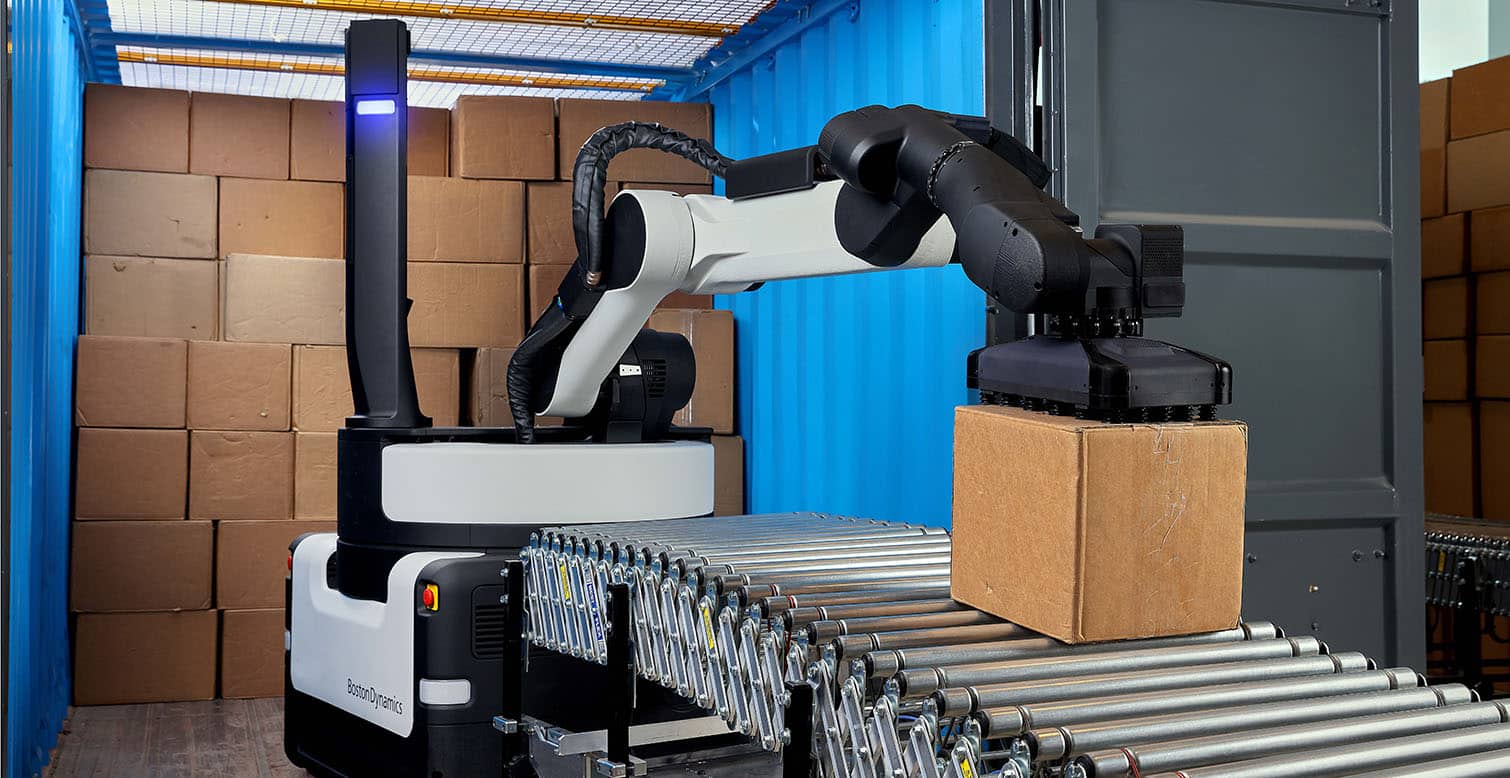
Compare warehouse robots by the task they actually complete
| Equipment approach | Primary task to evaluate | Important boundary |
|---|---|---|
| Automated storage and retrieval system | Store and retrieve the defined inventory units. | Confirm containers, storage structure, software and workstation scope. |
| Industrial delivery AMR | Move the specified load between handover points. | Identify loading, unloading and inventory-confirmation responsibilities. |
| Trailer-unloading robot | Transfer eligible cases into the receiving process. | Confirm freight range, dock layout and downstream capacity. |
| Robotic picking station | Identify, grasp and transfer supported items. | Specify perception, tooling, order confirmation and exceptions. |
A warehouse robots purchase should compare equivalent work. A transport-platform price does not describe the cost of a storage system, and a storage retrieval rate does not establish the output of a complete order-picking process.
Where the project combines several equipment types, ask for one coordinated process model. It should show the handovers and identify who resolves a failure between systems.
Inventory data can determine whether warehouse robots fit the operation
Provide a representative inventory profile before selecting equipment. Include dimensions, mass, packaging, handling restrictions and demand variation. Average values alone can hide the items that require a different route.
For warehouse robots, separate the number of product references from the number of stored units and daily transactions. Those figures describe different requirements and should not be substituted for one another in a capacity discussion.
Identify frequently requested items, slow-moving inventory and products with unusual handling needs. Ask how the proposed configuration accommodates that mix and how it responds when the demand profile changes.
Keep oversize or unsupported items visible in the design. A project can be commercially useful while leaving some inventory outside the automated system, provided the remaining process and labour are included in the calculation.
Retain the data used to size the proposal. Later comparisons are more meaningful when the team can distinguish a change in demand from a change in equipment performance.
Warehouse robot integration: define the software handovers
Warehouse robot integration connects physical movement to order and inventory records. The project needs a clear definition of which system requests work, which system executes it and which event confirms completion.
For warehouse robots, ask how jobs and inventory units are identified. The team should be able to trace a request from the original order through the movement and final confirmation.
Include interrupted communications, duplicated requests and uncertain completion states in the integration discussion. A robot that reaches a location successfully does not, by itself, establish that the inventory or order record was updated correctly.
Assign ownership for each interface across the warehouse software supplier, robot provider and integrator. Agree where support begins when the physical equipment appears operational but work is not flowing.
Keep operational screens understandable. Staff need to know whether work is waiting for stock, a free workstation, a destination, equipment recovery or a decision from another system.
Layout, routes and charging affect autonomous mobile robots
A transport assessment should include the loaded vehicle, not only the robot base. Record the load dimensions, handover points, shared routes, doorways and available space around destinations.
For warehouse robots, the most convenient empty route may not represent normal operation. Include busy periods, waiting at handovers and temporary obstructions in the feasibility discussion.
Confirm the exact operating environment and site requirements with the supplier. The proposed use needs an application-specific assessment covering interaction with people, other vehicles and installed equipment.
Charging and maintenance should appear in the fleet plan. Ask how equipment becomes available again after charging, service or a fault, and how work is allocated while a unit is unavailable.
Evaluate a representative mission rather than relying on a maximum travel-speed figure. Loading, waiting, unloading and charging can affect completed work as directly as movement time.
8 smart warehouse robots checks for better fulfillment
- Define the completed task. State whether the project covers unloading, transport, storage, retrieval or picking.
- Provide the inventory profile. Include dimensions, weights, demand variation and unsupported-item candidates.
- Map all handovers. Show receiving, replenishment, workstations, exceptions and dispatch connections.
- Confirm the software chain. Identify job requests, inventory records, confirmations and interface ownership.
- Test representative demand. Include peak periods, mixed workloads and normal operating interruptions.
- Plan unavailable equipment. Include charging, maintenance, faults and the remaining operating route.
- Agree acceptance evidence. Measure correct completed work, interventions, inventory accuracy and recovery.
- Price the lifecycle. Include infrastructure, integration, training, software, spares and support.
Use these checks when comparing warehouse robots proposals. A lower equipment price can represent a narrower supplied scope, while a higher robot count may reflect a different process design.
Request a workflow-based equipment shortlist
Send your inventory data, order profile, site layout and current process. Ask which functions each proposed component performs and what evidence is needed before the design is accepted.
Discuss warehouse automation equipmentAcceptance testing for automated storage and retrieval
Automated storage and retrieval should be tested as part of the agreed operational process. Include replenishment, retrieval, workstation processing and exception handling where they fall within the supplied scope.
A warehouse robots acceptance test needs a representative workload and clear definitions. Measure completed order work or another agreed outcome rather than selecting only the fastest equipment movement.
| Test area | Include | Record separately |
|---|---|---|
| Inventory coverage | Representative products and containers. | Unsupported items and manual preparation. |
| Demand variation | Normal and peak workloads. | Waiting, backlog and completion time. |
| Accuracy | Correct inventory and order confirmations. | Discrepancies, manual reviews and corrections. |
| Availability | Charging, maintenance and agreed interruptions. | Unavailable equipment and resulting delays. |
| Recovery | Representative fault and restart scenarios. | Operator effort, duration and unresolved jobs. |
Agree the sample, operating period and permitted exclusions before the trial. Keep the layout, software, robot configuration and workload data with the results so later changes can be compared meaningfully.
Plan the transition before warehouse robots go live
Introducing automation can require changes to containers, location records, workstations and staff routines. The project needs a transition plan as well as an installation schedule.
For warehouse robots, identify how existing stock becomes available in the new process and how inventory accuracy is checked. The team should understand what happens to orders while equipment is commissioned or a section is unavailable.
Train staff on normal operation and realistic exceptions. Include the tasks that remain manual, the meaning of status messages and the route for escalating a problem.
Keep a controlled change process after acceptance. New product types, altered containers or software updates can affect a previously validated workflow. Agree which changes require another test.
Compare warehouse robots costs using equivalent supplied scopes
The installed cost can include robots, storage structures, containers, workstations, charging, networks, software and integration. Training, maintenance and continuing support may create additional costs after go-live.
A warehouse robots business case should identify the present constraint and the portion the proposed system can address. Improved storage density, reduced travel and faster order completion are different benefits and require different evidence.
Include remaining human work. Operators may still replenish inventory, handle exceptions, pack orders, maintain equipment and manage discrepancies. Keep those activities visible when comparing operating models.
Ask what expansion requires. Adding equipment may also require software capacity, workstation changes, infrastructure or further commissioning. A staged proposal should explain those dependencies.
Where evidence is incomplete, use a feasibility study and a representative trial before a larger commitment. Each stage should answer a defined question rather than simply repeat a favourable demonstration.
Internal product links for warehouse robots enquiries
The following AI Robot Supplier products support different warehouse tasks. They are not presented as the HaiPick system selected by NAPA or as a prevalidated combined installation.
- PUDU T300 Standard Industrial Delivery Robot for a configuration-specific internal-transport assessment.
- PUDU T150 Light-Payload Industrial Delivery Robot for a separately specified transport workflow.
- Boston Dynamics Stretch Warehouse Robot for an independently assessed inbound case-handling application.
- AI Robot Supplier robotics catalogue for broader equipment research.
- Request warehouse robot sourcing and configuration guidance with the exact workflow and destination requirements.
Before purchasing warehouse robots, request written confirmation of the model, accessories, supported application, supply route and service responsibilities. A catalogue listing does not establish compatibility with an existing storage system or software platform.
Warehouse robots frequently asked questions
What are warehouse robots?
They are robotic systems used for defined warehouse tasks such as unloading, internal transport, storage, retrieval or picking. The equipment should be selected by the work it completes and the process it connects to.
What did NAPA select Hai Robotics and Hy-Tek to do?
The official announcement describes a flow-center automation project using a multi-robot HaiPick solution, with Hy-Tek acting as systems integrator. It also describes evaluation during the design stage. Review the release for the announced scope.
Are the announced benefits already measured at NAPA?
The release presents project objectives and pre-deployment evaluation. It does not provide measured operating improvements from a completed NAPA installation. Those objectives should not be presented as independently verified results.
Are autonomous mobile robots the same as an AS/RS?
A mobile robot may perform a transport role, while an automated storage and retrieval system includes a coordinated storage process. Compare the supplied functions, equipment and software rather than assuming the labels describe equivalent scope.
Does goods-to-person automation remove all manual work?
The remaining work depends on the configuration. Operators may still pick, replenish, inspect, pack or resolve exceptions. Include those duties in the operating model and acceptance criteria.
Can PUDU T300 replace a rack-based storage system?
Its industrial delivery role should be assessed separately from storage and retrieval. Define the transport task, load, handovers and software requirements. Do not assume that a transport-platform purchase provides a complete storage application.
What does Boston Dynamics Stretch do?
Boston Dynamics presents Stretch for warehouse case handling, including trailer and container unloading. Confirm the eligible freight, site requirements, receiving interface and exact supplied scope for your proposed application.
What should warehouse robot integration include?
Define job requests, inventory identification, physical handovers, completion confirmation and recovery. Assign responsibility for interfaces and support when equipment, software and operational processes are supplied by different parties.
How much do warehouse robots cost?
Request an itemised proposal matched to the workflow. Include hardware, infrastructure, software, integration, training and support. This article supplies no unverified installed price or guaranteed operating-cost saving.
What should I send with an enquiry?
Provide the inventory profile, load dimensions, order patterns, current process, layout and required outcome. Include the delivery country, target date and any existing warehouse software or equipment that must be integrated.
Official warehouse robots sources
- Hai Robotics’ official NAPA and Hy-Tek announcement .
- Hai Robotics’ storage and retrieval system overview .
- PUDU Robotics’ official industrial delivery product range .
- Boston Dynamics’ trailer-unloading application information .
- Boston Dynamics’ explanation of representative warehouse testing .
Research checked on 25 October 2026. Manufacturer announcements and product roles are attributed to official sources. Application examples are planning scenarios, not claimed hands-on tests or guaranteed deployment results.
Start with the work your operation needs completed
Plan your warehouse robots equipment scope
Send your inventory, order profile, layout and current bottleneck. Ask AI Robot Supplier to discuss transport, unloading and robotics options with clear sourcing and integration responsibilities.
 ZOTAC GAMING GeForce RTX 5090 AMP Extreme INFINITY
 PNY GeForce RTX 5070 Ti 16GB ARGB EPIC-X RGB Overclocked Triple Fan
 NVIDIA GeForce RTX 3090 Founders Edition 24GB
 Sapphire NITRO+ Radeon RX 7800 XT 16GB