Warehouse Automation: What to Buy First
 •
Workstation Hardware Research
•
Updated October 28, 2026
•
7 min read
Performance intelligence for workstation buyers.
Warehouse automation can raise throughput and accuracy when robots, software, safety, and support are selected around a defined operating case first.
A warehouse that misses its shipping cutoff because operators spend too long walking between pick faces has a different problem from one with pallet congestion at receiving. Both may benefit from warehouse automation, but they should not buy the same equipment or start with the same project. The productive first step is to identify the constraint, quantify it, and match technology to the operating case.
For procurement and operations teams, the purchase decision extends beyond a robot’s published speed, payload, or battery capacity. The selected system must fit the facility, integrate with current workflows, meet safety requirements, and arrive with documented configuration, accessories, warranty coverage, and service expectations. That discipline is what separates a useful deployment from an expensive pilot that never reaches daily operations.
Start Warehouse Automation With the Constraint
Automation should address a measurable source of lost capacity, errors, labor exposure, or service inconsistency. In many facilities, travel time is the first candidate. Associates may walk miles per shift transporting totes, cartons, or materials between storage, workstations, packing, and outbound staging. Autonomous mobile robots, or AMRs, can reduce that non-value-added travel while allowing people to focus on picking, packing, inspection, or exception handling.
Other facilities face a different bottleneck. A high-volume receiving area may need pallet movement, replenishment, and put-away coordination. A kitting operation may need repeatable delivery of parts to work cells. A distribution center with frequent SKU changes may need flexible routing rather than fixed conveyor infrastructure. The workflow determines whether mobile robots, conveyors, collaborative robots, pallet-handling vehicles, sortation equipment, or a combination is appropriate.
Before requesting quotes, establish a baseline for throughput per hour, order cycle time, travel distance, error rate, labor hours, peak volumes, and downtime. Include the variation, not just the average. A system designed for normal Tuesday volume may fail to support seasonal peaks or late inbound arrivals. A clear baseline also gives finance and operations a common way to assess the results after deployment.
Select the Right Automation Layer
Warehouse technology is not a single category. Buyers should evaluate the automation layer that best fits the current process and the intended scale.
AMRs for Flexible Material Movement
AMRs are often a practical entry point when material flow changes frequently or the building cannot justify fixed infrastructure. They navigate dynamically using onboard sensors and maps, making them suitable for tote transport, cart movement, replenishment support, goods-to-person workflows, and point-to-point delivery.
Their flexibility comes with operational requirements. Travel lanes need to be reasonably clear, charging must be planned, and robot traffic has to coexist with pedestrians, forklifts, doors, and staging areas. A nominal robot payload is not enough information. Buyers should confirm the top module, load dimensions, center of gravity limits, floor transitions, ramp grades, and whether the platform can perform the required pickup and drop-off method.
Goods-to-Person Systems for Pick Density
Where order picking dominates labor cost, goods-to-person systems can reduce walking substantially by bringing inventory to fixed workstations. These systems may use AMRs, storage racks, bins, conveyors, or vertical storage equipment depending on the inventory profile.
They are most effective when SKU velocity, storage formats, replenishment rules, and station ergonomics are well understood. Fast-moving items, small parts, and repetitive order profiles can be strong candidates. Oversized, irregular, or low-frequency inventory may remain better suited to conventional picking. The goal is not to automate every SKU. It is to automate the portion of the operation where movement and repetition create the greatest return.
Collaborative Robots for Repeatable Work Cells
Collaborative robots can support packing, labeling, inspection, case handling, and machine tending where motions are repetitive and product presentation is controlled. They work best when the incoming item orientation, required tools, cycle time, and exception process have been clearly defined.
A cobot may be technically capable of lifting a carton, yet still be unsuitable if carton dimensions vary too widely, labels appear in inconsistent locations, or an operator must intervene constantly. End effectors, machine vision, guarding decisions, and workstation design are part of the purchase scope, not optional details to address later.
Pallet and Heavy-Load Automation
Pallet transport and palletizing can create meaningful gains in facilities with stable, repetitive flows. Options include autonomous pallet movers, automated guided vehicles, robotic palletizers, and conventional conveyor systems. These projects often require more careful analysis of floor condition, rack interfaces, pallet quality, fork geometry, docking accuracy, and pedestrian separation.
Fixed systems can deliver predictable throughput in stable processes, while AMRs and autonomous pallet movers offer greater layout flexibility. Neither is universally superior. A facility with a mature, high-volume flow may benefit from fixed infrastructure; a changing operation may place a higher value on reconfiguration.
Treat Software and Integration as Core Scope
The robot is only one part of the operating system. Warehouse automation depends on reliable task creation, dispatch, traffic management, inventory status, exception handling, and reporting. Buyers should determine how the fleet management platform will connect to the warehouse management system, enterprise resource planning system, manufacturing execution system, or other control layer.
Ask whether integration uses standard APIs, file exchange, middleware, or custom development. Confirm which party owns each interface, what data is exchanged, and how failures are handled. For example, if a pick task is canceled after an AMR has started moving, the system needs a defined response. If a robot cannot reach a destination because a lane is blocked, a supervisor needs visibility and a recovery workflow.
Do not treat integrations as an informal implementation detail. Request a written statement of scope covering interfaces, acceptance criteria, responsibilities, test conditions, and change-control procedures. Software licenses, fleet manager capacity, analytics modules, remote support access, and future expansion rights should also be commercially clear.
Validate the Site Before Committing
A productive site assessment considers more than a floor plan. Measure aisle widths, turning areas, doorway clearances, elevator dimensions, slopes, thresholds, lighting, wireless coverage, and floor quality. Review where people, forklifts, reach trucks, and robots will intersect. Map charging locations and confirm available electrical capacity.
Safety should be designed around the actual traffic pattern rather than assumed from a product brochure. Confirm applicable standards and local requirements with qualified safety and engineering stakeholders. Depending on the system, this can involve risk assessments, speed restrictions, designated zones, warning devices, physical separation, emergency stops, and operating procedures for manual recovery.
A pilot can be valuable, but only when it represents operational reality. Testing one robot in an empty aisle does not validate a fleet operating during shift changes, peak receiving, or heavy forklift traffic. Define pilot success criteria in advance, including uptime, task completion rate, throughput, operator interventions, and integration performance.
Build a Procurement Package That Prevents Surprises
High-value robotics purchases require product-specific confirmation. A quotation should identify the exact platform, quantity, payload class, navigation configuration, top modules, batteries, chargers, software, integration scope, spare parts, and included accessories. It should also state whether equipment is new, demonstration, refurbished, or otherwise conditioned.
Commercial terms matter as much as technical specifications. Confirm availability, lead time, shipping origin, delivery method, Incoterms where applicable, commissioning support, warranty duration and exclusions, training, service response expectations, and the process for replacement parts. International buyers should also clarify export documentation, import responsibilities, and local electrical or regulatory requirements.
For fleet orders, ask how the supplier will manage configuration consistency. A mixed fleet with different firmware, battery revisions, or top modules can create avoidable support complexity. Establish acceptance tests before shipment and at site delivery, particularly when custom attachments or software interfaces are involved.
AI Robot Supplier supports this type of procurement process through direct purchase options, formal quotations, special orders, and supplier-confirmed sourcing for deployment-specific robotics requirements. The value is not simply locating a platform. It is obtaining clear confirmation of the configuration and commercial conditions that apply to the order.
Plan for People, Maintenance, and Scale
Warehouse automation changes job design. Operators may transition from travel-heavy work to exception resolution, workstation tasks, robot recovery, inventory verification, or fleet coordination. Early involvement from supervisors and frontline teams usually improves adoption because they understand the practical conditions that affect daily performance.
Maintenance planning should cover routine inspection, cleaning, battery procedures, wheel and sensor checks, software updates, spare-part stocking, and escalation paths. Consider whether internal technicians can handle first-line support or whether the operating model requires a service agreement. A low purchase price can become costly if a critical platform has limited parts access or unclear field support.
Finally, buy for the next sensible phase, not an imagined fully autonomous facility. A first deployment should establish a repeatable process, reliable integration, and measurable operating benefits. Once those foundations are in place, expanding the fleet or adding adjacent workflows becomes a controlled procurement decision rather than a leap of faith.
 NVIDIA CMP 170HX 8GB Graphics card
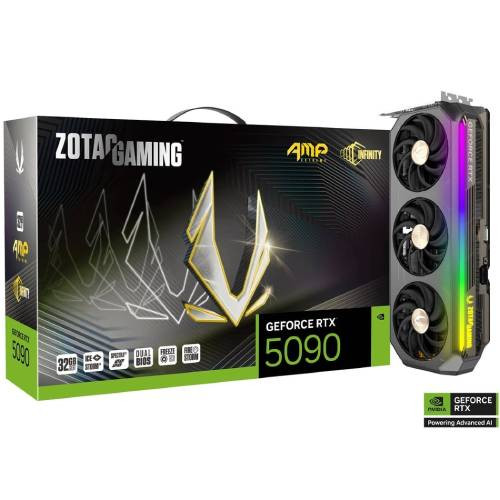 ZOTAC GAMING GeForce RTX 5090 AMP Extreme INFINITY
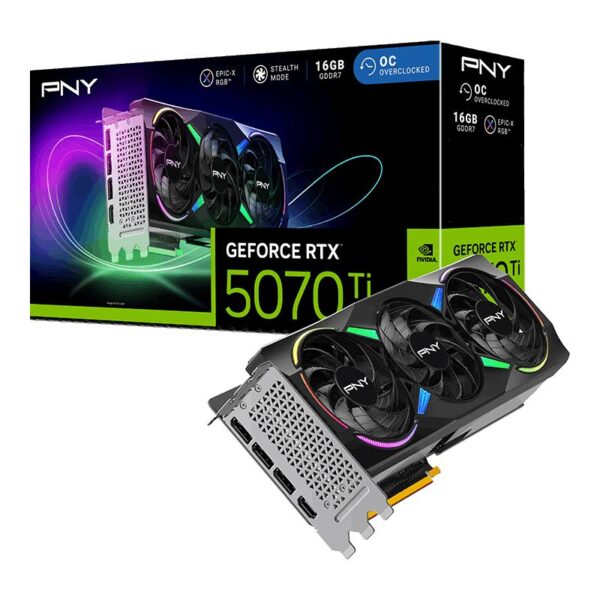 PNY GeForce RTX 5070 Ti 16GB ARGB EPIC-X RGB Overclocked Triple Fan
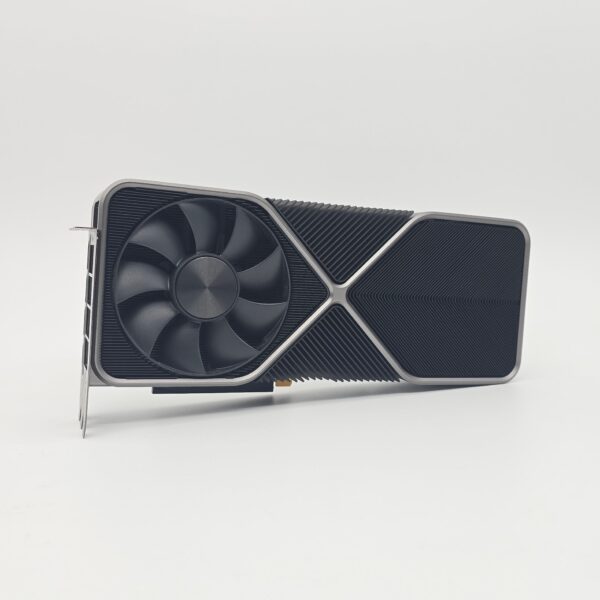 NVIDIA GeForce RTX 3090 Founders Edition 24GB