Best Warehouse Robots 2026: Geek+ vs SEER Robotics vs PUDU
 airobot_admin
•
Workstation Hardware Research
•
Updated September 8, 2026
•
16 min read
airobot_admin
•
Workstation Hardware Research
•
Updated September 8, 2026
•
16 min read
Performance intelligence for workstation buyers.
Best warehouse robots 2026 buyers should consider now range from compact autonomous mobile robots to goods-to-person picking systems, autonomous forklifts, high-density tote-to-person solutions and 2,000 kg pallet-handling robots. Geek+ P500R goods-to-person warehouse robot. Image source: Geek+. The warehouse robotics market has moved beyond the question of…
Best warehouse robots 2026 buyers should consider now range from compact autonomous mobile robots to goods-to-person picking systems, autonomous forklifts, high-density tote-to-person solutions and 2,000 kg pallet-handling robots.
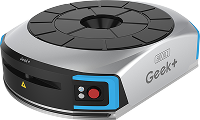
The warehouse robotics market has moved beyond the question of whether AMRs work. In 2026, the more important questions are which robot architecture fits the workflow, how the fleet connects to WMS or MES software, whether mixed robot brands can be orchestrated together, how charging and exceptions are managed, and whether the promised throughput survives real-world operation.
Geek+, SEER Robotics and PUDU approach warehouse automation from different directions. Geek+ has particularly deep coverage in goods-to-person fulfillment, tote-to-person storage and intralogistics. SEER Robotics combines autonomous mobile robots, pallet trucks, stacker forklifts and robot-management software. PUDU has expanded from its T300 industrial transport AMR into heavier pallet automation with the new MP2000.
This best warehouse robots 2026 guide compares the systems and robot types most relevant to e-commerce fulfillment, 3PL warehouses, manufacturing logistics, pallet transport, line feeding and high-density storage. It also covers warehouse robot prices 2026, Geek+ vs SEER Robotics vs PUDU, AMR vs AGV, fleet interoperability, WMS integration and real operator lessons.
To compare systems already available through AI Robot Supplier, visit our warehouse robots for sale category.
How we selected the best warehouse robots 2026: this comparison uses current manufacturer specifications, September 2026 product information, AI Robot Supplier listings, payload, navigation architecture, handling method, warehouse fit, fleet software, integration requirements and recent operator discussions. Recommendations are use-case comparisons rather than claims that every system was physically tested by AI Robot Supplier.
Best Warehouse Robots 2026: Quick Comparison
| Robot / System | Best For | Payload / Capacity | Key Strength | Buying Model |
|---|---|---|---|---|
| Geek+ P500R | Goods-to-person picking | 600 kg | Rack-to-person fulfillment | Project quotation |
| Geek+ P-Series | Scalable shelf-to-person fulfillment | Up to 1,200 kg across variants | Multiple picking robot sizes | Project quotation |
| Geek+ M200C | Light intralogistics | 200 kg | Laser SLAM, QR and vision navigation options | Project quotation |
| Geek+ MP1000R | Heavy intralogistics | 1,000 kg | Heavy-load transport in compact spaces | Project quotation |
| Geek+ RoboShuttle Hyper | High-throughput tote-to-person | 30 kg tote load | Up to 6,000 totes/hour per 1,000 m² | System quotation |
| SEER OneFork 300 | Narrow-aisle carrier transport | 300 kg | 500 mm body and laser SLAM | Project quotation |
| SEER SlimStack 1500 | Autonomous pallet stacking | 1,500 kg | Forklift automation and 10-hour endurance | Project quotation |
| PUDU T300 | Flexible industrial material delivery | 300 kg | VSLAM + LiDAR SLAM and building integration | $11,280 current listing* |
| PUDU MP2000 | Heavy pallet transport | 2,000 kg | 3D LiDAR-SLAM + VSLAM | Project quotation |
*AI Robot Supplier price checked September 2026. Prices, accessories, software, integration and availability can change. Most professional warehouse automation systems require a workflow-specific commercial quotation.
Which Are the Best Warehouse Robots 2026 Buyers Should Shortlist?
The best warehouse robots 2026 depend on the exact material-flow problem.
- Best goods-to-person ecosystem: Geek+ P-Series
- Best high-throughput tote-to-person technology: Geek+ RoboShuttle Hyper
- Best compact intralogistics AMR: Geek+ M200C
- Best 1,000 kg intralogistics AMR: Geek+ MP1000R
- Best narrow-body carrier robot: SEER OneFork 300
- Best autonomous stacker in this comparison: SEER SlimStack 1500
- Best flexible 300 kg industrial transport AMR: PUDU T300
- Best new heavy PUDU pallet platform: PUDU MP2000
The strongest buying process starts by identifying whether the warehouse needs picking automation, tote storage, line feeding, heavy carrier movement or pallet handling. Those workflows require different machines.
Warehouse Robotics Trends in 2026
The best warehouse robots 2026 are increasingly part of warehouse-wide automation systems rather than isolated mobile machines.
1. High-Throughput Tote-to-Person Automation
Geek+ launched RoboShuttle Hyper in August 2026 as its next-generation climbing tote-to-person system.
Geek+ publishes system throughput of up to 6,000 totes per hour per 1,000 m², workstation output of up to 800 totes per hour, storage racks up to 15 meters high and system scales exceeding thousands of robots.
That trend matters because e-commerce and micro-fulfillment increasingly require more throughput from the same floor area rather than simply adding more mobile robots.
Manufacturer reference: Geek+ RoboShuttle Hyper official specifications.
2. Heavy Pallet AMRs Are Getting Smarter
PUDU’s new MP2000 moves the company into much heavier pallet-handling applications.
The MP2000 is officially specified for loads up to 2,000 kg and uses 3D LiDAR-SLAM and VSLAM. PUDU publishes approximately 6 hours of battery life at maximum load and 12 hours without load.
This is a significant jump from lighter material-delivery AMRs and demonstrates how warehouse robots are expanding into workflows traditionally handled by forklifts and pallet trucks.
Manufacturer reference: PUDU MP2000 official specifications.
3. Mixed-Fleet Interoperability Is Becoming More Important
One of the most important 2026 developments is VDA 5050 Version 3.0.
The standard defines communication between mobile robots and fleet-control systems and is designed to support coordinated operation of heterogeneous robot fleets from different manufacturers.
Version 3.0 also adds stronger support for freely navigating mobile robots with higher levels of autonomy. This is important for buyers who do not want their entire warehouse locked permanently into one robot manufacturer.
However, VDA 5050 is an interface specification, not a complete safety or traffic-management solution. Buyers still need to evaluate fleet orchestration, deadlock handling, routing and facility integration separately.
Industry reference: VDA 5050 Version 3.0.
4. Software Is Becoming as Important as Robot Hardware
As robot fleets scale, traffic control, task assignment, congestion avoidance, charging and integration with WMS, WES, MES and ERP platforms become major parts of the project.
A warehouse can purchase excellent robot hardware and still get disappointing results if orders are prioritized incorrectly, pickup zones are blocked or charging creates fleet bottlenecks.
This is why the best warehouse automation robots should be evaluated together with their fleet-management software rather than as standalone machines.
1. Geek+ P500R — Best Goods-to-Person Picking Robot
The Geek+ P500R Picking Robot is one of the most relevant platforms in this best warehouse robots 2026 guide for shelf-to-person fulfillment.
Geek+ publishes a 600 kg maximum payload for the P500R configuration. Current manufacturer information lists loaded travel speeds up to approximately 2 m/s depending on revision, a minimum lifting time around 4 seconds and high-accuracy positioning.
The core idea is simple: instead of sending a worker through long aisles to locate stock, P-Series robots move compatible racks to picking stations.
Why P500R matters
- 600 kg published payload
- Designed for goods-to-person fulfillment
- Useful for small and medium-size items
- Rack-to-person movement reduces picker walking
- Part of a scalable P-Series ecosystem
- Suitable for e-commerce, retail and 3PL workflows
For warehouses where walking time is one of the largest productivity losses, a goods-to-person platform can be more valuable than a generic transport AMR.
Manufacturer reference: Geek+ P-Series official specifications.
2. Geek+ P-Series — Best Scalable Shelf-to-Person Ecosystem
Geek+ offers multiple P-Series configurations rather than treating the P500R as a one-size-fits-all product.
Across the range, Geek+ publishes variants supporting payload capacities up to approximately 1,200 kg. Different models are intended for different rack sizes, warehouse layouts and fulfillment profiles.
That matters when selecting the best warehouse robots 2026 because simply buying the highest-payload model can be inefficient if the warehouse uses lighter racks and smaller items.
Buyers should compare:
- Rack dimensions
- Maximum rack weight
- SKU velocity
- Picking-station design
- Orders per hour
- Number of active robots
- Charging strategy
3. Geek+ M200C — Best Compact Intralogistics AMR
The Geek+ M200C is designed around internal material transport rather than goods-to-person picking.
Geek+ officially publishes a 200 kg maximum payload, approximately 1.5 m/s maximum speed with load and navigation options including Laser SLAM, QR-code navigation and vision.
This makes M200C relevant to:
- Production-line feeding
- Workstation-to-workstation transport
- Light rack movement
- Factory intralogistics
- Material replenishment
- Flexible warehouse routing
For companies comparing the best warehouse robots 2026 for internal material flow rather than order picking, M200C is a more appropriate benchmark than P500R.
Manufacturer reference: Geek+ M-Series official specifications.
4. Geek+ MP1000R — Best Heavy Intralogistics AMR
The Geek+ MP1000R moves intralogistics into the 1-ton class.
Geek+ publishes a 1,000 kg payload, approximately 1.5 m/s travel speed and Laser SLAM-based navigation with additional localization options depending on configuration.
The MP1000R can work with carriers such as shelves, carts and pallets and is intended for manufacturing and warehouse material movement.
MP1000R is especially relevant for
- Heavy WIP transport
- Production logistics
- Finished-goods movement
- Heavy carrier transport
- Operations needing compact turning behavior
For best AMR robots comparisons involving loads around 1,000 kg, MP1000R deserves serious consideration.
Manufacturer reference: Geek+ MP1000R technical brochure.
5. Geek+ RoboShuttle Hyper — Best 2026 High-Throughput Tote System
RoboShuttle Hyper is one of the most significant additions to the best warehouse robots 2026 conversation.
Unlike a conventional floor AMR, RoboShuttle Hyper is designed to climb storage racks and retrieve totes directly.
Geek+ publishes:
- Travel speed up to 4.0 m/s unloaded
- Loaded travel speed up to 3.5 m/s
- 30 kg maximum payload
- Rack height up to 15 m
- Storage density above 50 totes/m²
- System throughput up to 6,000 totes/hour per 1,000 m²
- Workstation throughput up to 800 totes/hour
This makes the platform particularly interesting for micro-fulfillment, high-SKU e-commerce, cold-chain operations and facilities trying to maximize vertical storage density.
The system should be evaluated as a complete automation architecture rather than simply a robot purchase.
6. SEER OneFork 300 — Best Narrow-Body Carrier Robot
The SEER Robotics OneFork 300 is designed for narrow spaces and carrier movement.
SEER officially publishes a 300 kg rated load, 500 mm body width, approximately 800 mm minimum turning radius, laser-SLAM navigation and approximately 6 hours comprehensive battery life.
The system also incorporates depth-camera carrier recognition and multiple safety sensors.
Why OneFork 300 stands out
- Only 500 mm body width
- 300 kg rated load
- Laser SLAM
- AI carrier recognition
- Designed for narrow corridors
- Up to 6 hours published endurance
- Automatic charging option
This makes OneFork 300 particularly relevant to laboratories, electronics manufacturing, elevators and facilities where aisle width is a major constraint.
Manufacturer reference: SEER OneFork 300 official specifications.
7. SEER SlimStack 1500 — Best Autonomous Stacker Forklift
The SEER SlimStack 1500 addresses workflows that require pallet stacking rather than simple horizontal transport.
SEER officially publishes a 1,500 kg rated load, approximately 2,944 mm standard lifting height, laser-SLAM navigation and up to 10 hours comprehensive battery life.
The platform also includes pallet recognition, 3D obstacle avoidance and automatic charging support.
SlimStack 1500 is relevant when
- Pallets must be lifted and stacked
- The facility needs autonomous forklift workflows
- Narrow aisles matter
- Long shifts require multi-hour endurance
- Carrier recognition is required
For pallet-heavy operations, the best warehouse robots 2026 may therefore be autonomous forklifts rather than flat-top AMRs.
Manufacturer reference: SEER SlimStack 1500 official specifications.
8. PUDU T300 — Best Flexible 300 kg Industrial Transport AMR
The PUDU T300 Standard focuses on flexible point-to-point material transport.
PUDU officially publishes a 300 kg maximum payload, approximately 1.2 m/s maximum speed, VSLAM and LiDAR SLAM navigation, approximately 8 hours full-load runtime and approximately 12 hours no-load runtime.
The T300 also supports integration with:
- Elevators
- Automatic gates
- Turnstiles
- Remote call systems
- Enterprise software
- Secondary-development interfaces
AI Robot Supplier currently lists the T300 Standard at $11,280.
That makes T300 easier to evaluate as an individual AMR purchase than some large warehouse systems that are sold only as full project quotations.
Manufacturer reference: PUDU T300 official specifications.
9. PUDU MP2000 — Best New Heavy PUDU Pallet Robot
PUDU MP2000 is one of the strongest new entrants to the best warehouse robots 2026 comparison.
PUDU officially publishes:
- 2,000 kg maximum load
- 3D LiDAR-SLAM navigation
- VSLAM navigation
- Approximately 6 hours battery life at maximum load
- Approximately 12 hours battery life without load
- Fork configurations for common pallet dimensions
The robot is designed around heavy pallet movement and provides PUDU with a platform for workflows that previously would have required a much heavier autonomous forklift or conventional manual equipment.
For warehouses moving large pallets over repetitive routes, MP2000 should be part of the current 2026 shortlist.
Geek+ vs SEER Robotics vs PUDU
The question of Geek+ vs SEER Robotics vs PUDU is easier to answer when the comparison is organized by workflow.
| Use Case | Geek+ | SEER Robotics | PUDU |
|---|---|---|---|
| Goods-to-person picking | Major strength | Not the main focus | Not the main focus |
| High-density tote-to-person | RoboShuttle Hyper | Different solution focus | Different solution focus |
| General intralogistics | M / MP-Series | Strong AMR range | T300 |
| Narrow carrier handling | Model-dependent | OneFork 300 | Model-dependent |
| Autonomous forklifts | Solutions available | Major strength | MP2000 focuses on pallet transport |
| 1,500 kg stacking | Workflow-dependent | SlimStack 1500 | Different handling architecture |
| 2,000 kg pallet transport | Heavy AMR solutions available | Multiple heavy forklift platforms | MP2000 |
| Fleet software depth | Strong warehouse ecosystem | Strong robot-management ecosystem | Enterprise and fleet integration |
Choose Geek+ when the project is centered on fulfillment, shelf-to-person, tote-to-person or scalable intralogistics.
Choose SEER Robotics when the project is centered on pallet trucks, stacker forklifts, autonomous forklift fleets or industrial robot management.
Choose PUDU when a flexible industrial transport platform such as T300 or a heavy 2,000 kg pallet system such as MP2000 fits the workflow.
Warehouse Robot Prices 2026: What Buyers Actually Pay For
Warehouse robot prices 2026 are difficult to compare because the robot chassis may represent only part of the project cost.
A deployment may also require:
- Charging stations
- Fleet-management software
- Racks or totes
- Custom carriers
- WMS integration
- MES or ERP integration
- Conveyor interfaces
- Elevator controls
- Automatic gates
- Wi-Fi or network upgrades
- Mapping and commissioning
- Safety engineering
- Training
- Spare batteries
- Replacement parts
- Software subscriptions
That is why many of the best warehouse robots 2026 are sold through project quotations.
Real Warehouse Operator Lessons: What Vendor Demos Often Miss
Warehouse operators discussing automation in 2026 repeatedly raise issues that specification tables do not show.
WMS Integration Can Be a Major Cost
A logistics manager evaluating goods-to-person systems noted that the robot purchase itself was only part of the business case. WMS integration, staff retraining and the temporary productivity decline during rollout also affected real deployment economics.
Community reference: Warehouse automation ROI discussion.
Robots Do Not Fix Bad Inventory Data
Another warehouse operator running automated overnight picking explained that robots significantly reduced repetitive walking and improved consistency, but inventory problems, damaged products and exceptions still required human intervention.
The lesson is important: automation executes warehouse processes consistently, but it does not automatically correct poor inventory accuracy or weak operating procedures.
Community reference: Warehouse lights-out picking operator discussion.
Not Every SKU Should Be Automated
Real operations frequently maintain hybrid workflows. Bulky products, damaged items, unusual packaging and low-confidence picks may still be routed to human stations.
This means the best automation plan does not necessarily aim for 100% robotic handling. It aims to automate the repetitive, predictable majority while handling exceptions efficiently.
AMR vs AGV in 2026
Traditional AGVs generally follow predefined guidance infrastructure or routes. Modern AMRs typically use onboard sensing and software to navigate more flexibly.
AMRs may use:
- Laser SLAM
- Visual SLAM
- QR-code navigation
- Reflector-assisted localization
- Multi-sensor fusion
Geek+ M-Series, SEER OneFork and PUDU T300 demonstrate how different navigation technologies can be applied to different warehouse workflows.
The best AMR robots should be selected according to floor conditions, route variability, aisle geometry and integration requirements rather than simply because the term “AMR” sounds more advanced.
Why VDA 5050 Matters for Warehouse Automation
VDA 5050 Version 3.0 is increasingly relevant for warehouses considering mixed fleets.
Its objective is to standardize communication between mobile robots and fleet-control systems, making it easier to coordinate robots from different manufacturers.
For buyers, this can reduce dependence on one robot supplier and create more flexible long-term automation architectures.
However, VDA 5050 does not automatically solve:
- Safety engineering
- Traffic-routing strategy
- Deadlock resolution
- Charging optimization
- WMS integration
- Infrastructure control
Those remain project-level responsibilities.
Best Warehouse Robot for E-Commerce Fulfillment
For high-SKU e-commerce, the best warehouse robots 2026 shortlist should start with goods-to-person and tote-to-person systems.
Geek+ P-Series reduces picker travel by moving racks to operators, while RoboShuttle Hyper targets much higher storage density and tote throughput.
The correct architecture depends on:
- SKU count
- SKU dimensions
- Order profile
- Storage height
- Peak throughput
- Available floor area
Best Warehouse Robot for Manufacturing Logistics
Manufacturing logistics is often less about individual order picking and more about repetitive material movement.
Good candidates include:
- Geek+ M200C for lighter line feeding
- Geek+ MP1000R for heavier intralogistics
- PUDU T300 for flexible 300 kg transport
- PUDU MP2000 for heavy pallet movement
- SEER forklifts where lifting and stacking are required
The best warehouse automation robots for manufacturing should be selected around load type, pickup method and production scheduling.
Best Warehouse Robot for Pallet Handling
Pallet handling requires more than horizontal movement.
Buyers should evaluate:
- Pallet dimensions
- Fork dimensions
- Lift height
- Right-angle stacking aisle width
- Load center
- Docking accuracy
- Pallet recognition
SEER SlimStack 1500 is designed specifically for stacking, while PUDU MP2000 focuses on heavy pallet movement.
How to Choose the Best Warehouse Robots 2026
1. Map the Workflow
Identify exactly what material moves, where it starts, where it ends and how frequently the task occurs.
2. Confirm Payload
Include racks, pallets, totes, carriers and fixtures in the real payload calculation.
3. Measure the Warehouse
Document aisle widths, turning areas, doorways, elevators, thresholds and docking locations.
4. Select the Handling Method
Decide whether the process needs shelf lifting, tote retrieval, flat-top transport, pallet forks, stacking or conveyor transfer.
5. Check Navigation
Match SLAM, QR, vision or other navigation methods to the environment and expected layout changes.
6. Evaluate Fleet Software
Check dispatching, traffic control, congestion management, charging logic, APIs and reporting.
7. Confirm WMS / MES Integration
Define how tasks will enter the robot fleet and who is responsible for building and maintaining the integration.
8. Test Failure Modes
Acceptance testing should include blocked pickup zones, lost network connections, unavailable robots, charging congestion and inventory exceptions.
9. Model Peak Throughput
Do not size a fleet based only on average workload. Peak order periods often determine the required number of robots.
10. Consider a Pilot
A smaller pilot can validate navigation, integration, employee interaction and ROI assumptions before a larger rollout.
Frequently Asked Questions About the Best Warehouse Robots 2026
What are the best warehouse robots 2026 buyers should consider?
The best warehouse robots 2026 depend on workflow. Geek+ P-Series is strong for goods-to-person fulfillment, RoboShuttle Hyper targets high-throughput tote-to-person operations, Geek+ M-Series handles intralogistics, SEER Robotics is strong in autonomous forklifts, and PUDU T300 and MP2000 cover flexible transport and heavy pallet movement.
How much do warehouse robots cost in 2026?
Warehouse robot prices 2026 range widely because most deployments include software, charging, integration and facility changes in addition to hardware. AI Robot Supplier currently lists PUDU T300 Standard at $11,280, while larger Geek+, SEER and PUDU automation systems generally require quotations.
What is the best warehouse robot for small warehouses?
A small facility should first determine whether its main problem is picking or transport. Geek+ P500R is relevant to rack-to-person picking, while M200C or PUDU T300 may make more sense for material movement.
Which warehouse robot can carry 1,000 kg?
Geek+ MP1000R is officially rated for a 1,000 kg payload and is designed for heavy intralogistics transport.
Which warehouse robot can carry 2,000 kg?
PUDU MP2000 is officially rated for loads up to 2,000 kg and is designed around pallet transport.
Which warehouse robot is best for narrow aisles?
SEER OneFork 300 is especially notable because its official body width is only 500 mm and it is designed for narrow carrier-handling scenarios.
Is Geek+ better than SEER Robotics?
Neither is universally better. Geek+ is particularly strong in fulfillment, tote-to-person and intralogistics. SEER Robotics has especially broad autonomous forklift and industrial pallet-handling coverage.
Is PUDU T300 suitable for warehouses?
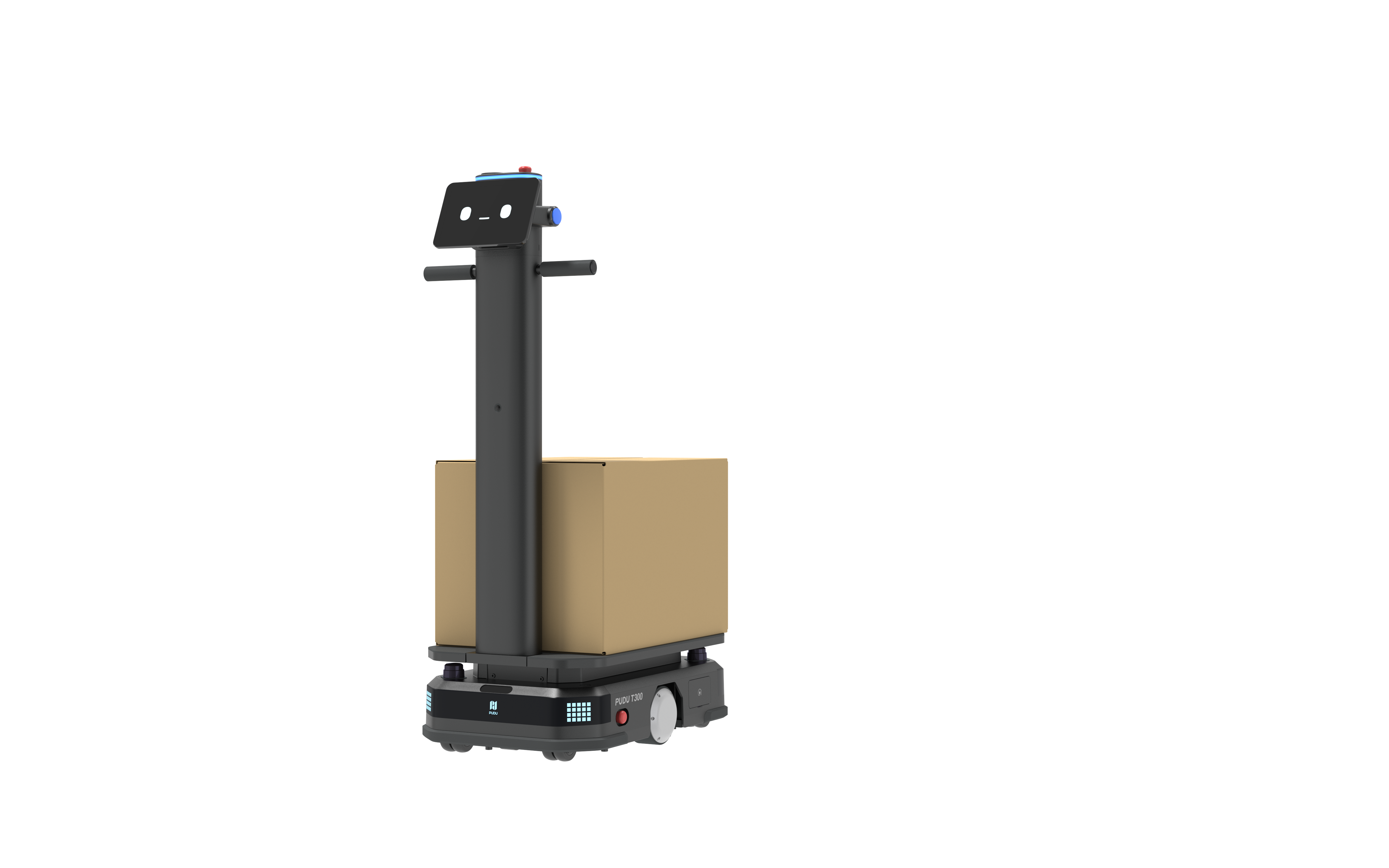
Yes. T300 is an industrial material-delivery AMR with a 300 kg payload and support for elevators, gates, fleet operations and enterprise-system integration.
What is VDA 5050?
VDA 5050 is a standardized communication interface designed to help fleet controllers communicate with mobile robots, including heterogeneous fleets from different manufacturers.
Can warehouse robots run without people?
Some processes can operate with very low staffing for periods of time, but real warehouses still need people for replenishment, packing, maintenance, damaged goods, inventory problems and other exceptions.
Do warehouse robots replace a WMS?
No. Warehouse robots execute physical tasks. A WMS or related software still manages inventory and order logic, and integration between these systems is a critical part of most deployments.
Final Verdict: Best Warehouse Robots 2026 by Use Case
The best warehouse robots 2026 become much easier to choose once the warehouse problem is clearly defined.
Choose Geek+ P-Series when goods-to-person shelf picking is the core requirement.
Choose Geek+ RoboShuttle Hyper when high-density storage and very high tote throughput are priorities.
Choose Geek+ M200C for lighter flexible intralogistics.
Choose Geek+ MP1000R when autonomous movement of loads around 1,000 kg is required.
Choose SEER OneFork 300 for narrow-body carrier handling.
Choose SEER SlimStack 1500 when autonomous pallet lifting and stacking are required.
Choose PUDU T300 when the project needs a flexible 300 kg industrial delivery AMR with building and enterprise integration.
Evaluate PUDU MP2000 when heavy pallet loads up to 2,000 kg must be moved autonomously.
The best project is not the warehouse with the most robots. It is the warehouse where robot type, fleet software, WMS integration, charging, safety and human exception handling all work together.
Compare current warehouse robots for sale and autonomous mobile robots, explore the wider Robots for Sale catalogue, or review Industrial Robots when the application requires manipulation rather than mobile transport.
 ZOTAC GAMING GeForce RTX 5090 AMP Extreme INFINITY
 PNY GeForce RTX 5070 Ti 16GB ARGB EPIC-X RGB Overclocked Triple Fan
 NVIDIA GeForce RTX 3090 Founders Edition 24GB
 Sapphire NITRO+ Radeon RX 7800 XT 16GB