Unmanned Ground Vehicle Procurement for Operations
 •
Workstation Hardware Research
•
Updated October 15, 2026
•
7 min read
•
Workstation Hardware Research
•
Updated October 15, 2026
•
7 min read
Performance intelligence for workstation buyers.
Unmanned ground vehicle procurement requires verified configurations, support terms, delivery planning, and supplier-confirmed availability for deployment.
A ground robot that performs well in a demonstration can still be the wrong purchase for a live site. The difference usually appears in the details: payload with installed sensors, usable runtime in local conditions, communications coverage, operator training, replacement-part access, and the commercial terms behind the order. Effective unmanned ground vehicle procurement turns those details into requirements before a purchase order is issued.
For procurement teams, the objective is not simply to acquire a vehicle. It is to acquire a documented, supportable system that can reach the intended operating environment with the agreed configuration, warranty, accessories, and delivery conditions.
Start With the Mission, Not the Platform
Unmanned ground vehicles cover a wide range of applications, including perimeter patrol, industrial inspection, hazardous-area assessment, public safety support, agricultural work, material transport, research, and remote sensing. A tracked UGV built for uneven outdoor terrain is not automatically suitable for indoor facility rounds. A compact wheeled platform may be highly effective in corridors and warehouses but insufficient for stairs, loose soil, steep grades, or weather exposure.
The first procurement document should define the mission in operational terms. Specify the terrain, expected slopes, obstacles, ambient temperature range, lighting, weather exposure, working hours, and the level of autonomy required. Clarify whether the UGV will be teleoperated, run waypoint missions, follow a person or vehicle, patrol a mapped route, or support a custom autonomy stack.
This is also where teams should define success. For an inspection program, success may be repeatable image capture at defined points with minimal operator intervention. For security operations, it may be reliable patrol coverage, controlled access to video feeds, and clear escalation procedures. For research, the priority may be open interfaces, sensor mounting flexibility, and software development access rather than production-grade fleet management.
A useful requirement is measurable. “Long battery life” is not enough. State the target operating duration under the anticipated payload, terrain, speed, and communications load. Likewise, “high payload” should distinguish between rated static payload, payload while moving, available mounting volume, power available to accessories, and the impact of the payload on stability.
Build a Product-Specific Configuration Request
Many UGVs are modular systems, not fixed catalog items. The base vehicle may be offered with different battery capacities, radio options, cameras, thermal payloads, lidar, robotic arms, compute modules, charging equipment, and software licenses. Comparable-looking product pages can represent materially different deployment packages.
For that reason, a formal quotation request should identify the exact configuration to be confirmed. Include the base platform model, requested payloads, onboard computer requirements, communications equipment, controller type, charging hardware, spare batteries, and any required accessories. If an application depends on a thermal camera, RTK positioning, a manipulator, or a secure private network, state that requirement directly rather than assuming it is included with the vehicle.
The following items warrant product-specific confirmation before approval:
- The model, revision, condition, and included accessories
- Battery quantity, charger type, rated runtime, and transport documentation
- Installed sensors, compute hardware, storage, and software licenses
- Communications bands, control range assumptions, and network requirements
- Warranty coverage, exclusions, service process, and available spare parts
- Export eligibility, delivery lead time, shipping method, and destination-specific costs
These confirmations protect both the buyer and the supplier. They also prevent a common procurement failure: comparing an entry-level base platform against a fully equipped system and treating the prices as equivalent.
Separate vehicle capability from deployment capability
A manufacturer specification may state a maximum speed, payload, climbing angle, or operating range. Those figures are useful, but they are not a deployment guarantee. A vehicle can meet its published payload rating while becoming less stable with a tall sensor mast. It can support a stated radio range in open terrain while losing reliable control around concrete walls, metal racking, vegetation, or elevation changes.
Ask suppliers and technical stakeholders to evaluate the complete operating system: vehicle, payload, software, network, charging workflow, transport case, operator controls, and site procedures. The practical question is not “Can the UGV do this?” It is “Can this configured UGV do this consistently at our site?”
Evaluate Autonomy, Integration, and Control Boundaries
Autonomy claims should be reviewed with precision. Navigation capability depends on the sensors installed, map quality, environmental change, GNSS availability, localization method, obstacle types, lighting conditions, and software version. A UGV that performs autonomous mapping in a controlled yard may require additional integration work for a busy logistics site or a partially enclosed industrial facility.
Procurement teams should establish what level of access is required. Some buyers need a ready-to-operate system with manufacturer-supported software and defined workflows. Others need software development kits, API access, ROS compatibility, custom payload integration, or the ability to run proprietary AI models on an onboard GPU. Neither approach is universally better. A more open platform can support advanced engineering work, but it may place more integration and maintenance responsibility on the buyer or system integrator.
Control boundaries matter as well. Confirm how operators take over, what happens when communication is lost, how emergency stop functions are implemented, and whether mission logs, video, and telemetry can be retained under the organization’s data policies. For security-sensitive or regulated environments, review user access controls, data storage location, encryption options, and the process for software updates before finalizing the order.
Plan the Commercial Path for UGV Procurement
The right order method depends on purchase value, configuration complexity, and internal approval requirements. A standard platform with a fixed configuration may be suitable for direct checkout. A fleet order, custom sensor package, or deployment-specific system generally benefits from a formal quotation that records the requested configuration and commercial assumptions.
For larger purchases, align the quotation with the purchase order process. The document should clearly identify unit price, currency, taxes or duties where applicable, shipping scope, payment terms, estimated lead time, Incoterms when relevant, warranty period, and any services included. If site commissioning, integration, training, or custom development is needed, separate those services from the hardware line items. This makes scope, accountability, and future support easier to manage.
Availability deserves particular attention in advanced robotics. Inventory status can change quickly, and some platforms are built or allocated after order confirmation. A transparent supplier should confirm current availability and expected delivery for the requested configuration rather than relying on a generic product category lead time. Supplier-confirmed sourcing is especially valuable when the buyer requires specific accessories, a particular regional version, or a platform that is not routinely stocked.
International delivery introduces additional variables. Battery-powered UGVs may require specialized packaging and carrier handling. Destinations can affect lead time, customs documentation, import costs, and local radio or safety requirements. Procurement should involve logistics and compliance stakeholders early when an order crosses borders or includes lithium batteries, radio equipment, thermal sensors, or advanced compute hardware.
Include Lifecycle Costs in the Approval Case
The acquisition price is only one part of the decision. A low initial price can be offset by limited battery availability, proprietary components, restricted software access, expensive replacement sensors, or weak technical support. Conversely, a higher-priced package may reduce deployment risk by including spare batteries, protective transport equipment, a supported payload, and a defined warranty path.
Estimate the first-year operating requirement before presenting the business case. Consider spare parts, batteries, charging infrastructure, protective cases, data connectivity, software subscriptions, preventive maintenance, operator training, and the internal labor needed to supervise missions. For a fleet, add centralized management, standardization of payloads, and an approach for keeping software versions consistent.
It is also sensible to define acceptance criteria before delivery. Criteria may include the correct configuration, physical inspection, battery and charging verification, control-link testing, sensor validation, and a documented handoff of manuals, software credentials, and warranty information. If the UGV is intended for a defined site mission, a controlled acceptance test can verify that its operating behavior matches the approved requirement.
Select a Supplier That Can Confirm the Details
For difficult-to-procure robotics, supplier quality is part of the technical decision. Buyers should look for a procurement partner that can provide a clear quotation, validate configuration and included accessories, communicate availability honestly, and state delivery and warranty conditions in writing. This is particularly relevant for commercial UGVs that may have region-specific versions or optional equipment that changes the final system capability.
AI Robot Supplier supports this process through direct purchase options and product-specific quotation workflows for organizations that need confirmed sourcing before committing to a deployment. The value is not merely access to a catalog. It is a clearer commercial record of what is being purchased and how it will be fulfilled.
A well-run UGV purchase gives operations teams fewer surprises after delivery. Treat the vehicle as a deployable system, insist on configuration-level confirmation, and make the approval decision against the conditions the robot will actually face. That discipline creates a stronger foundation for the first unit and for every fleet decision that follows.
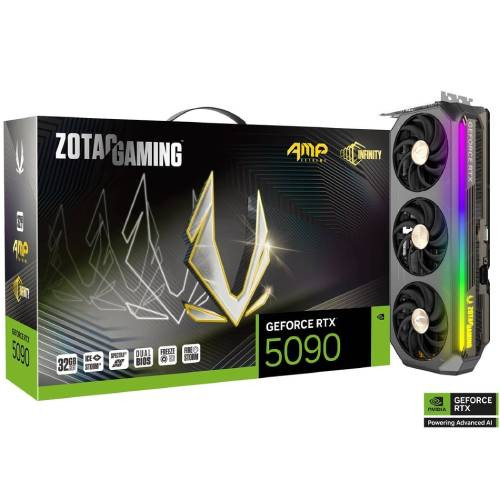 ZOTAC GAMING GeForce RTX 5090 AMP Extreme INFINITY
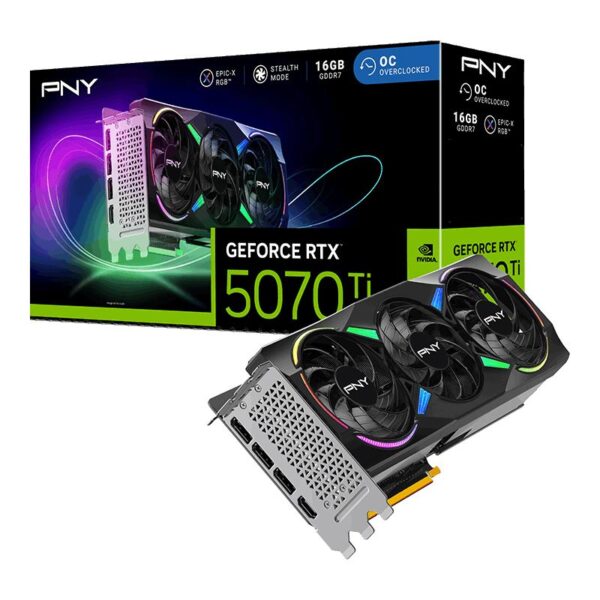 PNY GeForce RTX 5070 Ti 16GB ARGB EPIC-X RGB Overclocked Triple Fan
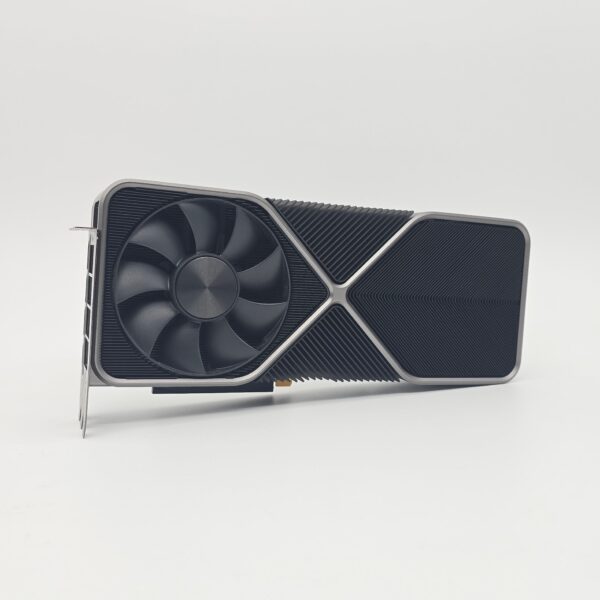 NVIDIA GeForce RTX 3090 Founders Edition 24GB
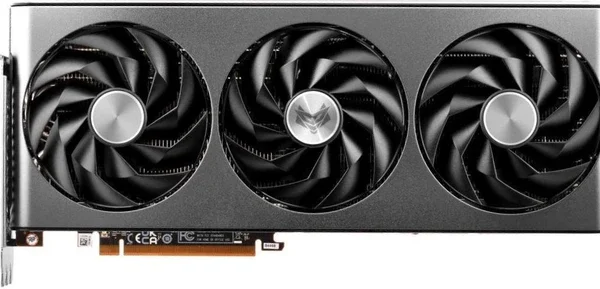 Sapphire NITRO+ Radeon RX 7800 XT 16GB