Compare industrial robots for sale in 2026 across compact six-axis arms, heavy-payload robots, collaborative robots and application-specific automation platforms. This guide covers current AI Robot Supplier prices, payload and reach, controller and safety requirements, welding, palletizing, machine tending, material handling and the integration costs that determine the real project budget.
AI Robot Supplier currently lists more than 200 industrial robots across ABB, FANUC, KUKA, Yaskawa Motoman, SIASUN and other manufacturers. Buyers searching for industrial robots for sale should compare the complete automation requirement rather than only the robot arm. Payload, reach, repeatability, wrist inertia, end-of-arm tooling, controller, guarding, PLC integration, cycle time and commissioning all affect whether a robot is suitable for production.
For direct product browsing, use the Industrial Robots category. This page is the commercial comparison and buying hub designed to help factories, integrators, universities and procurement teams narrow the available models before moving to an individual robot page or requesting a project-specific quotation.

Factories comparing industrial robots for sale should first define the process, required payload, reach and cycle time so that price comparisons are made between robots that can actually perform the same job.
Industrial Robot Prices in 2026: Quick Answer
There is no single industrial robot price. Current AI Robot Supplier listings range from lower-cost compact and legacy industrial arms below $5,000 through collaborative and mainstream six-axis robots around $7,000–$20,000, while larger or highly specialized industrial platforms are commonly supplied by quotation. A complete production cell can cost substantially more than the robot itself once tooling, guarding, vision, fixtures, conveyors, PLCs and integration are included.
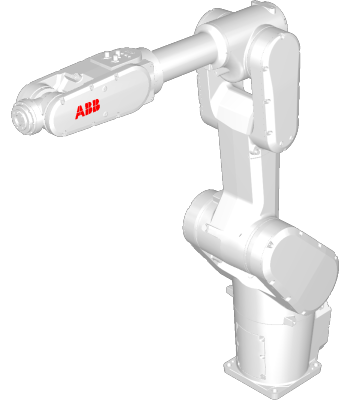
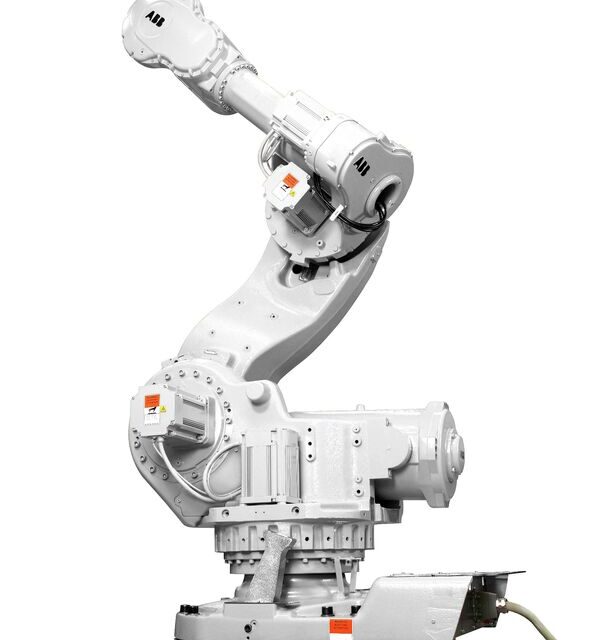
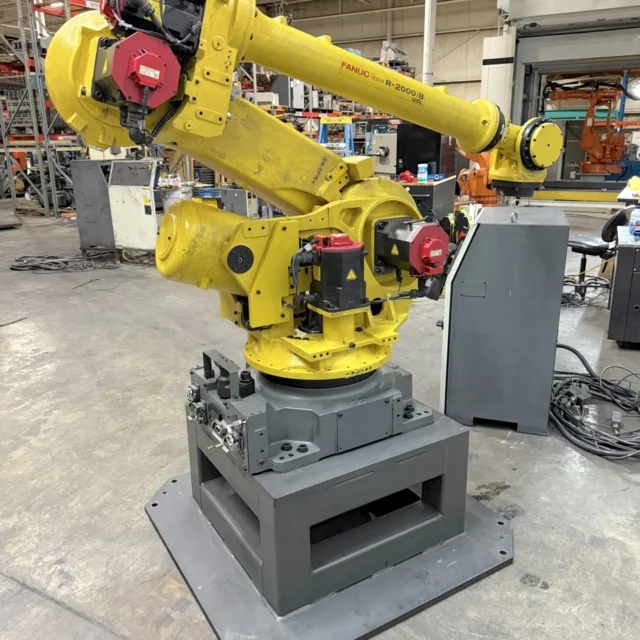
Current September 2026 examples include the Yaskawa Motoman HP3 at about $3,900, FAIRINO FR16 at about $7,197, FANUC R-2000iB/125L at about $11,516, ABB IRB 1300-7/1.4 at about $11,940, ABB IRB 7600-340/2.8 at about $14,100, DENSO COBOTTA PRO 900 at about $15,600, and Yaskawa Motoman GP35L at about $16,500.
Quote-only models include larger KUKA, Yaskawa and SIASUN systems where the final configuration depends on controller, application package, mounting, tooling and delivery scope. When comparing industrial robots for sale, buyers should always separate the robot-arm price from the cost of the complete engineered cell.
Industrial Robots for Sale: 2026 Price Comparison
The table below compares selected current models representing different payload and application classes. Direct prices are shown where AI Robot Supplier currently publishes one; quotation-based systems are marked accordingly.
For buyers reviewing industrial robots for sale, the table is intended as a starting point rather than a substitute for application engineering, because controller, tooling and safety scope can change both suitability and total project cost.
| Industrial robot | Current price | Robot class | Typical fit |
|---|---|---|---|
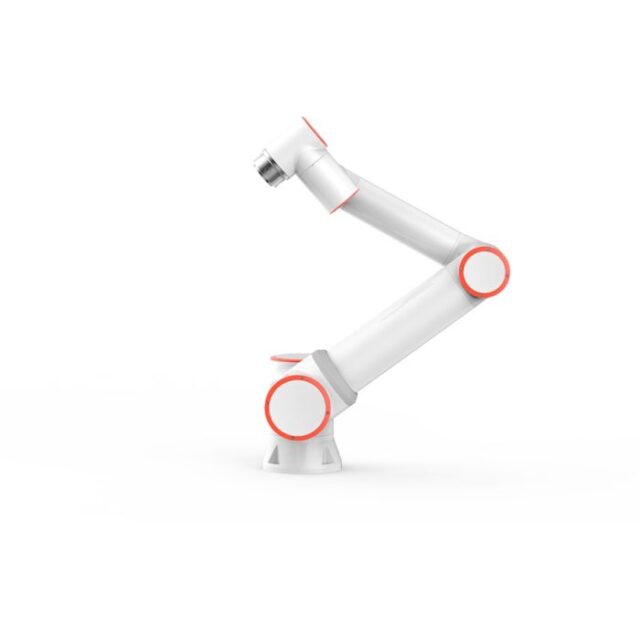
| FAIRINO FR16 | $7,197 | 16 kg collaborative robot | Machine tending, handling, assembly, flexible automation |
| Yaskawa Motoman HP3 | $3,900 | Compact six-axis industrial robot | Small-part handling, assembly, compact automation cells |
| FANUC R-2000iB/125L | $11,516 | 125 kg long-reach industrial robot | Heavy handling, machine tending, palletizing |
| ABB IRB 1300-7/1.4 | $11,940 | 7 kg compact six-axis robot | Assembly, handling, polishing, machine tending |
| ABB IRB 7600-340/2.8 | $14,100 | Heavy-payload industrial robot | Large-part handling, automotive, heavy production |
| DENSO COBOTTA PRO 900 | $15,600 | 6 kg collaborative robot | Assembly, inspection, machine tending, material handling |
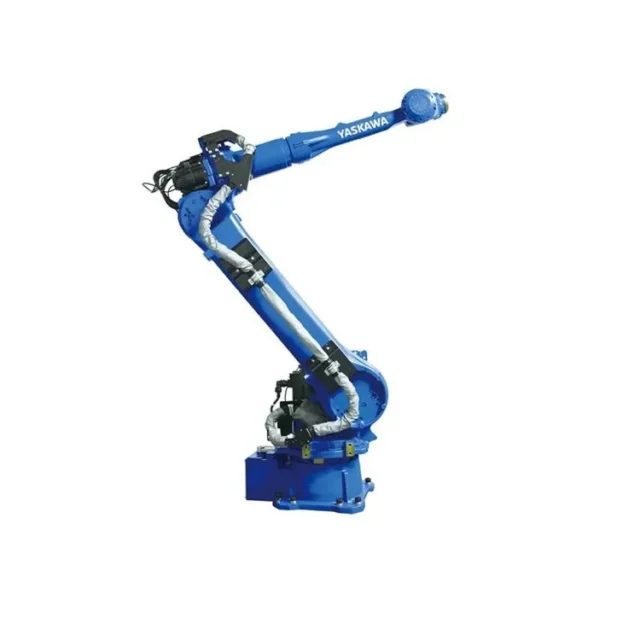
| Yaskawa Motoman GP35L | $16,500 | 35 kg long-reach industrial robot | Handling, press tending, dispensing, material removal |
| SIASUN GCR20-1400 | Request quote | 20 kg collaborative robot | Handling, assembly, machine tending, inspection |
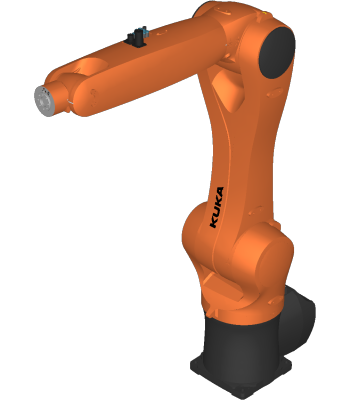
| KUKA KR 10 R1100 | Request quote | Compact industrial robot | Handling, assembly and compact cells |
| KUKA KR 240 PA | Request quote | 240 kg palletizing robot | End-of-line palletizing and heavy handling |
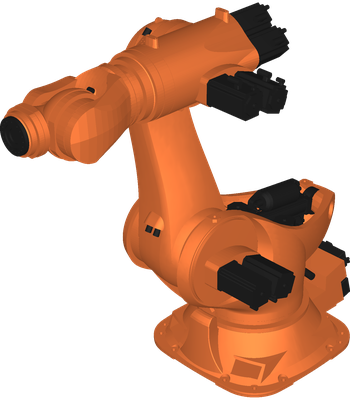
| KUKA KR 1000 Titan | Request quote | 1,000 kg heavy-payload robot | Very heavy components, steel, foundry and large-part handling |
Prices were checked against current AI Robot Supplier listings in September 2026. Exact condition, controller generation, configuration, included accessories and delivery scope should be confirmed on the individual product page or written quotation.
Industrial Robotics Market in 2026: What Buyers Should Know
Industrial robotics remains a large, active capital-equipment market rather than an experimental niche. The International Federation of Robotics reported 542,000 new industrial robot installations in 2024, with the global operational stock reaching about 4.664 million robots. Asia represented 74% of new installations, while China alone installed about 295,000 units and accounted for 54% of global deployments.
The IFR’s 2026 trend report places the market value of industrial robot installations at an all-time high of about $16.7 billion. That scale matters for buyers because the market now combines mature conventional automation with faster-moving technologies such as AI vision, digital twins, natural-language programming, mobile manipulation and connected predictive maintenance.
AI Robot Supplier’s live robot catalog currently shows 229 products in Industrial Robots, alongside 51 cobots and 86 AMRs. The broader robot catalog also currently shows substantial brand depth including FANUC, ABB, KUKA and SIASUN. That allows buyers comparing industrial robots for sale to evaluate fixed robot arms together with collaborative and mobile alternatives rather than forcing every automation problem into one robot type.
For broader context, see the Robots for Sale catalog, the Cobots category and the Warehouse Robots & AMRs category.
What Is Trending in Industrial Robotics in 2026?
The strongest 2026 trends are not simply about higher payload or faster axes. Manufacturers are changing how robots are programmed, simulated, connected, maintained and secured. Buyers comparing industrial robots for sale should increasingly treat the controller and software ecosystem as part of the robot specification.
| 2026 trend | What is changing | What buyers should verify |
|---|---|---|
| Physical AI & natural-language programming | Robots increasingly combine vision, force sensing and AI reasoning so operators can describe tasks, generate programs and adapt to variable work. | AI/vision compatibility, supported APIs, Python/ROS access, compute requirements and what functions are production-ready versus demonstration-only. |
| Digital twins & virtual commissioning | Simulation is moving from offline reach checks toward AI training, cycle-time optimization, commissioning and sim-to-real workflows. | RobotStudio, ROBOGUIDE, iiQWorks or equivalent support; controller emulation; CAD import; collision checking; licensing and offline-programming workflow. |
| Industrial-grade cobots | Cobots are becoming faster and higher-payload while remaining easier to deploy and reconfigure. | Payload at speed, safety mode limits, reach, repeatability, duty cycle and whether collaborative operation still meets required cycle time. |
| AI vision & adaptive handling | 3D vision and AI models are enabling random-bin picking, moving-part tracking, mixed-SKU depalletizing and adaptive inspection. | Camera ecosystem, inference hardware, lighting, trained-model support, latency and fallback behavior when confidence is low. |
| Mobile manipulation | Robot arms and cobots are increasingly combined with AMRs so one manipulator can serve multiple workstations. | Battery-powered controller options, navigation integration, docking accuracy, safety zones and fleet/robot coordination. |
| Predictive maintenance | Connected robot diagnostics increasingly track health, performance and maintenance conditions in real time. | Cloud/on-premise monitoring, data ownership, alarm history, condition monitoring, service access and software subscription requirements. |
| Cybersecurity & new safety standards | Connected controllers are being evaluated against industrial cybersecurity requirements alongside functional safety. | IEC 62443 support, firmware-update policy, user/access controls, network architecture, backup/recovery and compliance with current robot safety standards. |
The International Federation of Robotics identifies AI and autonomy, IT/OT convergence, safety and security, humanoid reliability and labor shortages as the major global robotics themes for 2026. For a buyer, the practical conclusion is simple: a modern industrial robot purchase increasingly includes software, data, simulation and cybersecurity decisions in addition to mechanics. Companies comparing industrial robots for sale should therefore evaluate the controller and software roadmap alongside payload, reach and repeatability.
Read the IFR Top 5 Global Robotics Trends 2026 and the IFR World Robotics 2025 summary for the underlying market data.
Physical AI, Digital Twins and Faster Deployment
FANUC’s 2026 demonstrations show how quickly industrial automation is moving toward Physical AI. At Automate and IMTS 2026, FANUC highlighted generative-AI robot programming, real-time 3D vision, moving-part tracking, AI-assisted inspection, NVIDIA-powered processing and digital-twin simulation. FANUC is also working with NVIDIA and Google on Physical AI systems that combine perception, reasoning and robot motion.
This does not mean every buyer needs generative AI. It means factories comparing industrial robots for sale should ask whether the controller and software stack can support future vision, simulation, data and AI requirements without replacing the entire automation platform. For a new industrial robot for sale, future software compatibility can be almost as important as the mechanical arm specification.
FANUC’s newest examples also show growing demand for pre-engineered automation. Its 2026 “Cobot and Go” systems package CRX collaborative robots into application-ready machine-tending, palletizing, welding, coating, inspection and picking cells. This trend is important for small and mid-sized manufacturers because it can reduce engineering time compared with fully custom integration.
See FANUC’s Automate 2026 robotics overview and its September 2026 IMTS update.
Industrial-Grade Cobots Are Moving Upmarket
Collaborative robots are moving beyond light-duty bench applications. ABB’s 2026 PoWa cobot family spans 7 kg to 30 kg payload classes and is promoted with top speeds up to 5.8 m/s, reflecting the industry’s push toward industrial-level cycle time with simpler deployment. ABB says it expects the collaborative robot market to grow by about 20% annually through 2028.
That trend is directly relevant to buyers comparing traditional robot arms and cobots on AI Robot Supplier. A FAIRINO FR16, DENSO COBOTTA PRO or SIASUN GCR20 may now be considered for tasks that historically defaulted to fenced industrial arms, but the application still has to meet safety and throughput requirements. Buyers reviewing industrial robots for sale should compare the actual collaborative operating speed with the production cycle target before choosing a cobot.
For a deeper comparison, use our Cobots vs. Industrial Arms: Which Fits Your Line? guide. ABB’s current perspective is available in its 2026 cobot trends report.
Cybersecurity Is Now Part of Robot Procurement
As robot controllers become connected to factory networks, cybersecurity is becoming a procurement requirement rather than only an IT concern. In July 2026, KUKA announced that iiQKA.OS2 with its KR C5 controller platform had achieved Security Level 2 certification under IEC 62443-4-2 and stated that the platform meets EN ISO 10218-1:2025 requirements.
When evaluating industrial robots for sale, connected factories should therefore ask about supported security standards, firmware updates, network segmentation, authentication, remote-service access, backup procedures and how long the controller software will remain supported.
See KUKA’s 2026 industrial robot cybersecurity update and iiQKA.OS2 overview.
Condition Monitoring and Predictive Maintenance
Industrial robot ROI depends on uptime after commissioning. ABB’s 2026 OptiFact Robot Diagnosis work illustrates the shift toward dashboards that collect robot health and performance data so maintenance teams can identify problems earlier. FANUC similarly highlights Zero Down Time cloud monitoring in current automation demonstrations.
This changes what a buyer should request with a quotation. Beyond spare parts and warranty, ask whether the controller supports remote diagnostics, health monitoring, maintenance history, alarm export and integration with the plant’s maintenance or analytics systems. When two industrial robots for sale have similar mechanical specifications, service data and diagnostic capability can become an important lifecycle-cost differentiator.
Key Industrial Robot Specifications Compared
Payload is only one dimension of robot selection. Buyers comparing industrial robots for sale should also evaluate reach, repeatability, axes, mounting, environmental protection, controller generation, wrist load and real cycle-time requirements.
| Model | Payload | Reach | Repeatability / accuracy reference | Key buying position |
|---|---|---|---|---|
| ABB IRB 1300-7/1.4 | 7 kg | 1,400 mm | Position repeatability about ±0.03 mm | Compact, fast production robot with OmniCore controller family |
| FANUC R-2000iB/125L | 125 kg | About 3,010 mm | Legacy model reference about ±0.2 mm | Long-reach heavy handling and production automation |
| Yaskawa GP35L | 35 kg | 2,538 mm horizontal | About ±0.07 mm | Long-reach handling, tending and process automation |
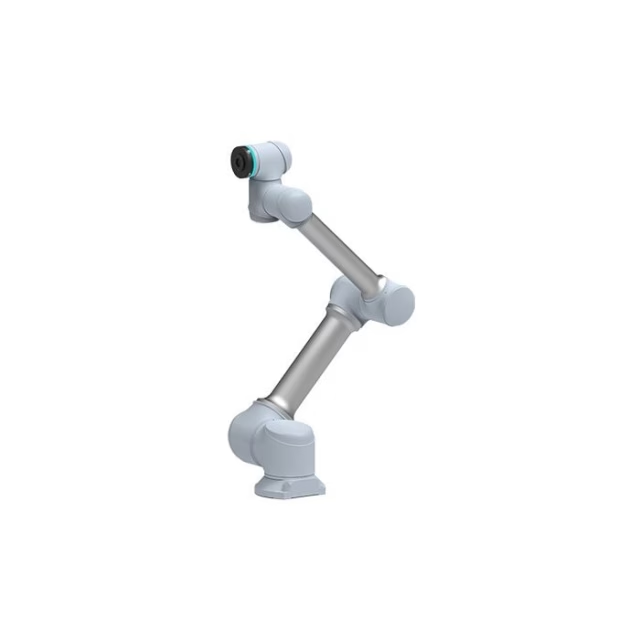
| FAIRINO FR16 | 16 kg nominal; up to 20 kg max reference | 1,034 mm | ±0.03 mm | Higher-payload collaborative automation |
| SIASUN GCR20-1400 | 20 kg | 1,400 mm | ±0.05 mm | Mid/high-payload cobot for flexible production cells |
| DENSO COBOTTA PRO 900 | 6 kg | 1,066 mm maximum arm reach reference | Model-specific collaborative platform | Fast collaborative assembly, tending and inspection |
| KUKA KR 1000 Titan | 1,000 kg | 3,202 mm | ±0.10 mm | Extreme heavy-payload handling |
For authoritative manufacturer references, ABB specifies the IRB 1300 family at up to 1.4 m reach and up to 12 kg payload depending on version, while the 7/1.4 variant is a 7 kg, 1.4 m model. KUKA specifies the KR 1000 Titan at 1,000 kg payload and 3,202 mm reach. Yaskawa lists the GP35L at 35 kg payload and 2,538 mm horizontal reach, and FAIRINO specifies the FR16 at 16 kg payload, 1,034 mm reach and ±0.03 mm repeatability.
Review manufacturer-level details at the official ABB IRB 1300 page, KUKA KR 1000 Titan page, Yaskawa GP35L page and FAIRINO FR16 page.
Shop Selected Industrial Robots
The products below connect this buying hub directly to current industrial and collaborative robot listings. Because industrial-robot inventory includes multiple controller generations and quote-only configurations, the exact package should always be verified before order acceptance.
Industrial Robot vs Cobot: Which Should You Buy?
One of the most important decisions when evaluating industrial robots for sale is whether the process needs a conventional industrial robot or a collaborative robot. Cobots are not automatically safer, cheaper or better; they solve a different set of production constraints.
| Factor | Traditional industrial robot | Collaborative robot / cobot |
|---|---|---|
| Typical speed | Higher potential production speed | May be limited by collaborative safety mode |
| Payload range | From small arms to 1,000 kg+ heavy robots | Usually lower, though 20 kg+ cobots are common |
| Human proximity | Usually separated by engineered safeguarding | Can support closer human interaction when the entire application is risk-assessed |
| Cycle time | Often best for high-volume repetitive production | Good for flexible lower-volume or mixed workflows |
| Integration | Can require larger cell, guarding and specialist engineering | Often easier to redeploy, but still needs proper safety and tooling design |
| Typical uses | Welding, palletizing, heavy handling, automotive, high-speed cells | Machine tending, assembly, inspection, flexible handling |
A cobot label does not eliminate application-level safety engineering. End effectors, sharp tools, hot parts, presses, conveyors and pinch points can still make a collaborative arm hazardous. The complete cell requires appropriate risk assessment and validation.
When comparing collaborative and conventional industrial robots for sale, evaluate the required production rate and safety strategy together instead of assuming that one robot type is automatically the better investment.
Best Industrial Robots by Application
For machine tending
Machine tending often benefits from moderate payload, useful reach, good repeatability and easy PLC or machine-interface integration. ABB IRB 1300, FAIRINO FR16, DENSO COBOTTA PRO 900 and Yaskawa GP35L can all fit different machine-tending scenarios depending on part mass, door access, cycle time and guarding strategy.
Buyers comparing industrial robots for sale for CNC, molding or press tending should model the full motion path. A robot can have enough nominal reach and still fail the application because of wrist orientation, fixture interference, machine door geometry or tool-center-point offset.
For palletizing
Palletizing selection should begin with maximum case weight, gripper weight, pallet dimensions, top-layer height and target cases per minute. Heavy-payload robots such as KUKA KR 240 PA and larger ABB or FANUC arms can support end-of-line systems where speed and stack height matter more than collaborative operation.
Do not size a palletizing robot using box weight alone. Vacuum grippers, layer tooling, slip-sheet handling and multi-case picks can add substantial wrist load and inertia. The robot must also reach the highest pallet position without violating wrist-load or singularity constraints.
For welding
Welding robots require more than accurate motion. The system may include welding power source, torch, wire feeder, dress pack, positioner, fume extraction, safety enclosure and offline programming. Compact six-axis arms can fit arc-welding cells, while larger robots or positioners are required for bigger fabrications.
When reviewing industrial robots for sale for welding, confirm the controller software package, torch-mounting geometry, cable management, process synchronization and whether the robot variant is intended for the environmental conditions of the welding cell.
For material handling and part transfer
Material handling covers a wide range of payloads, from a few kilograms in electronics and packaging to hundreds of kilograms in automotive and metal fabrication. FANUC R-2000-class robots, Yaskawa GP-series arms and ABB heavy-payload models are designed around this type of factory work.
For assembly and precision handling
Assembly applications often prioritize repeatability, path accuracy, compact footprint and access to fixtures rather than very high payload. ABB IRB 1300 is specifically positioned around compact production and supports multiple variants up to 1.4 m reach, while collaborative platforms can be attractive for flexible assembly where workers and robots share the production area.
For very heavy components
KUKA KR 1000 Titan illustrates the extreme end of industrial robotics. KUKA lists the standard Titan at 1,000 kg payload and 3,202 mm reach, with other family variants extending payload or reach for specialized handling and palletizing. Robots in this class require serious foundation, safety, tooling and integration engineering.
How to Size an Industrial Robot Correctly
Choosing the correct model starts with the real application, not the robot brochure. The following checks should be completed before comparing quotations.
- Payload: add the part, gripper, sensors, adapters, cabling and any process forces.
- Center of gravity and inertia: a light but long tool can exceed wrist limits even when nominal payload looks acceptable.
- Reach: model all approach angles, not only the straight-line distance from robot base to part.
- Repeatability: use the process tolerance and fixture strategy to determine what repeatability is actually required.
- Cycle time: simulate the full pick, process, place and return sequence.
- Mounting: floor, wall, ceiling and angled mounting are model-specific.
- Environment: foundry, food, cleanroom, dust and washdown applications require appropriate robot protection.
- Controller: confirm generation, software options, safety features and fieldbus.
- End effector: gripper, welder, spindle, dispenser or vacuum tool should be engineered with the robot.
- Safety: safeguarding, scanners, fences, interlocks, emergency stops and safety PLC requirements must be designed at cell level.
For buyers evaluating industrial robots for sale, these engineering checks are more important than choosing a familiar brand. The wrong robot can be expensive even if its purchase price is low because redesigning tooling, fixtures or the production cell after delivery can cost more than the robot itself.
What Is Included in an Industrial Robot Price?
A website listing may refer to a robot arm, a robot with controller, or a broader package. Before purchase, confirm the exact bill of materials rather than assuming every visible component is included.
- Robot arm and exact mechanical variant
- Controller and controller generation
- Teach pendant
- Power and robot-controller cables
- Base or mounting hardware where specified
- Software options and application packages
- Safety hardware or safety software where included
- End-of-arm tooling, if included
- Dress pack and process utilities
- Documentation and manuals
- Warranty and support terms
- Export packing and freight scope
A reliable industrial robot price comparison should put every quotation onto the same scope. One seller may quote only the arm and controller while another includes pendant, cabling, application software, tooling and freight.
What Changes the Total Cost of an Industrial Robot Cell?
The robot arm may represent only part of the final automation budget. The complete project cost can include:
- End-of-arm tooling: grippers, vacuum systems, welding torches, spindles and process tools.
- Fixtures: nests, clamps, pallets, machine interfaces and part-present sensors.
- Vision: cameras, lighting, calibration targets and vision software.
- Safety: fencing, doors, scanners, light curtains, safety PLCs and validation.
- PLC and controls: factory I/O, fieldbus, HMI and machine communication.
- Positioners and external axes: common in welding and large-part applications.
- Conveyors: product flow, indexing and synchronization hardware.
- Programming: online teaching, offline simulation and process development.
- Commissioning: installation, calibration, dry runs, process trials and acceptance testing.
- Training: operator, maintenance and programming training.
- Freight and rigging: particularly important for robots weighing hundreds or thousands of kilograms.
This is why factories shopping for industrial robots for sale should compare total deployed cost rather than treating the arm price as the final automation budget.
New vs Pre-Owned Industrial Robots
New robots generally provide clearer warranty, current controller technology, manufacturer support and known operating history. Pre-owned equipment can reduce capital cost but requires additional verification.
Buyers looking at pre-owned industrial robots for sale should place extra emphasis on controller age, service history, operating hours, gearbox condition and future spare-parts availability.
- Confirm robot serial number and exact model variant.
- Check controller generation and supported software.
- Review operating hours and service history where available.
- Inspect backlash, brakes, gearboxes, cables and dress packs.
- Confirm whether batteries and encoder backup systems have been maintained.
- Check availability of manufacturer spare parts and software licenses.
- Verify the supplied pendant, controller and cables match the robot.
- Confirm functional testing and acceptance criteria before shipment.
For critical production lines, a cheaper pre-owned robot can become expensive if downtime, obsolete controllers or unavailable parts create operational risk. Procurement decisions should therefore include lifecycle support, not only the initial industrial robot price.
Industrial Robot Safety and Cell Engineering
Industrial robots are high-energy machines. The complete application should be engineered and validated according to the requirements that apply in the destination country and workplace. Robot safety is not created by the arm alone.
Organizations comparing industrial robots for sale should include safeguarding and validation costs in the project budget from the beginning rather than treating safety hardware as an optional afterthought.
A typical cell may require perimeter guarding, interlocked access doors, emergency stops, safety-rated monitored stop, safe speed functions, scanners or light curtains, and a risk assessment that includes the end effector and workpiece. Collaborative robots may allow closer human access, but the application still requires safety engineering.
Industrial Robots vs Warehouse Robots
Fixed industrial arms and mobile warehouse robots solve different problems. An industrial arm is usually best when the process happens at a defined workstation and requires controlled manipulation, welding, tending, assembly or palletizing. An AMR is better suited to transporting material between locations.
Many modern automation systems use both: AMRs move totes or pallets between areas while industrial robots load machines, assemble parts or palletize products. Buyers should therefore design the whole material and production flow rather than treating one robot category as a substitute for every automation need.
For this reason, companies searching for industrial robots for sale should map both stationary manipulation tasks and material movement before deciding how many robot arms, AMRs or other automation systems are actually required.
Buying Industrial Robots Internationally
International buyers comparing industrial robots for sale should provide the exact model, controller requirement, quantity, destination, application and target delivery date. Large robot arms may require export crates, specialist rigging and freight planning.
The written quotation should clearly identify the robot, controller, pendant, included cables, condition, software options, accessories, warranty, packing and delivery scope. For large automation projects, integration, installation and commissioning should be specified separately so procurement teams understand what is and is not included.
For cross-border sourcing details, read How to Buy Industrial Robots Internationally in 2026. It complements this model-comparison page with landed-cost, warranty and logistics considerations.
Frequently Asked Questions About Industrial Robots
How much does an industrial robot cost in 2026?
Current AI Robot Supplier examples range from about $3,900 for the Yaskawa Motoman HP3 and $7,197 for the FAIRINO FR16 to roughly $11,500–$16,500 for selected FANUC, ABB, DENSO and Yaskawa models. Larger and specialized systems are often quote-only. The complete robot cell can cost much more after tooling, guarding, controls and integration.
What are the best industrial robots for sale?
There is no universal best model. ABB IRB 1300 is strong for compact production, FANUC R-2000-class robots fit heavier long-reach handling, Yaskawa GP35L suits medium-payload handling and tending, and KUKA KR 1000 Titan targets extremely heavy loads. The best model is the one that meets the real payload, reach, cycle-time and integration requirements.
How do I choose the correct payload?
Add the part, gripper, adapter, sensors and any process forces. Then verify center of gravity and wrist inertia against the manufacturer’s load diagrams. Nominal payload alone is not enough.
What is robot reach?
Reach is the maximum distance the robot can extend to a defined reference point, but a real application also depends on wrist orientation, tool length, fixture interference and usable workspace. Always simulate the complete path.
What is repeatability?
Repeatability describes how consistently the robot can return to a taught position under specified conditions. It is not the same as absolute positioning accuracy. Fixtures, calibration and process design also influence real production accuracy.
Should I buy a cobot or an industrial robot?
Choose according to the process. Cobots are useful for flexible automation and some human-adjacent tasks, while conventional industrial robots usually offer higher speed and much broader payload ranges. Both require application-level safety engineering.
Can industrial robots be used for welding?
Yes. Industrial robots are widely used for arc welding and spot welding, but the complete system requires welding equipment, torch or gun, dress pack, safety equipment, process software and often a positioner.
Can industrial robots be used for palletizing?
Yes. Palletizing robots range from medium-payload arms to heavy dedicated palletizers. Selection depends on box weight, gripper, pallet height, reach, required throughput and cell layout.
Can industrial robots be shipped internationally?
Many models can be supplied internationally subject to the exact product, destination, freight limits and commercial terms. Large robots can require specialist export packing, cranes or rigging at the receiving facility.
What should I include in a quotation request?
Provide application, part weight, end-effector weight, required reach, cycle time, quantity, destination, preferred brand or model, mounting, controller requirements and target delivery date. This allows the quotation to be matched to the actual project.
Explore Industrial Robots and Related Automation
- Browse all Industrial Robots
- ABB IRB 1300-7/1.4
- Yaskawa Motoman HP3
- FANUC R-2000iB/125L
- ABB IRB 7600-340/2.8
- Yaskawa Motoman GP35L
- KUKA KR 1000 Titan
- FAIRINO FR16
- DENSO COBOTTA PRO 900
- SIASUN GCR20-1400
- Warehouse Robots & AMRs
- Humanoid Robots for Sale & Prices 2026
- Robot Dogs for Sale & Prices 2026
Request an Industrial Robot Quote
Need help comparing industrial robots for sale for a factory or automation project? Send the intended application, payload, reach, cycle time, quantity, destination country and preferred manufacturer or model. Include tooling, mounting, controller, safety and integration requirements where already known.