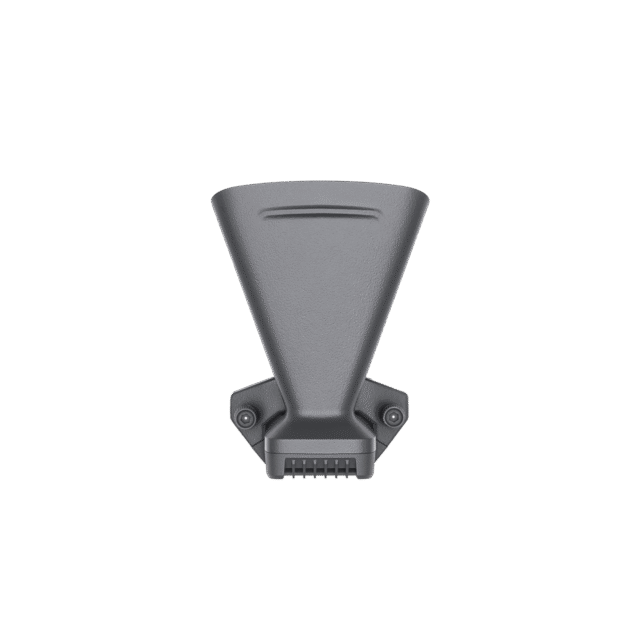
Zenmuse H30 / H30T
Multi-sensor visual, zoom, thermal, laser-rangefinding and NIR payload for public safety, inspection and response.
$6,180.00
DJI Matrice 400 Enterprise Drone is a DJI enterprise multirotor built for inspection, mapping, emergency response and multi-payload missions. Model-level performance includes up to 59 min in specified test conditions, up to 6 kg, up to 25 m/s. Professional operation should account for payload configuration, batteries, communications, weather, site risk and the aviation rules applicable to the mission location.
Related products, categories and research.
DJI Matrice 400 is DJI Enterprise’s long-endurance flagship multi-payload drone platform, combining up to 59 minutes of forward flight, a 6 kg maximum payload, 25 m/s maximum horizontal speed, IP55 environmental protection, rotating LiDAR, six-direction mmWave radar and O4 Enterprise Enhanced transmission. This AI Robot Supplier configuration is currently listed at $8,393 and identifies the BS100 Intelligent Battery Station and TB100 Intelligent Flight Battery in the product package. Exact controller, accessories, service plan and final packing scope should be confirmed on the written quotation before purchase.
59-minute enterprise flagship drone platform
DJI Matrice 400 is a professional multi-mission UAV platform designed for infrastructure inspection, surveying and mapping, public safety, search and rescue, engineering, construction, maritime operations and advanced third-party payload integration.
DJI specifies up to 59 minutes of forward flight and 53 minutes of hover time under defined no-wind sea-level test conditions while carrying a Zenmuse H30T. Maximum takeoff weight is 15.8 kg and published maximum payload capacity reaches 6 kg when the third-gimbal interface is used with the required fastening configuration.
This AI Robot Supplier listing specifically identifies a TB100 Intelligent Flight Battery and BS100 Intelligent Battery Station, making battery and charging-system performance central to the buying decision rather than optional details hidden after checkout.
The Matrice 400 also combines rotating LiDAR, six-direction mmWave radar, full-color low-light vision, RTK positioning, O4 Enterprise Enhanced transmission, airborne relay capability and a broad DJI/third-party payload ecosystem.
AI Robot Supplier currently lists this configuration at $8,393. Because competing Matrice 400 bundles include different controllers, batteries, DJI Care plans and accessories, buyers should compare the exact packing list rather than headline price alone.
Price and market comparison
The current DJI Matrice 400 price on this AI Robot Supplier listing is $8,393, with the page currently marked in stock.
That price should be evaluated against packages containing comparable equipment. A drone-only listing is not equivalent to a bundle that includes the BS100 battery station, TB100 flight battery, controller, WB37 controller battery, carrying case and DJI Care.
| Seller / reference | Observed price | Configuration note |
|---|---|---|
| AI Robot Supplier | $8,393 | Live listing identifies Matrice 400 + BS100 Battery Station + TB100 Intelligent Flight Battery. Confirm remaining accessories in quotation. |
| Altitude Drones | $11,999 | Combo listing with Matrice 400, BS100, TB100, RC Plus 2, WB37, carrying case and standard accessories. |
| Advexure | $13,920 | Current displayed Combo Bundle price; seller also offers a separate base configuration. |
| Munster Drone Services | €12,684 | M400 + RC Plus 2 + one BS100 + one TB100 + DJI Care Enterprise Plus 1 year. |
| Global Geosystems | €10,369 excl. VAT | Combo package with M400, TB100, BS100, RC Plus 2 Enhanced and Care Plus. |
The current AI Robot Supplier price is therefore commercially attractive if the advertised Matrice 400, BS100 and TB100 are all included as stated in the product title.
The most important conversion improvement is not lowering the price further. It is making the exact supplied scope unmistakable.
Product overview
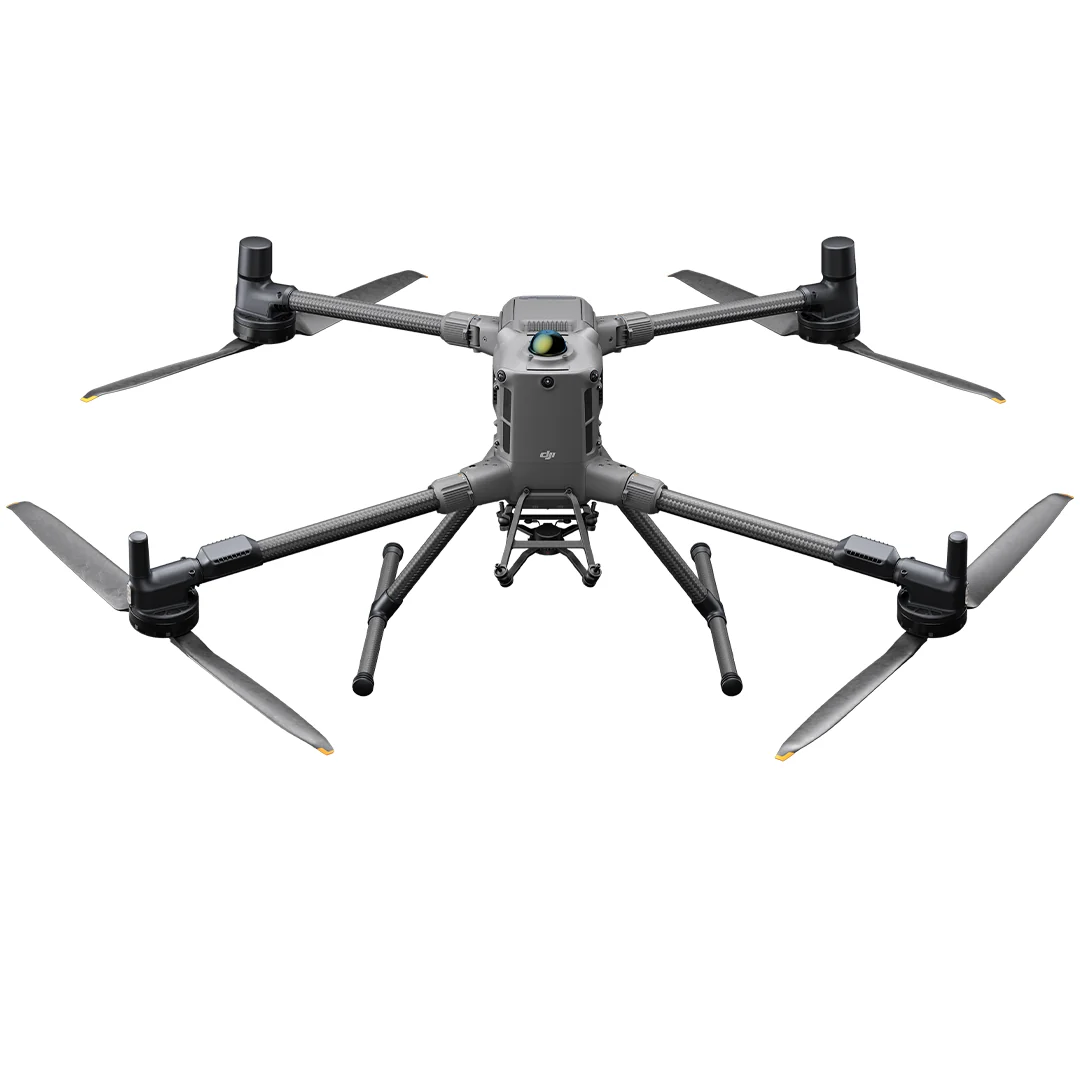
DJI positions the Matrice 400 as its flagship enterprise drone platform for long-duration, high-payload and complex professional missions.
Its value is not based on one integrated camera. Instead, the aircraft is a modular aerial platform that can be configured around the mission using DJI and compatible third-party payloads.
This design separates Matrice 400 from smaller fixed-camera enterprise drones. A public-safety team can configure the aircraft with an H30T, V1 loudspeaker and S1 spotlight, while a survey team can use P1, L2 or the newer long-range Zenmuse L3.
Four E-Port V2 interfaces are built into the aircraft, and DJI supports multiple gimbal mounting arrangements. This architecture enables sophisticated multi-sensor flights while keeping the underlying airframe, controller and battery ecosystem consistent.
Buyers should therefore select Matrice 400 only after defining the required payload, deliverable, flight environment, range, battery rotation and regulatory framework.
1
H30T inspection, P1 photogrammetry, L2/L3 LiDAR and third-party payload missions require different mounting, power and workflow decisions.
2
One TB100 can operate the aircraft, but continuous field programs normally require a battery-and-charging strategy rather than a single-pack assumption.
3
Verify controller, WB37, case, connectors, DJI Care, payload and regional SKU in writing before order approval.
Official DJI product images
These official manufacturer visuals show the Matrice 400 platform and the specific BS100 and TB100 components named in this product listing.

Official DJI manufacturer image of the flagship enterprise aircraft.
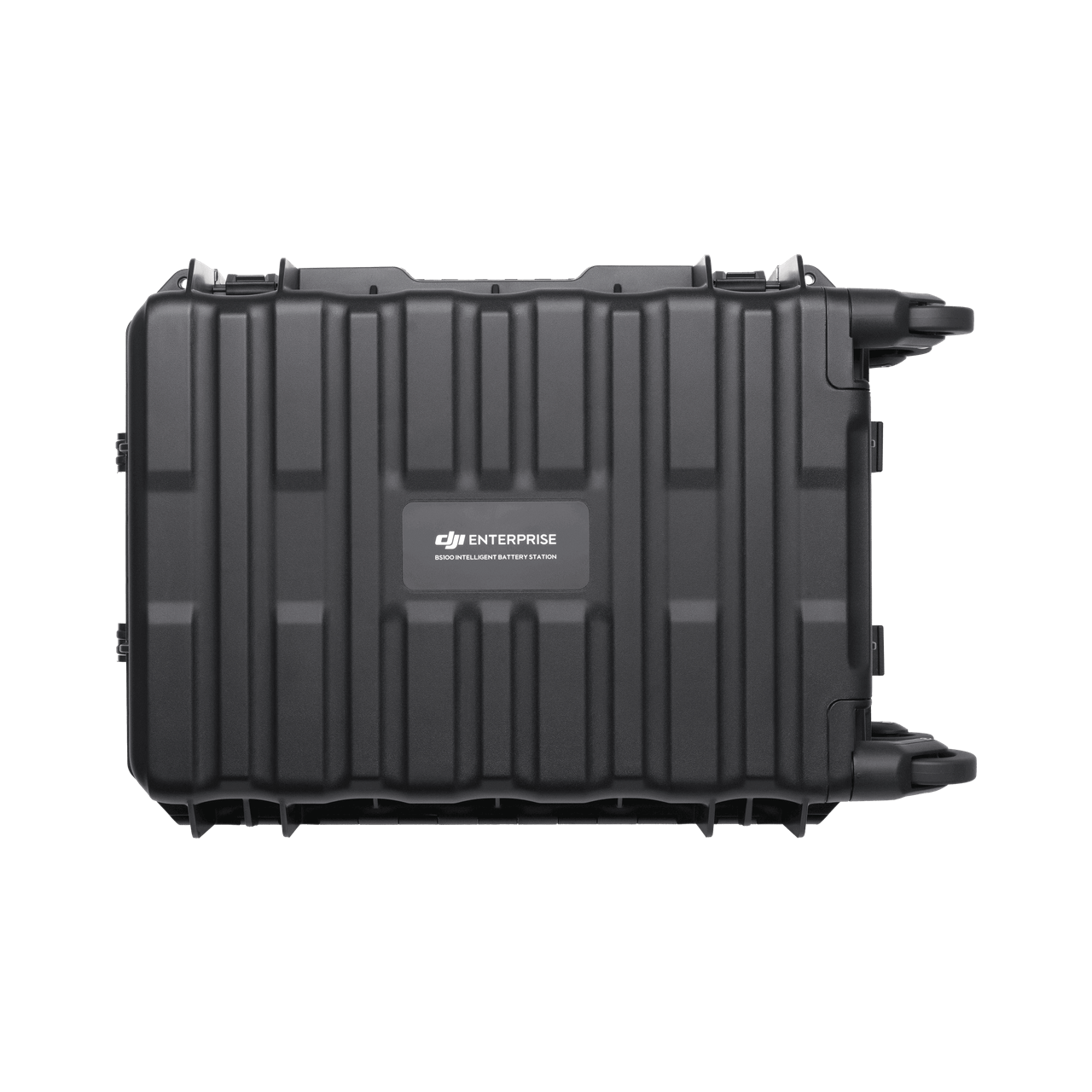
Three TB100 battery ports, two WB37 ports and USB-C charging.
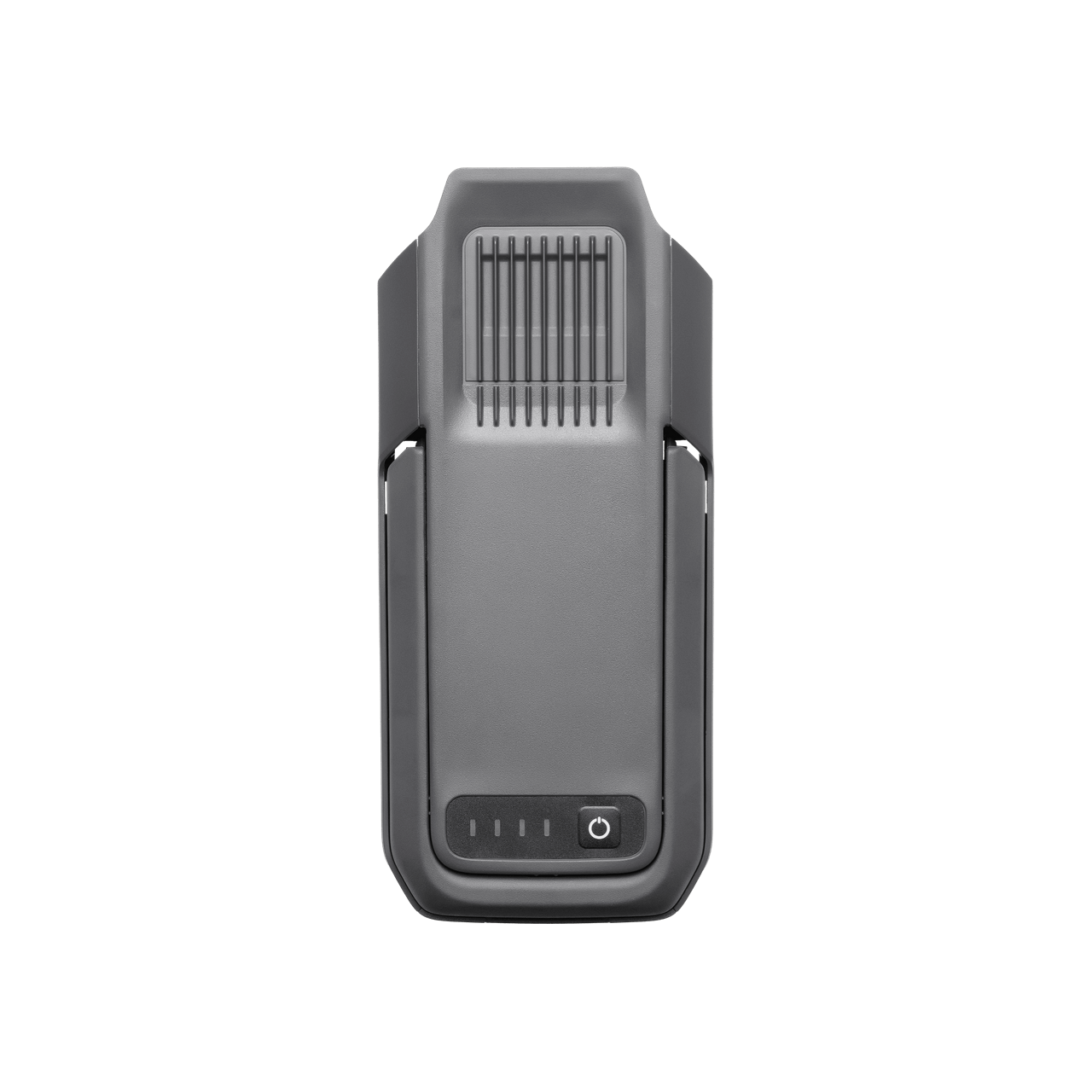
20,254 mAh / 977 Wh flight battery for DJI Matrice 400.

Official DJI application image demonstrating a core Matrice 400 enterprise use case.
Verified DJI specification
The following DJI Matrice 400 specs prioritize DJI’s current official documentation rather than reseller summaries.
| Model | DJI Matrice 400 |
|---|---|
| Product class | Flagship enterprise multi-payload drone platform |
| Weight without battery | 5020 ±20 g |
| Weight with TB100 battery | 9740 ±40 g |
| Maximum takeoff weight | 15.8 kg |
| Maximum payload | 6 kg at third gimbal connector under DJI-specified sea-level conditions |
| Unfolded dimensions | 980 × 760 × 480 mm including landing gear, excluding propellers |
| Folded dimensions | 490 × 490 × 480 mm with landing gear and gimbal, excluding propellers |
| Carrying case dimensions | 779 × 363 × 528 mm |
| Diagonal wheelbase | 1070 mm |
| Propellers | 25-inch 2510F |
| Maximum ascent speed | 10 m/s |
| Maximum descent speed | 8 m/s |
| Maximum horizontal speed | 25 m/s at sea level in no wind |
| Maximum flight time | 59 minutes under DJI test conditions with H30T payload |
| Maximum hover time | 53 minutes under DJI test conditions with H30T payload |
| Maximum no-wind flight distance | 49 km under DJI test conditions |
| Maximum takeoff altitude | 7000 m |
| Maximum wind-speed resistance | 12 m/s during takeoff and landing |
| Ingress protection | IP55 |
| Operating temperature | -20°C to 50°C without solar radiation |
| GNSS | GPS + Galileo + BeiDou + GLONASS when RTK is enabled |
| RTK positioning accuracy | 1 cm + 1 ppm horizontal / 1.5 cm + 1 ppm vertical |
| Airborne ADS-B In | Standard receiver with dual antennas; published reception up to 20 km |
| Aircraft ports | 4 × E-Port V2, USB-C debug port, 2 × Cellular Dongle 2 interfaces |
| E-Port V2 power | Up to 120 W per port |
| Sensing | Omnidirectional vision + rotating LiDAR + upper LiDAR + downward 3D infrared + six-direction mmWave radar |
| Rotating LiDAR point frequency | 520,000 points/sec |
| FPV camera | 1080p / 30 fps, 150° diagonal FOV, starlight-grade night vision |
| Transmission | DJI O4 Enterprise Enhanced |
| Maximum transmission range | 40 km FCC / 20 km CE, SRRC and MIC in unobstructed interference-free conditions |
| TB100 capacity | 20,254 mAh |
| TB100 energy | 977 Wh |
| TB100 weight | 4720 ±20 g |
| TB100 cycle rating | Up to 400 cycles |
| BS100 dimensions | 605 × 410 × 250 mm |
| BS100 weight | 11.8 kg |
| BS100 battery ports | 3 × TB100/TB100C + 2 × WB37 + USB-C |
| TB100 0–100% charge time | 45 min at 220 V fast mode / 70 min at 110 V fast mode / 110 min silent mode |
Real-world flight planning
The 59-minute Matrice 400 flight-time figure is unusually useful because DJI does not measure it with an empty aircraft.
DJI’s official test used the aircraft flying forward at 10 m/s at sea level in no wind while carrying a Zenmuse H30T, for a total aircraft weight of approximately 10,670 g.
DJI measured flight until forced landing caused by battery depletion, which means professional operators should not plan routine missions around using every published minute.
Actual useful mission endurance must preserve regulatory and operational battery reserves and will change with:
DJI separately publishes 53 minutes of maximum hover time under comparable sea-level/no-wind H30T test conditions.
That difference is important for buyers performing bridge, tower, facade or public-safety overwatch missions where the aircraft may spend much more time hovering than moving efficiently forward.
Matrice 400 reaches a published 25 m/s maximum horizontal speed at sea level with no wind.
This higher transit speed can materially improve corridor inspection, emergency-response positioning and large-site deployment, but mission speed should always be limited by payload requirements, airspace, sensing conditions and safe stopping distance.
Multi-payload platform
“6 kg payload” is accurate, but it does not mean every Matrice 400 gimbal position accepts 6 kg.
DJI publishes different payload limits according to mounting interface.
| Matrice 400 interface | Published maximum payload | Important note |
|---|---|---|
| Single gimbal connector | 1.4 kg | Loads above 950 g reduce DJI’s referenced gimbal-damper service life. |
| Dual gimbal connector | 950 g per mount | Useful for complementary payload combinations. |
| Third gimbal quick-release port | 3 kg | Different from the maximum screw-fastened configuration. |
| Third gimbal screw-lock fastening | 6 kg | This is the configuration behind DJI’s headline 6 kg maximum payload figure. |
| Zenmuse L3 connector | 2.1 kg | Designed for the newer L3 survey-grade LiDAR payload. |
Multi-sensor visual, zoom, thermal, laser-rangefinding and NIR payload for public safety, inspection and response.
Long-range 1535 nm LiDAR with dual 100 MP RGB cameras for high-efficiency professional surveying and corridor work.
Integrated frame-based LiDAR, IMU and 4/3 RGB mapping camera for geospatial data acquisition.
45 MP full-frame photogrammetry payload with interchangeable fixed-focus lenses.
Enterprise spotlight and loudspeaker options for emergency response, nighttime missions and public-safety communication.
100-TOPS embedded computing option for onboard AI applications and developer workflows.
AI Robot Supplier currently also lists the
DJI Zenmuse L3 survey-grade LiDAR payload
and
DJI Zenmuse H30T
.
Power-line-level sensing
Obstacle sensing is one of the largest technical upgrades from Matrice 350 RTK to Matrice 400.
DJI combines several sensing layers rather than depending exclusively on conventional stereo vision.
DJI’s horizontal LiDAR provides a 360° horizontal field of view, 58° vertical field of view and 520,000 points per second.
Radar supports small-obstacle and wire detection under manufacturer-defined conditions and supplements optical sensing in difficult environments.
Omnidirectional fisheye visual sensors provide surrounding environmental information while the starlight FPV camera supports low-light operations.
DJI publishes a rotating-LiDAR reference of approximately 35 m for a 21.6 mm steel-core aluminum stranded wire under its specified lighting and angle conditions.
For mmWave radar, DJI publishes approximately 36 m for 12 mm wire and 50 m for 21.6 mm wire under the stated conditions.
Those numbers are not guarantees that every cable will always be detected. Wire material, diameter, angle, lighting, weather and regional radar availability affect performance.
DJI notes that the mmWave radar function may be unavailable or restricted in some countries or regions. Operators should verify regional radio rules and should never treat obstacle sensing as a replacement for mission planning and pilot responsibility.
977 Wh Intelligent Flight Battery
The TB100 Intelligent Flight Battery named in this product package is a major part of the Matrice 400 platform’s endurance.
| Model | TB100 Intelligent Flight Battery |
|---|---|
| Capacity | 20,254 mAh |
| Standard voltage | 48.23 V |
| Maximum charging voltage | 54.6 V |
| Energy | 977 Wh |
| Cell chemistry | Li-ion 13S |
| Weight | 4720 ±20 g |
| Charging temperature | 5°C to 45°C |
| Discharge temperature | -20°C to 75°C |
| Heating | Battery, onboard and station heating supported |
| Discharge rate | 4C |
| Maximum charging power | 2C |
| Published cycle count | Up to 400 cycles |
One TB100 is enough for the aircraft to fly, but one battery does not necessarily constitute a production-ready kit for high-tempo inspection, mapping or emergency-response operations.
Teams planning continuous work should model charging time against average sortie duration and turnaround time.
For example, a mapping program performing repeated long sorties can easily benefit from multiple TB100 batteries even though BS100 has several physical battery ports.
Additional batteries also provide contingency capacity when a pack is cooling, undergoing diagnostics or approaching end-of-service criteria.
Intelligent battery management
The BS100 Intelligent Battery Station in this listing is not simply a charging cable. It is the Matrice 400 field battery-management station.
The BS100 weighs approximately 11.8 kg and measures 605 × 410 × 250 mm. It accepts 100–240 V AC input and supports TB100, TB100C tethered batteries and WB37 controller batteries.
Charges supported flight batteries to 90% for faster operational turnaround and reduced time at maximum state of charge.
Charges the TB100 to 100% when a full battery state is required.
Operators can prioritize faster turnaround or quieter, slower charging according to site requirements.
| Input | Fast Charging Mode | Silent Mode |
|---|---|---|
| 220 V | Approx. 45 min | Approx. 110 min |
| 110 V | Approx. 70 min | Approx. 110 min |
DJI measured those 0–100% charging figures at approximately 25°C. Real charging time changes with ambient temperature, battery temperature and electrical supply.
That voltage dependence matters for international buyers. A charging workflow developed around 220–240 V operation should not assume identical turnaround on 110 V supply.
O4 Enterprise Enhanced control
DJI specifies the RC Plus 2 Enterprise Enhanced as the dedicated Matrice 400 remote controller.
It uses a 7.02-inch, 1920 × 1200, 1400-nit display and DJI O4 Enterprise Enhanced Video Transmission.
Maximum unobstructed interference-free transmission is published at 40 km under FCC and 20 km under CE/SRRC/MIC. Those numbers describe radio capability—not legal permission to operate beyond visual line of sight.
DJI publishes approximately 3.8 hours from the built-in controller battery.
An optional WB37 provides approximately another 3.2 hours, taking the combined reference to about seven hours.
The controller provides 8 GB RAM, 128 GB UFS internal storage and microSD expansion.
Matrice 400 includes a built-in video-transmission relay module. DJI supports using one Matrice 400 as a relay aircraft for another Matrice 400 to help maintain communications where terrain or infrastructure blocks a direct radio path.
The aircraft provides two Cellular Dongle 2 interfaces. Regional availability and cellular-airborne-use rules should be confirmed before relying on enhanced cellular transmission.
Developer and AI ecosystem
Matrice 400 is significantly more developer-friendly than a closed fixed-camera drone, but it should not be described as a ROS development robot.
DJI confirms that RC Plus 2 Enterprise Enhanced supports MSDK. The aircraft also exposes four E-Port V2 interfaces capable of providing up to 120 W per port to supported accessories and Payload SDK devices.
The DJI E-Port V2 Development Kit, X-Port and SkyPort V3 ecosystem allow organizations to integrate approved third-party hardware.
DJI’s optional Manifold 3 provides 100 TOPS of onboard computing capability—60 TOPS from GPU processing plus 40 TOPS from DLA acceleration.
DJI says developers can use PSDK open interfaces and CUDA components to build drone AI applications, while commercial developers can pursue DJI ecosystem review for production deployment.
DJI FlightHub 2 currently lists Matrice 400 among its supported aircraft platforms.
Buyers whose project depends on a particular SDK function, third-party payload, cloud API or autonomous workflow should validate that exact requirement before purchase.
Professional use cases
Long endurance, wire-aware sensing and H30/H30T compatibility support transmission-line, tower and substation workflows.
P1, L2 and L3 payload compatibility allows photogrammetry and LiDAR workflows ranging from detailed sites to long corridors and large-area mapping.
Thermal imaging, long endurance, V1 loudspeaker, S1 spotlight and intelligent detection support coordinated emergency-response missions.
H30T thermal imaging and multi-payload capability allow visual, thermal and illumination tools to be combined in one aircraft.
High-payload flexibility, close-structure positioning and multiple sensor options support bridge, facade, tower and industrial-asset assessment.
DJI supports ship-based takeoff and landing workflows, including landing on moving vessels under supported conditions.
Long-range visual, thermal, LiDAR and third-party gas-detection payloads can support inspection programs when properly integrated.
Photogrammetry and LiDAR payloads support progress monitoring, as-built modeling, earthwork measurement and digital-twin workflows.
Manifold 3, PSDK, MSDK and E-Port V2 provide a platform for custom enterprise sensing and onboard AI development.
Limitations
Enterprise platform comparison
Matrice 350 RTK remains a capable professional platform, but Matrice 400 substantially increases payload capacity, communication range, speed and obstacle-sensing sophistication.
| Specification | DJI Matrice 400 | DJI Matrice 350 RTK |
|---|---|---|
| Maximum flight time | 59 min with H30T reference test | 55 min no-payload reference test |
| Maximum takeoff weight | 15.8 kg | 9.2 kg |
| Headline payload capacity | Up to 6 kg | 960 g per single gimbal damper reference |
| Maximum horizontal speed | 25 m/s | 23 m/s |
| Maximum FCC transmission | 40 km | 20 km |
| Maximum CE transmission | 20 km | 8 km |
| Transmission system | O4 Enterprise Enhanced | O3 Enterprise |
| Obstacle sensing | Vision + rotating LiDAR + upper LiDAR + infrared + six-direction mmWave radar | Six-direction vision + infrared sensing |
| Ingress protection | IP55 | IP55 |
| Operating temperature | -20°C to 50°C | -20°C to 50°C |
| Current-generation LiDAR compatibility | L3 + L2 | L2 |
| Best fit | Long-endurance, high-payload, advanced sensing and new enterprise deployments | Established enterprise fleets and lower payload requirements |
Choose Matrice 400 when the project benefits from its higher payload limit, longer communications range, power-line sensing, L3 compatibility, additional expansion ports or long-duration mission architecture.
Choose Matrice 350 RTK when existing fleet compatibility, current payload inventory and lower platform cost outweigh the Matrice 400 upgrades.
Send the required payload, mission type, expected acreage or inspection distance, operating environment and delivery country. The aircraft should be selected around the mission rather than headline specifications alone.
Package verification
The current AI Robot Supplier product title explicitly identifies three principal components:
Those components should therefore appear on the final quotation and packing list for this exact product.
However, the current live product description does not clearly establish the remaining package contents. They should not be silently assumed.
Matrice 400 aircraft, one BS100 battery station and one TB100 flight battery.
RC Plus 2 Enterprise Enhanced, WB37 battery, carrying case, straps, cables, propellers, tools and gimbal hardware.
Zenmuse camera/LiDAR payloads, dual/third gimbal connectors, D-RTK 3, Manifold 3, S1, V1, AP100 and extra TB100 batteries.
A comparable $11,999 U.S. combo from another dealer explicitly lists the aircraft, BS100, TB100, RC Plus 2, WB37, carrying case and supporting hardware.
Buyers should therefore compare the $8,393 AI Robot Supplier listing against the same written bill of materials before concluding how large the price advantage is.
International logistics
International shipping for Matrice 400 requires more planning than shipment of a small consumer drone because the TB100 contains 977 Wh of lithium-ion energy.
Large lithium batteries are commonly subject to dangerous-goods handling, carrier restrictions, special documentation and route limitations.
Before ordering for international delivery, confirm:
Professional buyers travelling internationally with the platform should not assume the 977 Wh TB100 can be handled like a consumer-camera battery.
Warranty and lifecycle
DJI offers DJI Care Enterprise Plus and extended warranty options for Matrice 400 in supported markets.
DJI describes Care Enterprise Plus as providing repair coverage within specified coverage limits and fleet-level options. Exact eligibility and terms vary by region and purchased service plan.
The Matrice 400 is also currently supported under DJI’s Enterprise Maintenance Program in multiple regions, including North America, the EU, UK, Australia and Japan, subject to regional model eligibility.
For this AI Robot Supplier product, customers should confirm in writing:
DJI also publishes a dedicated Matrice 400 Maintenance Manual, which should form part of a professional fleet’s inspection and service program.
Buying checklist
Send your delivery country, mission, payload requirement and battery requirement so the aircraft, BS100, TB100, controller and accessory scope can be confirmed before purchase.
Official manufacturer video
DJI Enterprise’s official Matrice 400 introduction demonstrates the aircraft’s endurance, multi-payload architecture, power-line obstacle sensing, intelligent features and enterprise mission positioning.
Official technical resources
Buyer questions
High-intent buyer questions covering DJI Matrice 400 price, specs, battery, payload, BS100 charging, controller, payload compatibility and international shipping.
This AI Robot Supplier Matrice 400 listing is currently priced at $8,393 and identifies the BS100 Intelligent Battery Station and TB100 Intelligent Flight Battery in the product title. Current comparable packages from other specialist sellers are commonly priced higher, but exact included components must be compared before judging final value.
Yes. The current product page is marked in stock. Destination-specific availability, package contents, warranty and shipping should be confirmed before order approval.
DJI publishes up to 59 minutes of forward flight under specified sea-level, no-wind test conditions while carrying an H30T payload. Real commercial missions require battery reserve and vary with payload, wind, speed, altitude, temperature and battery condition.
DJI publishes up to 53 minutes of hovering under its defined no-wind sea-level H30T test conditions.
DJI publishes up to 6 kg, but that headline capacity applies to the third gimbal connector using screw-lock fastening under specified sea-level conditions. Individual gimbal mounting positions have lower limits.
Yes. DJI says Matrice 400 can support up to seven payloads simultaneously across its gimbal and E-Port V2 architecture, subject to total weight, interface and configuration limits.
Matrice 400 uses the TB100 Intelligent Flight Battery, rated at 20,254 mAh, 48.23 V, 977 Wh and approximately 4.72 kg.
DJI publishes a 400-cycle reference for the TB100 Intelligent Flight Battery. Actual useful service life depends on charging, storage, temperature and operating conditions.
With the BS100 station at 220 V, DJI publishes approximately 45 minutes from 0–100% in Fast Charging Mode. At 110 V the corresponding fast-charge figure is approximately 70 minutes. Silent Mode is approximately 110 minutes.
BS100 provides three TB100/TB100C battery ports, two WB37 battery ports and a USB-C output. Charging behavior and sequencing depend on the selected mode.
DJI specifies the RC Plus 2 Enterprise Enhanced controller. The current AI Robot Supplier product title does not explicitly state that it is included, so controller inclusion should be confirmed on the quotation.
DJI publishes up to 40 km under FCC and 20 km under CE/SRRC/MIC in unobstructed, interference-free conditions. These figures describe technical radio performance and do not override local flight-distance or BVLOS regulations.
Yes. The aircraft itself incorporates a horizontal rotating LiDAR plus upper LiDAR as part of its obstacle-sensing system. This is separate from mission LiDAR payloads such as Zenmuse L2 or L3.
DJI specifically designed the platform for power-line-level obstacle sensing using rotating LiDAR, mmWave radar and vision. Detection performance depends on conductor size, angle, lighting, material and environmental conditions.
Yes. DJI currently lists Zenmuse L3 as compatible specifically with Matrice 400 using the dedicated Zenmuse L3 single gimbal connector.
Yes. H30T is officially compatible with Matrice 400 and is one of the primary payloads for public safety, thermal inspection and long-range visual missions.
Yes. DJI confirms MSDK support through the RC Plus 2 Enterprise Enhanced environment. Matrice 400 also supports Payload SDK-oriented integrations through the E-Port V2 ecosystem.
DJI does not market Matrice 400 as a native general-purpose ROS 2 platform. Developers should use DJI’s MSDK, Payload SDK, Cloud API and Manifold 3 ecosystem or validate the specific third-party integration they require.
Matrice 400 increases maximum flight time to 59 minutes, maximum takeoff weight to 15.8 kg, headline payload capacity to 6 kg, top speed to 25 m/s and FCC transmission to 40 km. It also adds rotating LiDAR and mmWave radar obstacle sensing plus a newer O4 Enterprise Enhanced communications architecture.
The aircraft carries an IP55 ingress-protection rating under DJI’s controlled test conditions. DJI states that protection is not permanent and may decrease through product wear.
Yes, international B2B shipment can be arranged for supported destinations, but the 977 Wh TB100 requires appropriate lithium-battery freight planning. Customs, insurance, local radio configuration, aviation rules and warranty territory should be confirmed first.
The current product title explicitly identifies the DJI Matrice 400, BS100 Intelligent Battery Station and TB100 Intelligent Flight Battery. The controller, WB37, DJI Care, carrying case, camera payloads and other accessories should be confirmed on the final written packing list rather than assumed.
AI Robot Supplier
Matrice 400, BS100, TB100, controller, accessories and payload scope can be confirmed before payment.
Match H30T, P1, L2, L3 or third-party payload requirements to the correct gimbal and workflow.
Coordinate export packing, 977 Wh TB100 battery freight, insurance and destination documentation.
Review battery rotation, charging, software, RTK and developer requirements before deployment.
Enterprise drone quotation
Send your delivery country, quantity, intended mission, payload requirement and battery requirement to confirm the current $8,393 listing, availability and complete supplied package.
Tell us what you need — we respond within one business day.