Zivid / application buying guide
Zivid 3 XL250 Industrial 3D Camera
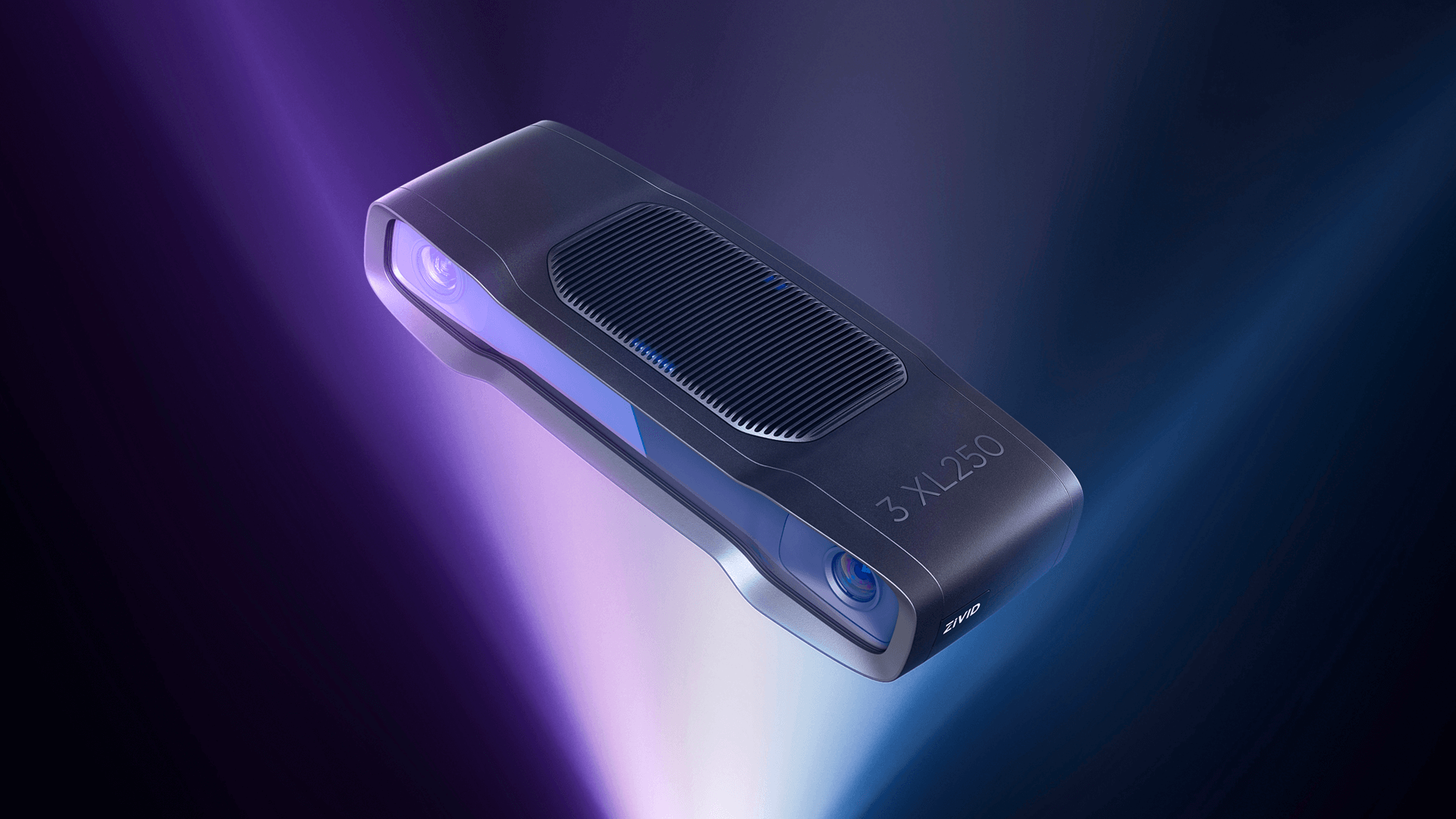
The Zivid 3 XL250 is an industrial 2D and 3D camera for larger robotic working volumes, including depalletising and large-bin picking. Its role is to provide image and depth information for an integrated handling system. Confirm the working distance, mounting geometry and processing requirements for the intended cell.

Where Zivid 3 XL250 fits
Applications and buying fit
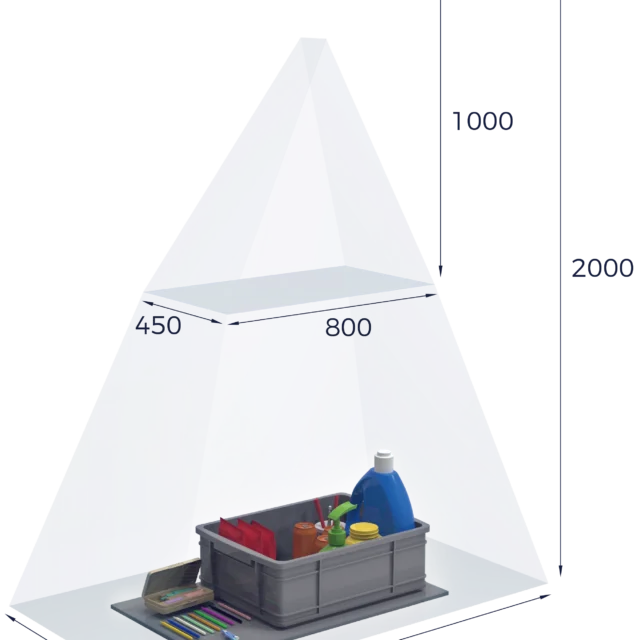
Evaluate XL250 where a stationary camera must cover a pallet or large container from a greater distance. Provide the tallest load, lowest remaining layer, pallet size and robot clearance envelope. Confirm field of view and resolution at both the near and far working positions.
What this offer covers
Specify the camera hardware revision, data and power cables, power supply, network accessories, mounting, calibration resources and SDK scope. The host computer, robot, gripper, safety hardware and application commissioning must be separately identified unless included in writing.
Zivid 3 XL250 specifications
| Manufacturer order code | ZVD3-XL250 |
|---|---|
| Image resolution | 2816 × 2816 pixels; approximately 8 MP |
| Imaging | Structured-light 3D with colour output |
| Target applications | Depalletising; large-volume bin picking |
| Installation approach | Stationary mounting for large working volumes |
| Recommended working distance | 1500–4000 mm |
| Focus distance | 2500 mm |
| Dimensions / mass | 336 × 133 × 70 mm / 2.7 kg |
| Protection | IP65 |
| Network | 10 Gigabit Ethernet |
| Typical capture time | 250–1500 ms; settings and host dependent |
Source: Zivid documentation. Published values are not a guarantee of performance in every application.
Integration and compatibility
Software and control
Review current Zivid SDK support, host GPU and network requirements. Acquisition, point-cloud processing, segmentation, grasp planning and robot communication contribute separately to end-to-end time. The camera does not include every third-party perception or motion licence.
Engineering checks that matter
Use the datasheet recommended 1.5–4 m range for initial design. Extended-coverage marketing is not an application-specific guarantee. Check the tallest pallet and final low layer, with robot clearance included. Allow for network transfer and host processing; a fast exposure is not the time needed to recognise a grasp and execute it.
Compare configurations before buying
Compared with the smaller R-series MR130, XL250 targets a different working volume and installation distance. Choose the field of view, mounting location and spatial result required by the application. Higher pixel count alone does not establish a better fit for a close-range station.
| Metric | Zivid 3 XL250 | Zivid 2+ MR130 |
|---|---|---|
| Resolution | 2816 × 2816 | 2448 × 2048 |
| Focus | 2500 mm | 1300 mm |
| Distance | 1500–4000 mm recommended | 800–2700 mm working range |
| Selection | Pallet / large-bin coverage | Compact piece-picking volume |
Plan the complete installation
Transparent, reflective and dark materials still need application testing. The manufacturer datasheet identifies limits for extremely transparent materials. Capture timing depends on settings and processing conditions; minimum acquisition time must not be sold as a complete picking-cycle guarantee.
How to validate the application
Test high and low layers, edge positions and partly occluded items. Inspect usable data on the suction or finger contact area. Include extremely transparent samples where relevant: the datasheet identifies limits for these materials. Record network setup, host and capture profile with the results.
Agree the acceptance evidence
Define the representative products or parts, operating conditions and pass criteria before approval. Keep the selected hardware, software versions and settings with the test record. Assign responsibility for installation, commissioning, training and recovery procedures in the proposal.
Zivid 3 XL250 price, supply and package scope
Request a written quotation
Ask for the exact model, condition, quantity and itemised accessories. Selling price and lead time are confirmed against that offer. External market listings are research references and are not our selling prices or proof of stock.
Delivery, warranty and support
Confirm packing, insurance, freight terms, customs responsibilities and the service location for your destination. Warranty coverage and return procedures depend on the supplied package and commercial agreement. Request installation and training separately where required.
Documentation and project resources
Zivid 3 XL250 frequently asked questions
Is XL250 a complete depalletising system?
No. It is a vision component. Robot hardware, gripping, motion control, safeguarding and process integration must be specified.
Is acquisition time the same as capture time?
No. Capture-to-result timing also involves processing. Evaluate the full camera and application pipeline.
Which working distance should I use?
Determine it from the exact camera datasheet, mounting position and required near/far field of view for the load.
Should we design around a guaranteed 4.5 m distance?
Use the linked datasheet recommended 1.5–4 m range initially. Extended operation requires evidence for the actual scene and performance requirement.
How do I request an accurate quotation?
Send the exact model, delivery country, quantity, required configuration and target purchase date. Include the task, existing equipment and any acceptance requirement so the offer can be checked against your application.
What delivery and warranty terms apply?
The written quotation must identify freight terms, import responsibilities, lead time, warranty coverage and service route. A third-party seller listing does not establish AI Robot Supplier inventory or delivery commitments.
Build the right configuration
Request your Zivid 3 XL250 quotation
Send your destination, quantity, configuration and application requirements. Ask for a complete written scope before ordering.