Compare humanoid robots for sale in 2026, including compact development platforms, full-size bipedal robots, industrial humanoids and advanced service robots. Review current price references, applications, development capabilities and important buying factors before choosing a robot for research, education, business, manufacturing, logistics or embodied AI development.
This 2026 guide compares humanoid robots for sale across different price ranges, sizes, development levels and commercial applications.
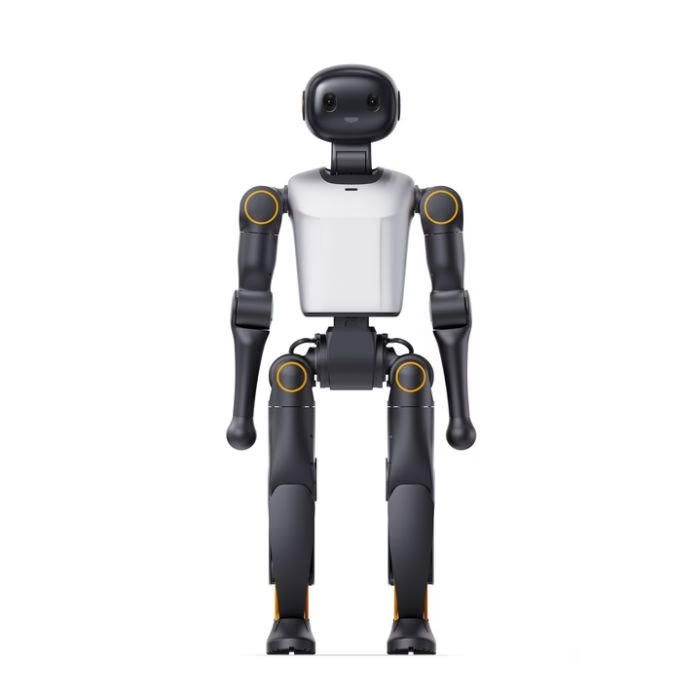
Humanoid robot prices now span an unusually wide range. Compact research and education platforms can cost below $10,000, while larger developer robots, advanced manipulation platforms and industrial humanoids can cost tens of thousands of dollars or more. Some enterprise systems are supplied only after the exact configuration and project requirements are confirmed.
AI Robot Supplier maintains a large humanoid robot catalog covering multiple manufacturers and application classes. This guide is designed to help buyers narrow that catalog before moving to individual product specifications or requesting a quotation.
Humanoid Robot Prices in 2026
There is no single “humanoid robot price.” Cost changes significantly according to robot size, degrees of freedom, onboard computing, sensors, dexterous hands, locomotion capability, battery system, developer access and the intended application.
When comparing humanoid robots for sale, buyers should look beyond the advertised price and verify the exact hardware, software access, included accessories and intended deployment environment.
As a practical 2026 buying reference, compact humanoids can start at approximately $4,500–$8,000. More capable research and embodied-AI systems commonly appear between approximately $10,000 and $35,000. Larger service, industrial and highly dexterous systems can reach $40,000–$100,000+. Some factory-oriented robots are quotation-based rather than sold at one fixed public price.
| Price range | Typical humanoid class | Common applications |
|---|---|---|
| Below $10,000 | Compact development and education robots | Teaching, robotics development, demonstrations, AI experimentation |
| $10,000–$25,000 | Advanced compact and mid-size humanoids | Embodied AI, research, interaction, service pilots, development |
| $25,000–$60,000 | Higher-spec development, full-size and wheeled humanoids | Manipulation research, industrial pilots, logistics, service applications |
| $60,000–$100,000+ | Premium service and highly capable humanoid systems | Commercial interaction, advanced research and specialist deployment |
| Request quotation | Enterprise and industrial humanoids | Manufacturing, warehousing, material handling and customized projects |
Price ranges are purchasing references rather than universal manufacturer price bands. Exact prices can change with configuration, inventory, accessories, freight, taxes, warranty terms and destination.
For buyers comparing humanoid robots for sale under $10,000, compact platforms can provide a practical entry point for education, demonstrations and early-stage robotics development.
Humanoid Robots for Sale: 2026 Comparison
The models below illustrate the range currently represented in the AI Robot Supplier catalog. They should not be treated as interchangeable robots: a compact university development platform has very different requirements from a humanoid intended for factory automation.
Our current selection of humanoid robots for sale includes compact education platforms, developer-focused robots, full-size humanoids and industrial systems from multiple manufacturers.
| Humanoid robot | Current price reference | Robot class | Best suited for |
|---|---|---|---|
| Booster K1 GEEK | Approx. $4,500 | Compact humanoid | Education, introductory development and demonstrations |
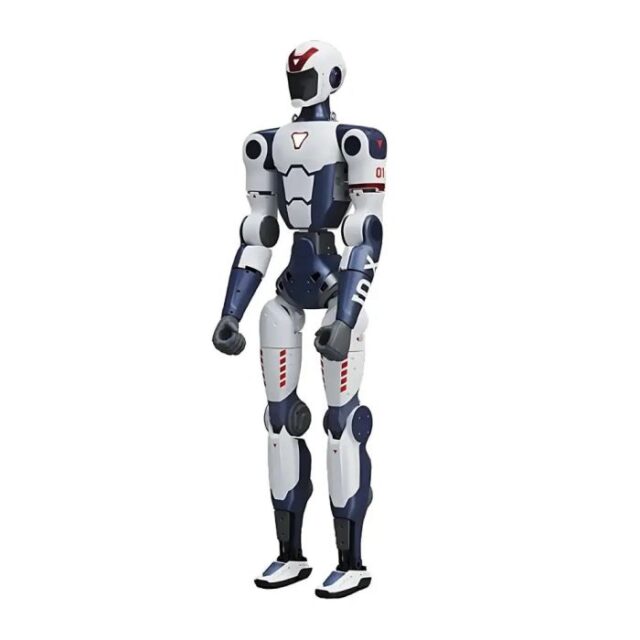
| Unitree R1 Basic | Approx. $5,994 | 26-DOF compact humanoid | Education, demonstrations and platform evaluation |
| Booster K1 EDU | Approx. $6,000 | Developer humanoid | University teaching and robotics research |
| Booster K1 Professional | Approx. $7,500 | Developer humanoid | Embodied AI, ROS 2 and advanced education |
| Noetix E1 | Approx. $11,997 | Embodied-intelligence humanoid | Research, interaction and developer applications |
| AgiBot X2 | Approx. $14,544 | Open development humanoid | Embodied AI, education and research |
| UBTECH U1 Lite | Approx. $16,500 | Upper-body humanoid | Interaction, demonstrations and service applications |
| Booster T1 Standard | Approx. $20,400 | Humanoid development platform | Research and advanced robotics development |
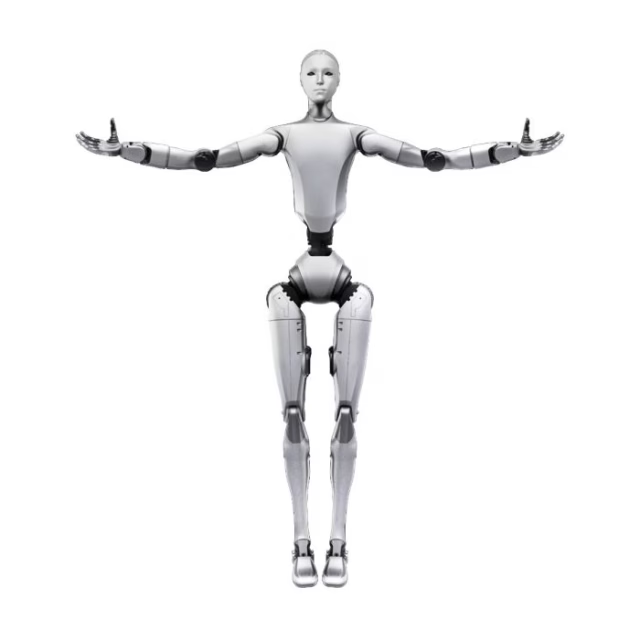
| Unitree H2 | Approx. $23,940 | Full-size humanoid | Advanced humanoid development and platform evaluation |
| AgiBot X2 Pro | Approx. $23,760 | High-DOF developer humanoid | Manipulation, HRI and embodied-AI research |
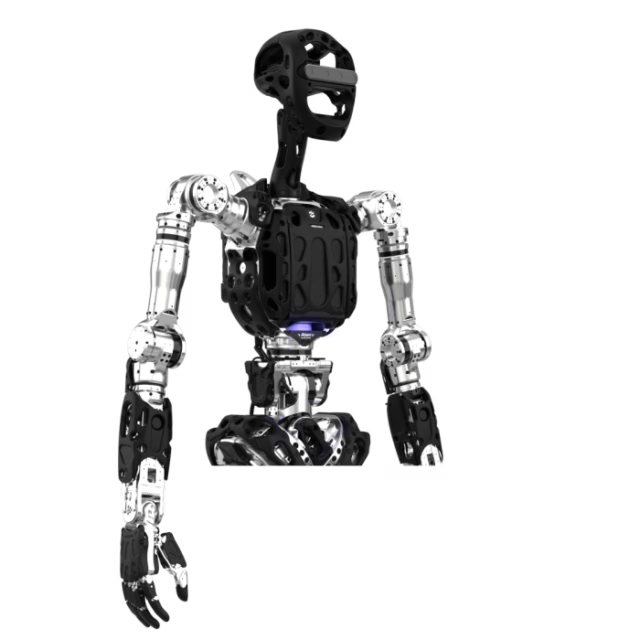
| PNDbotics Adam-U | Approx. $27,000 | Upper-body humanoid | Manipulation, development and AI research |
| AgiBot X2 Ultra | Approx. $29,232 | Advanced developer humanoid | Perception, autonomy and advanced embodied AI |
| PNDbotics Adam-U Pro | Approx. $34,800 | Upper-body humanoid | Advanced manipulation and research |
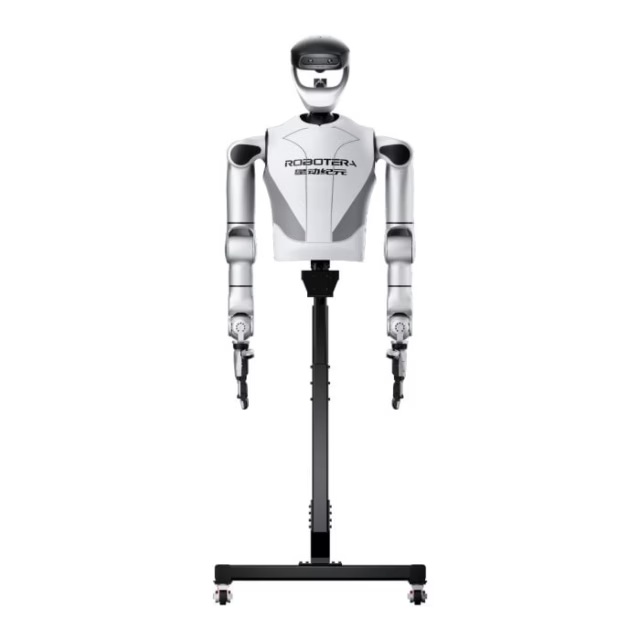
| RobotEra M7 | Approx. $60,000 | Upper-body humanoid | Dexterous manipulation, teleoperation and embodied AI |
| UBTECH U1 Ultra | Approx. $95,970+ | Hyper-bionic humanoid | Premium interaction and specialist applications |
| Fourier GR-3 | Approx. $106,837 | Full-size care/service humanoid | Research, human interaction and care-oriented development |
| Figure 03 | Request quote | General-purpose humanoid | Advanced manufacturing and physical-AI evaluation |
| Apptronik Apollo 2 | Request quote | Industrial humanoid | Manufacturing, logistics and material movement |
| UBTECH Walker S | Request quote | Industrial humanoid | Smart factories, inspection and production workflows |
Key Humanoid Robot Specifications Compared
Price alone does not show whether a platform fits a project. The table below compares several current models using configuration-specific specifications already documented on AI Robot Supplier and, where noted, manufacturer information. Values that vary by version should still be confirmed on the final quotation.
| Model | Height / format | DOF | Compute / development | Runtime | Price reference |
|---|---|---|---|---|---|
| Unitree R1 Basic | 1.23 m biped | 26 | 8-core processor; standard R1 does not include the R1 EDU secondary-development package | About 1 hour | $5,994 |
| Unitree H2 | 1.82 m full-size biped | 31 | Intel Core i5 on standard H2; H2 EDU is the custom-development configuration | About 3 hours | $23,940 |
| Noetix E1 | About 1.36 m biped | 21 baseline; up to 29 by configuration | Developer-oriented configurations; optional higher compute, LiDAR and dexterous hands | About 1–2 hours | $11,997 |
| AgiBot X2 | About 1.31 m biped | Variant dependent; about 27–31 reported across X2 trims | AimDK_X2 developer framework with task APIs and sensor access | Up to about 2 hours depending on configuration and use | $14,544 |
| AgiBot X2 Ultra | About 1.31 m / 39 kg biped | 30 | AimDK_X2; 3D LiDAR, RGB-D and additional perception hardware; auto-docking support | Configuration dependent; docking extends operating availability | $29,232 |
| RobotEra M7 | 1.19 m upper-body platform | 19 without hands; 43 with hands | Teleoperation support including Meta Quest; stereo vision and 3D LiDAR listed | Depends on supplied base and configuration | $60,000 |
For an external manufacturer reference, review the official Unitree R1 specifications. Unitree currently publishes R1 family dimensions, weight, DOF, battery references and configuration differences on that page.
Technical specifications are especially important when comparing humanoid robots for sale, because two similarly priced platforms can differ substantially in compute, sensing, runtime, hand configuration and developer access.
Important: current catalog prices are reference prices checked in September 2026. Always open the individual product page or request a written quotation before making a purchasing decision because configuration and availability can change.
Shop Current Humanoid Robots
The products below are a curated group of complete humanoid robots selected from the live WooCommerce catalog. This avoids pulling unrelated components that may share a broad taxonomy while still keeping product images, current store prices and product links dynamic.
-
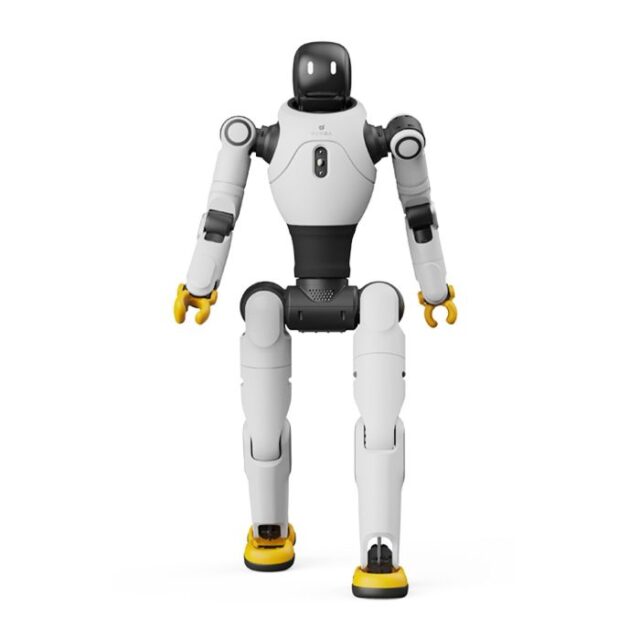 Add to Cart — $14,544.00
-
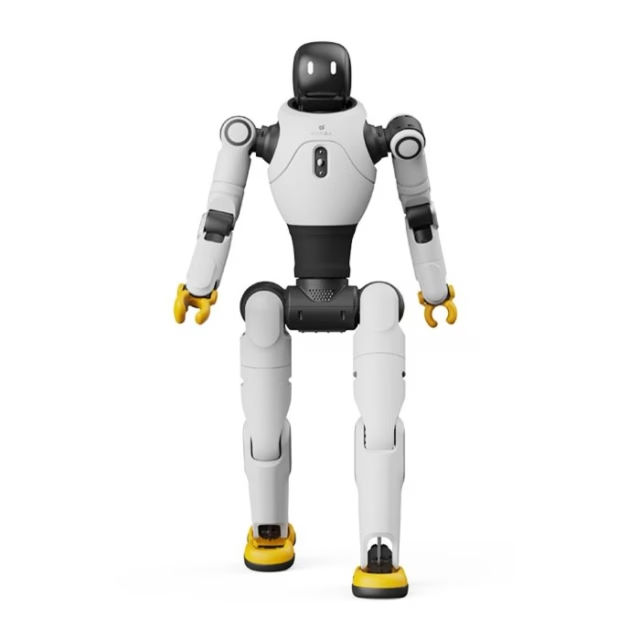 Add to Cart — $29,232.00
-
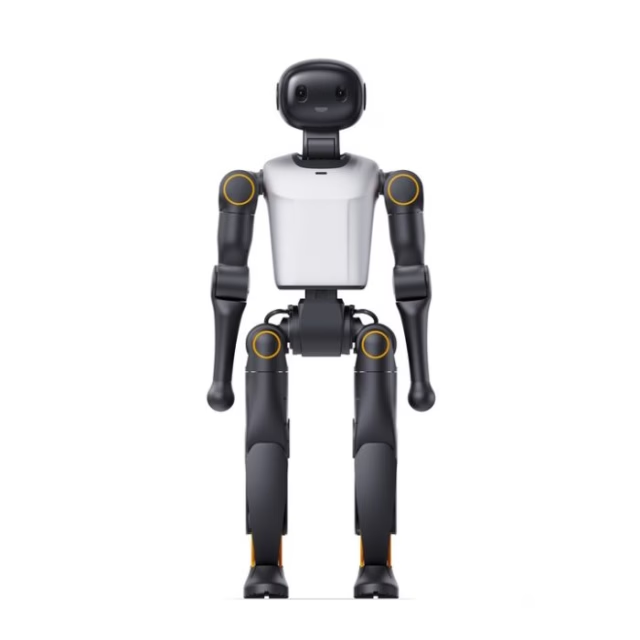 BOOSTER ROBOTICSAdd to Cart — $5,999.99
Booster K1 EDU Humanoid Robot
-
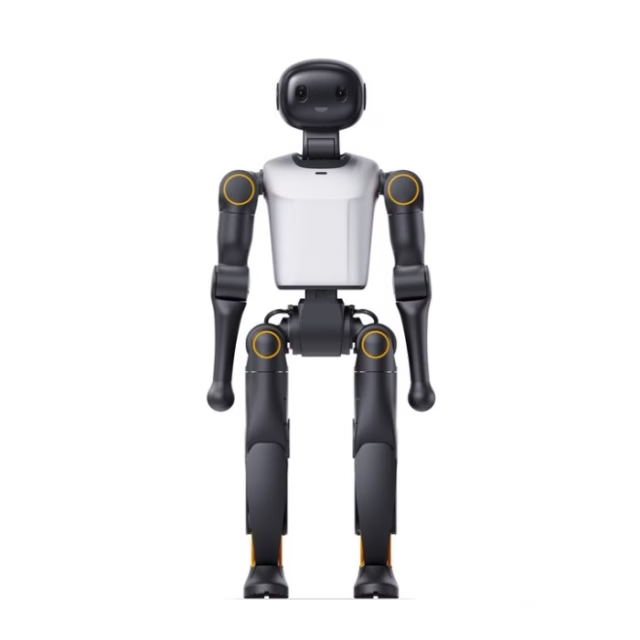 BOOSTER ROBOTICSAdd to Cart — $4,500.00
Booster K1 GEEK Edition Humanoid Robot
-
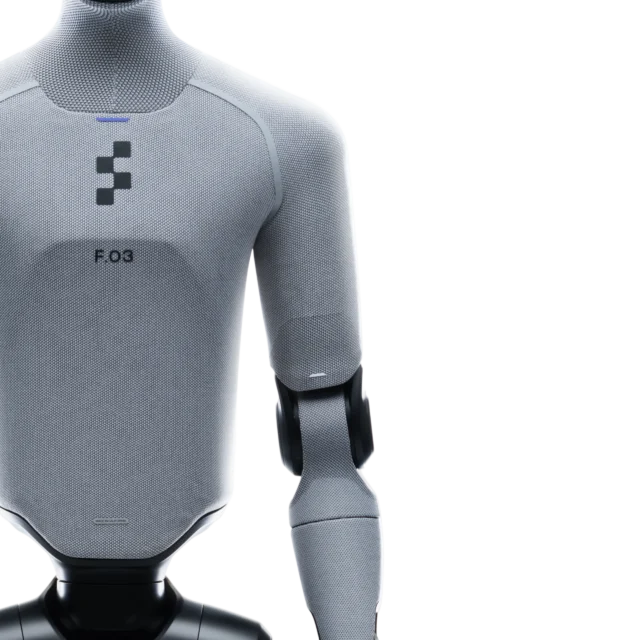 Figure AI
Figure 03 Humanoid Robot
-
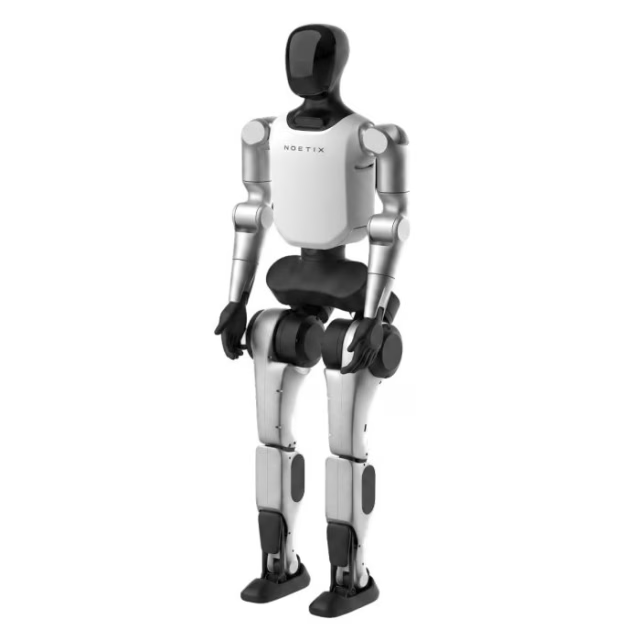 Add to Cart — $11,997.00
-
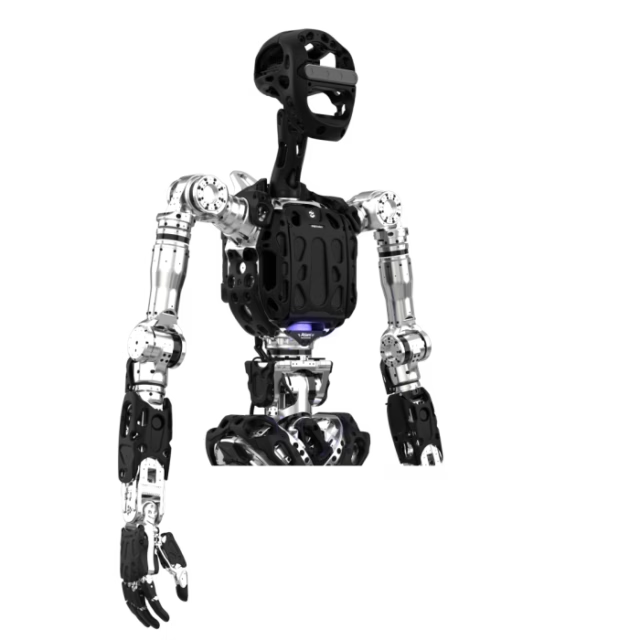 Add to Cart — $34,800.00
-
 Add to Cart — $27,000.00
-
 Add to Cart — $59,999.99
-
 Add to Cart — $95,970.00
-
 UNITREE ROBOTICSAdd to Cart — $23,940.00
Unitree H2 Humanoid Robot
-
 UNITREE ROBOTICSAdd to Cart — $5,994.00
Unitree R1 Humanoid Robot (R1 / R1 Basic)
Which Humanoid Robot Should You Buy?
The best humanoid robot depends much more on the intended job than on price alone. Buyers comparing humanoid robots for sale should first define the intended application, required software access and realistic deployment budget. Then decide whether the robot will primarily be used for software development, academic research, manipulation, human interaction, industrial automation or public demonstrations.
For universities and robotics research
Research buyers should prioritize software access. Look for a documented SDK, ROS or ROS 2 compatibility, access to sensor data, simulation tools, control interfaces and sufficient onboard compute. Platforms such as Booster K1 Professional, Noetix E1, AgiBot X2/X2 Pro and development-oriented Unitree configurations are more relevant to this requirement than a humanoid designed primarily for public interaction.
Universities comparing humanoid robots for sale should prioritize development access, documentation, sensor interfaces and long-term platform support rather than choosing solely by appearance or price.
For embodied AI development
Embodied-AI projects usually need more than walking. Researchers may require cameras, depth sensing, LiDAR, microphones, force feedback, dexterous hands, teleoperation and access to low-level or task-level APIs. Onboard GPU or accelerator capability also matters when perception and AI models need to run directly on the robot.
For factories and warehouses
Industrial buyers should focus on repeatability, useful payload, manipulation reliability, runtime, battery strategy, safety, integration and measurable task performance. A robot that performs an impressive demonstration may not yet be suitable for a production workflow that must operate thousands of cycles.
For a deeper industrial comparison, see our Best Humanoid Robots for Warehouses and Factories 2026 guide, which covers platforms such as UBTECH Walker, Agility Robotics Digit, AGIBOT, Figure and Apptronik.
For demonstrations, exhibitions and customer interaction
For public-facing use, consider appearance, speech capability, gesture quality, vision, navigation, operating noise, portability and how easily content can be controlled. A compact platform can be more practical than a large industrial humanoid when the goal is exhibitions, education, corporate demonstrations or visitor interaction.
Compact Humanoid vs Full-Size Humanoid vs Upper-Body Robot
| Type | Advantages | Limitations | Typical buyer |
|---|---|---|---|
| Compact biped humanoid | Lower cost, easier transport, smaller test area | Lower reach and payload | Universities, developers, demonstrations |
| Full-size biped humanoid | Human-scale reach and workspace compatibility | Higher cost and more demanding safety requirements | Advanced labs and industrial teams |
| Upper-body humanoid | Focuses budget and complexity on manipulation | No independent biped walking | Manipulation and embodied-AI researchers |
| Wheeled humanoid | Efficient movement on smooth indoor floors | Less capable on stairs and highly uneven terrain | Service, logistics and indoor commercial deployments |
What Determines the Price of a Humanoid Robot?
Two robots that appear similar in photographs can differ dramatically in price because much of the value is inside the platform. Important cost drivers include:
- Size and mechanical complexity: full-size bipedal systems normally require larger actuators, batteries and structures.
- Degrees of freedom: additional articulated joints generally increase control complexity and hardware cost.
- Hands and manipulation: simple grippers are much less complex than multi-finger dexterous hands with tactile or force sensing.
- Onboard AI compute: developer configurations may include NVIDIA Jetson or other high-performance computing modules.
- Perception: RGB cameras, stereo vision, RGB-D sensors, LiDAR, microphones, IMUs and force sensors change capability and price.
- Software access: SDKs, APIs, simulation packages and secondary-development rights can differentiate a research configuration from a standard unit.
- Battery system: runtime, hot-swappable batteries, chargers and autonomous charging systems affect real operating cost.
- Industrial engineering: systems intended for factories require substantially more attention to reliability, safety, connectivity and deployment support.
7 Things to Check Before Buying a Humanoid Robot
1. Exact model and configuration
Do not buy only by family name. A manufacturer may sell Basic, EDU, Pro, Ultra or other versions of the same robot, with different compute, hands, sensing and software access.
2. Developer and SDK access
If your organization intends to write software, train policies or connect custom sensors, confirm exactly which APIs and control levels are available. A standard demonstration version may not provide the same access as an EDU or developer configuration.
3. Manipulation capability
Check arm reach, payload, wrist articulation, hand type and whether payload figures apply with the arm extended. For real manipulation tasks, object geometry and grasp reliability matter as much as headline payload.
4. Runtime and charging
Published battery endurance is normally measured under specific conditions. Actual runtime changes with walking, manipulation, compute load and environment. For operational deployments, also consider spare batteries, charging time and whether batteries can be exchanged quickly.
5. Safety and operating environment
Dynamic humanoids require suitable operating space and risk controls. Floors, stairs, ramps, people, machinery, cables and other obstacles can change deployment requirements. Industrial projects should include application-level safety assessment rather than assuming the robot itself makes the workflow safe.
6. Warranty, service and replacement parts
Check the warranty applicable to the exact product, the process for technical support and how replacement components are obtained. Development robots may experience significantly different operating conditions from conventional commercial equipment.
7. Total delivered cost
The website price is not always the complete deployed cost. Buyers may also need to budget freight, insurance, customs charges, accessories, spare batteries, developer modules, hands, sensors, integration, commissioning and training.
Humanoid Robots for Industrial Automation
Industrial humanoid development has accelerated because a human-shaped robot can potentially operate around tools, shelves, workstations and aisles originally designed for people. This does not mean a humanoid is automatically the best automation solution.
Industrial teams evaluating humanoid robots for sale should compare real task performance, payload, uptime, manipulation reliability and integration requirements before selecting a platform.
For repetitive fixed processes, a conventional industrial robot or cobot may still offer higher speed, lower cost and greater maturity. For material movement, an autonomous mobile robot may be more efficient. Humanoids become particularly interesting when one mobile platform needs to interact with environments and equipment built around human dimensions.
Humanoid Robots for Research and Education
Universities and AI laboratories are one of the strongest current markets for commercially available humanoids. These buyers often care less about performing a predefined service task and more about the ability to experiment with locomotion, perception, reinforcement learning, teleoperation, manipulation, human-robot interaction and embodied intelligence.
A lower-cost development humanoid can therefore be more useful to a research team than a much more expensive commercial robot if the cheaper platform provides better software access and documentation.
Research teams evaluating humanoid robots for sale should therefore compare SDK access, simulation support, sensors and documentation alongside the mechanical specifications.
Are Humanoid Robots Commercially Available in 2026?
Yes. A growing number of humanoid robots can now be purchased as complete platforms, while others are supplied through commercial quotation or project-based procurement. However, “commercially available” does not mean every humanoid is ready to perform every advertised use case without engineering work.
The number of humanoid robots for sale has increased rapidly, but commercialization levels still differ greatly between education platforms, developer robots and production-focused industrial systems.
Buyers should distinguish between a robot that can be ordered, a development platform intended for experimentation, and a production system with documented performance in a specific industrial workflow.
Buying Humanoid Robots Internationally
International humanoid-robot orders should identify the exact model, configuration, quantity and destination before shipping is arranged. Larger systems may require specialist packing and freight, while batteries can affect transportation procedures.
International buyers searching for humanoid robots for sale should also confirm freight, battery-shipping requirements, warranty coverage, customs responsibilities and the exact configuration supplied.
Before payment, buyers should confirm the supplied configuration, included accessories, applicable warranty, estimated lead time, shipping scope and responsibility for destination import requirements. Business and institutional buyers requiring multiple robots should request a written commercial quotation.
Frequently Asked Questions About Humanoid Robots
How much does a humanoid robot cost in 2026?
Current prices range from several thousand dollars for compact education and development platforms to more than $100,000 for advanced service or industrial systems. The exact configuration is critical when comparing prices.
What is the cheapest humanoid robot for sale?
The lowest-priced model changes as inventory and product lines change. Current AI Robot Supplier catalog references include compact Booster and Unitree platforms below $10,000. When comparing entry-level humanoid robots for sale, verify whether the price includes developer access, hands, batteries and the required control hardware. Check the live humanoid category for current pricing.
Can I buy a Unitree humanoid robot?
Yes. AI Robot Supplier lists multiple Unitree robot configurations. The Unitree R1 Basic, for example, is a compact 26-DOF humanoid, while the Unitree H2 is a larger full-size platform.
What is the best humanoid robot for a university?
Universities should prioritize developer access, ROS compatibility, simulation support, sensor access and documentation. The best model depends on the research program and budget rather than the highest hardware specification.
What is the best humanoid robot for a factory?
There is no universal best factory humanoid. Buyers should compare robots such as UBTECH Walker, Agility Digit, Figure, AGIBOT and Apptronik against the exact manufacturing or logistics task. Reliability, cycle time, runtime and integration are more important than appearance.
Do humanoid robots come with dexterous hands?
Some do, but hand configuration often varies by version. A base robot may use simplified end effectors while an EDU, Pro or advanced configuration offers multi-finger dexterous hands. Confirm the exact hand hardware before ordering.
Can humanoid robots be programmed?
Many research-oriented humanoids support custom development, but not every configuration provides the same access. Confirm SDK availability, ROS or ROS 2 support, low-level controls, API documentation and licensing for the exact robot.
Can humanoid robots be shipped internationally?
Many models can be supplied internationally subject to the exact product, destination, battery and freight requirements. Shipping arrangements and destination-specific terms should be confirmed before the order is finalized.
Explore More Humanoid Robots
- Browse all humanoid robots
- Unitree R1 Basic Humanoid Robot
- Unitree H2 Humanoid Robot
- AgiBot X2 Humanoid Robot
- Figure 03 Humanoid Robot
- Apptronik Apollo 2
- Best Humanoid Robots for Warehouses & Factories 2026
Request a Humanoid Robot Quote
Browse our current humanoid robots for sale or request a quotation for a specific model and configuration.
Need help selecting a humanoid robot? Send the model or application you are evaluating, required quantity, destination country and intended use. For development projects, also tell us whether you require SDK access, ROS compatibility, dexterous hands, LiDAR, additional AI compute or other configuration options.