Humanoid Robots for Research Buying Criteria
 •
Workstation Hardware Research
•
Updated October 4, 2026
•
7 min read
•
Workstation Hardware Research
•
Updated October 4, 2026
•
7 min read
Performance intelligence for workstation buyers.
Humanoid robots for research require more than capable hardware. Specify sensing, software access, safety, support, and delivery terms before procurement.
A research humanoid can look impressive in a demonstration and still be a poor fit for a laboratory. For organizations procuring humanoid robots for research, the decision is less about selecting the most human-like platform and more about securing a system that can be instrumented, programmed, maintained, and operated safely throughout a multi-year project.
That distinction affects the entire procurement process. A platform intended for motion-learning experiments, human-robot interaction studies, embodied AI development, or manipulation research needs different capabilities, documentation, and commercial terms than a unit intended primarily for display or basic education. The right purchase begins with a defined research objective and a product-specific confirmation of what is included.
Start With the Research Question
Humanoid robots are not a single product category. They range from compact bipedal development platforms to full-size systems with dexterous hands, vision sensors, high-torque joints, and onboard AI computing. Their value depends on the experiment they must support.
A team studying locomotion may prioritize actuator control, joint telemetry, foot-force sensing, battery endurance, and recovery behavior after a fall. A team working on embodied perception may place greater weight on camera placement, depth sensing, compute capacity, synchronized sensor data, and access to raw data streams. Human-robot interaction programs may need expressive motion, speech integration, safe operating modes, and a form factor appropriate for work around participants.
This is why procurement specifications should begin with a short application statement. Define the tasks, operating environment, expected test frequency, required data, and the level of software modification the team expects to perform. It is much easier to compare platforms once those requirements are documented.
Evaluate Access, Not Just Hardware
For research buyers, software access often determines whether a humanoid remains useful after the first phase of a project. A capable mechanical platform with restricted interfaces may be suitable for demonstrations but limiting for academic or industrial R&D work.
Confirm which control layers are accessible. Some platforms provide high-level software development kits for navigation, perception, and predefined motion commands. Others may permit lower-level access to joint states, control loops, sensor data, or motion-planning functions. Neither approach is inherently better. High-level APIs can accelerate projects with limited robotics staff, while lower-level access may be essential for teams developing proprietary control, reinforcement learning, teleoperation, or whole-body manipulation methods.
Ask whether the delivered configuration includes development documentation, supported operating systems, middleware compatibility, simulation resources, sample code, and licensing details. If ROS or ROS 2 compatibility is required, clarify whether it is manufacturer-supported, community-maintained, or dependent on an integration effort by the buyer.
It is also prudent to identify what cannot be changed. Firmware restrictions, closed motor controllers, limited source access, or cloud-dependent functions may materially affect the research plan. Transparent sourcing should include confirmation of the delivered software package rather than assumptions based on product videos or early technical announcements.
Select Sensors and End Effectors for the Actual Work
A humanoid’s sensor list can be extensive, but research value comes from relevance and accessibility. Vision work may require stereo cameras, RGB-D sensors, inertial measurement units, microphone arrays, or lidar. Manipulation work may require tactile sensing, force feedback, articulated wrists, and hands with sufficient degrees of freedom. Mobility research may focus on encoders, torque measurements, foot sensors, and accurate timing across the motion stack.
The hand configuration deserves particular scrutiny. A robot with simple grippers may be entirely appropriate for object transfer, tool handling, or constrained industrial experiments. Research involving in-hand manipulation, grasp generalization, or tactile learning may require dexterous hands and accessible force or tactile data. More dexterity generally increases system complexity, cost, maintenance demands, and the amount of integration work required.
Do not assume every sensor shown in marketing materials is installed on every configuration. Confirm the exact sensor suite, compute hardware, hand type, charging equipment, remote controller, batteries, and other accessories included with the quoted unit. Where optional modules are available, determine whether they are factory-installed, field-installable, or subject to separate lead times.
Plan for Compute, Data, and Network Requirements
Humanoid robotics research creates operational demands beyond the robot itself. Modern perception and AI workloads can require substantial GPU capacity, local storage, reliable networking, and disciplined data-management practices. Onboard compute may be sufficient for basic autonomy, while model training, simulation, dataset processing, and large-scale inference may require separate workstation or server infrastructure.
A practical architecture often separates real-time robot control from experimental compute. The robot handles safety-critical functions and low-latency control, while external systems manage training jobs, experiment logging, visualization, and model iteration. The best arrangement depends on latency tolerance, wireless reliability, data sensitivity, and available IT resources.
Before purchase, verify onboard processor specifications, available expansion options, supported network connections, remote access methods, and power requirements. If the robot will operate on an institutional network, involve IT and cybersecurity teams early. They may need to review wireless capabilities, account management, update procedures, data flows, and any vendor-connected services before the system arrives.
Treat Safety and Facility Readiness as Procurement Items
A bipedal robot is not simply a mobile computer. It has moving mass, high-energy actuators, pinch points, battery systems, and fall risk. Research environments need operational controls that match the platform’s speed, weight, motion range, and intended experiments.
Confirm available emergency-stop methods, remote stop capability, power isolation, protective modes, supported speed limits, fault behavior, and recovery procedures. For early-stage development, a designated test zone, exclusion boundary, trained operators, and a written start-up and shutdown process are usually more valuable than an ambitious first experiment.
Facility readiness also includes floor conditions, door widths, charging locations, transport cases, storage, spare-part handling, and appropriate lifting or recovery equipment. Full-size platforms may require more space and stricter handling procedures than the product footprint suggests. If the robot will be used around students, staff, visitors, or study participants, institutional safety review requirements should be addressed before deployment.
Compare Total Deployment Cost, Not Unit Price Alone
The purchase price is only one part of the budget. Research organizations should account for accessories, spare batteries, replacement components, shipping, import requirements where applicable, training, integration labor, computing infrastructure, and contingency for maintenance or repair.
It may be reasonable to start with one platform when the goal is algorithm development or proof of concept. Fleet purchasing becomes more relevant when the program needs parallel testing, multi-robot studies, uptime coverage, or standardized deployment across multiple labs. In either case, the organization should distinguish between an evaluation configuration and a configuration intended for sustained research use.
Warranty terms require careful attention. Clarify the warranty period, covered components, exclusions related to experimental use, service process, expected response path, and responsibilities for return shipping or field repair. Research activity can involve nonstandard software, repeated impacts, altered payloads, and intensive duty cycles. Those conditions should not be left to interpretation after delivery.
Use a Product-Specific Purchasing Process
High-value robotics purchases benefit from formal confirmation rather than generic catalog assumptions. A usable quotation should identify the manufacturer and model, exact configuration, condition, included accessories, price, currency, warranty terms, estimated delivery conditions, and any dependencies affecting availability.
For supplier-confirmed sourcing, request confirmation of lead time only after the configuration is defined. Availability can differ substantially between standard units, optional hands, upgraded compute packages, regional power equipment, and replacement batteries. International buyers should also establish the shipping destination, customs responsibilities, and recipient requirements before placing an order.
AI Robot Supplier supports this type of procurement workflow through direct purchase options where available and formal quotations for deployment-specific requirements. For research institutions, that structure is useful when a purchase must pass technical review, budget approval, purchasing controls, and receiving procedures before release.
A Better First Purchase Creates Better Research
The strongest humanoid platform is not automatically the one with the largest specification sheet. It is the system whose control access, sensor package, operating limits, support terms, and delivery configuration align with the research program already approved by the team.
A clear technical specification and a product-specific commercial confirmation give researchers more time to work on experiments and less time resolving avoidable procurement gaps after the robot reaches the lab.
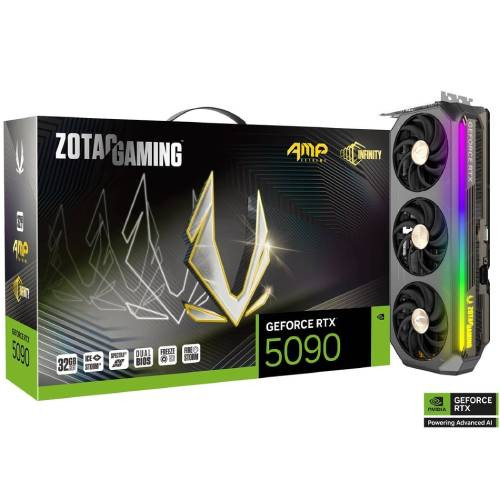 ZOTAC GAMING GeForce RTX 5090 AMP Extreme INFINITY
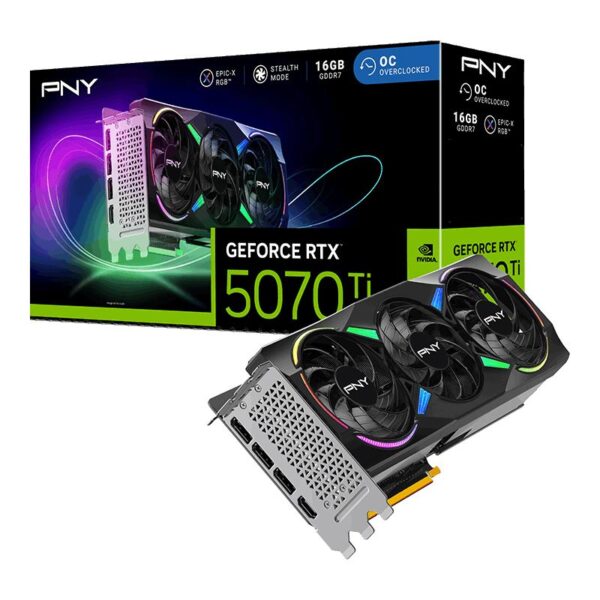 PNY GeForce RTX 5070 Ti 16GB ARGB EPIC-X RGB Overclocked Triple Fan
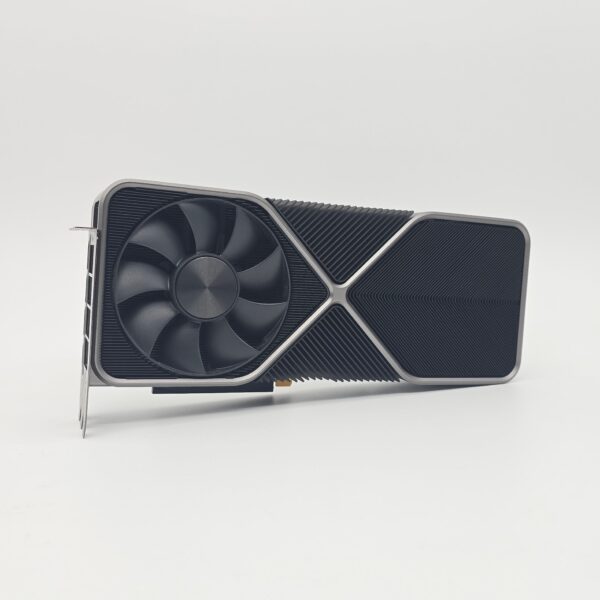 NVIDIA GeForce RTX 3090 Founders Edition 24GB
 Sapphire NITRO+ Radeon RX 7800 XT 16GB