What a Collaborative Robot Arm Price Includes
 •
Robotics Research
•
Updated October 7, 2026
•
7 min read
•
Robotics Research
•
Updated October 7, 2026
•
7 min read
Automation intelligence for serious technology buyers.
Understand collaborative robot arm price factors, from payload and safety to tooling, integration, warranty, and supplier-confirmed upfront delivery terms.
A collaborative robot arm price is rarely a single comparable number. Two units with a similar reach can differ significantly once payload, repeatability, safety functions, controller type, software, end-of-arm tooling, and delivery scope are accounted for. For business buyers, the relevant question is not simply what the arm costs. It is what configuration is ready to perform the intended task, under documented commercial terms.
Collaborative robots, commonly called cobots, are designed to work in shared spaces with people when the application and risk assessment permit it. They can reduce the need for fixed guarding in some workflows, but they are not automatically safe in every use case. A high-speed pick-and-place cell, a sharp-part handling process, or a heavy payload application may still require protective measures, sensors, or restricted operating zones. Those requirements affect the total project budget.
Collaborative Robot Arm Price Ranges by Deployment Level
For planning purposes, a professional collaborative robot arm commonly starts in the lower five figures for an entry-level unit and can exceed $100,000 for higher-payload, long-reach, specialized, or deployment-ready configurations. The robot arm itself is only one component of the purchase.
A compact cobot intended for education, light assembly, laboratory automation, or basic machine tending may be priced from approximately $10,000 to $30,000, depending on brand, payload, included controller, and software features. These platforms are often suitable for controlled tasks involving small parts, cameras, simple grippers, or test fixtures.
Mid-range industrial cobots typically fall between roughly $25,000 and $60,000 before application-specific tooling and integration. This segment covers many practical production requirements, including packaging, screwdriving, inspection, dispensing, machine tending, and material handling. Buyers often select these models for their balance of payload, reach, repeatability, and available ecosystem support.
Higher-capacity or extended-reach collaborative arms may range from $50,000 to $100,000 or more. The premium reflects mechanical capability, certified safety features, industrial communications, advanced force control, higher IP ratings, and the ability to support demanding tools or heavier workpieces. Specialized models for cleanrooms, food-related applications, laboratory environments, or mobile robot integration can also carry a higher acquisition cost.
These ranges are directional, not a substitute for a product-specific quotation. Manufacturer configuration, regional supply, currency movement, and current availability can change the commercial result. A formal quote should identify the exact model, condition, controller, included accessories, lead time, warranty, shipping terms, and any integration services.
What Changes the Collaborative Robot Arm Price?
Payload, reach, and cycle requirements
Payload is one of the clearest cost drivers. A 3 kg or 5 kg arm moving lightweight components does not require the same mechanical design as a 20 kg or 30 kg arm lifting a loaded tray, large gripper, or inspection package. Buyers should calculate the combined mass of the part, gripper, cables, adapters, and any tool changer rather than evaluating the workpiece alone.
Reach matters in the same way. A longer arm can serve larger fixtures, conveyor positions, or multiple machine doors, but it may require more floor space and can change cycle-time performance. A model selected solely for maximum reach may add cost without improving the application. Conversely, an arm with insufficient reach can create fixture compromises and expensive rework after delivery.
Repeatability and process capability
Repeatability requirements vary by task. Basic handling applications may work well with standard industrial repeatability, while precision assembly, dispensing, metrology support, or laboratory workflows may require tighter performance specifications. The cost difference is not always limited to the robot. It can extend to calibration, vision systems, force-torque sensors, and the design of the fixture itself.
For a procurement team, the useful specification is the tolerance the completed cell must achieve, not just the robot’s published repeatability number. A robot can repeat its position accurately while part variation, fixture movement, or gripper compliance prevents the process from meeting production requirements.
Controller, software, and communications
A collaborative arm needs a controller, programming environment, and communication method that fit the operating environment. Some units include a teach pendant and standard interfaces in the base price. Others require optional software modules, external safety components, or licenses for advanced functions such as force control, vision guidance, remote monitoring, or fieldbus communication.
Confirm whether the proposed configuration supports the protocols used by the existing line or facility, such as EtherNet/IP, PROFINET, Modbus TCP, or OPC UA. A lower initial hardware price can become less favorable if the selected platform requires additional gateways, licenses, or custom development to communicate with PLCs, machine tools, warehouse systems, or quality databases.
End-of-arm tooling and peripherals
The arm does not perform a production task without tooling. A simple pneumatic gripper may be a modest addition, while a servo gripper, vacuum system, welding package, screwdriver, dispensing valve, camera, force sensor, or automatic tool changer can materially increase the project value.
The same applies to peripherals: pedestals, mounting plates, cable management, part-present sensors, safety scanners, conveyors, and machine interfaces should be included in the purchasing scope when applicable. Quote comparisons are only valid when they describe equivalent equipment. An inexpensive robot-only offer should not be compared directly with a deployment package that includes tooling, installation support, and application validation.
Hardware Price Versus Installed System Cost
The most common budget error is treating the collaborative robot arm as the entire automation project. In many applications, the installed system cost is substantially higher than the arm price because engineering, mechanical design, electrical work, programming, safety validation, and commissioning are required.
A straightforward tabletop task with a standard gripper may have limited integration cost. A multi-machine tending cell with automatic doors, part orientation, barcode traceability, inspection, pallet handling, and shift-level monitoring is a different purchase category. It may involve an integrator, custom fabrication, controls engineering, and acceptance testing.
This does not mean every buyer needs a fully custom system. A well-defined task can often be standardized through proven tooling and reusable software templates. The commercial advantage comes from defining the workpiece, throughput, operating hours, target cycle time, available utilities, and required interfaces before requesting a quote. Clear requirements reduce both technical uncertainty and change-order risk.
Commercial Checks Before Issuing a Purchase Order
For a high-value robotics purchase, procurement documentation should be as specific as the technical specification. Confirm whether the product is new, demonstration equipment, refurbished, or supplied under a special-order arrangement. Ask whether the controller, teach pendant, cables, mounting hardware, and standard software are included.
Warranty needs equal attention. Warranty duration, covered components, repair procedure, geographic support limitations, and the availability of spare parts should be stated before order placement. For international deliveries, establish the shipping method, Incoterms, customs responsibility, export documentation, lead time, and whether delivery timing begins at order confirmation or at factory release.
It is also useful to define acceptance criteria early. For an arm purchased as equipment only, acceptance may be limited to model verification and basic functional testing. For an integrated cell, acceptance should address the agreed cycle time, part handling, safety operation, documentation, and training. This distinction prevents disputes caused by different assumptions about what the supplier is expected to deliver.
When a Quote Is Better Than a Listed Price
Listed pricing is useful for standard configurations and quick budget approval. A quote is usually the better route when the buyer needs multiple units, a nonstandard payload or accessory package, project-based delivery planning, or confirmation of manufacturer availability. It is also preferable when internal approval requires a formal commercial document with tax, shipping, warranty, and payment terms.
Supplier-confirmed sourcing adds value when products are difficult to procure, subject to regional availability, or offered in several controller and accessory variations. The objective is not merely to obtain a lower number. It is to ensure that the quoted equipment is the equipment that will be delivered, with the configuration and commercial conditions required for deployment.
AI Robot Supplier can support this process with direct purchasing where available and product-specific quotations for deployment-oriented requirements. The practical next step is to provide the intended application, payload, reach, tooling, quantity, delivery destination, and required timeline. A precise scope produces a more useful collaborative robot arm price and a procurement decision that is easier to defend.
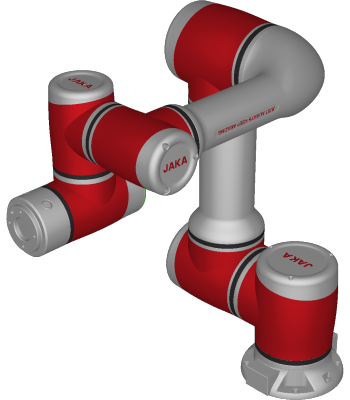 JAKA Zu 7 Collaborative Robot
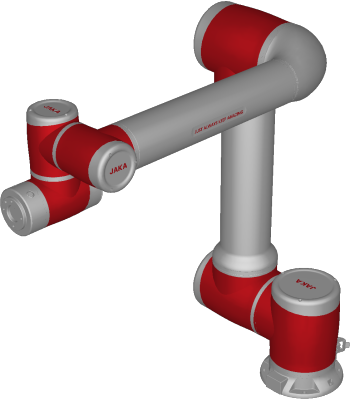 JAKA Zu 12 Collaborative Robot
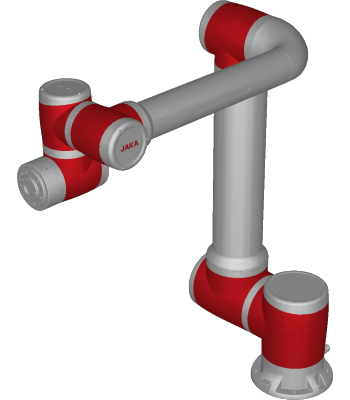 JAKA Pro 16 Collaborative Robot
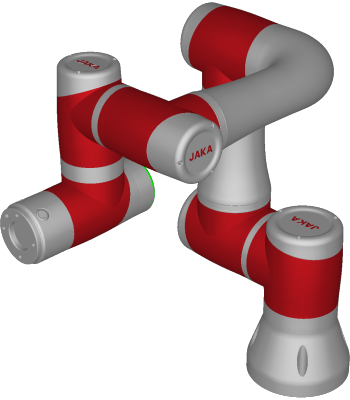 JAKA Zu 3 Collaborative Robot