8 Steps in the Industrial Drone Procurement Process
 •
Drone Systems Research
•
Updated October 16, 2026
•
7 min read
Smarter buying decisions for modern aerial systems.
Use an industrial drone procurement process to verify aircraft, payloads, compliance, supplier terms, and deployment readiness before purchase at scale.
A drone that performs well in a demonstration can still be the wrong asset for an industrial program. A thermal payload may not deliver the required reporting format, an aircraft may have insufficient wind tolerance for the site, or included batteries may not support the planned shift schedule. The industrial drone procurement process should therefore begin with the operating requirement, not a product page or a headline flight-time figure.
For business buyers, the objective is to acquire a documented, deployable system with known configuration, commercial terms, and support responsibilities. That requires coordination between operations, engineering, procurement, safety, IT, and the supplier. The process below helps teams move from a valid use case to an order that can be received, commissioned, and put to work with fewer surprises.
1. Define the operating mission before selecting an aircraft
Start with the work the drone must perform and the decision it must support. Inspection teams may need high-resolution visual imagery, radiometric thermal data, zoom capability, or repeatable waypoint flights. Security programs may prioritize rapid launch, low-light performance, persistent coverage, and reliable communications. Surveying applications may require RTK positioning, compatible correction services, and an approved processing workflow.
Document the environment as carefully as the task. Consider operating temperatures, wind exposure, precipitation, elevation, electromagnetic interference, takeoff and landing space, and distance from the control point. Indoor, outdoor, and confined-space operations place very different demands on the platform.
A useful requirement statement identifies the mission frequency, expected daily flight hours, payload type, data outputs, required accuracy, crew model, and site restrictions. It should also identify what is not acceptable, such as consumer-grade cameras, cloud-only data handling, or a system that cannot be serviced locally within the required timeframe.
2. Establish regulatory, safety, and data requirements early
Aircraft selection cannot be separated from the operating rules. In the United States, commercial drone operations commonly require compliance with applicable FAA requirements, including pilot credentials, aircraft registration, Remote ID, and any approvals needed for operations outside standard rules. International deployments require a separate review of country-specific aviation, radio, import, and privacy requirements.
Procurement teams should ask who will own the compliance process after delivery. A supplier can confirm product capabilities and included documentation, but the operator remains responsible for lawful use at the site. If the program involves flights near people, at night, beyond visual line of sight, around critical infrastructure, or in controlled airspace, approval timelines can affect the purchase schedule.
Data governance belongs in the same review. Confirm where flight logs, imagery, video, point clouds, and thermal files are stored; whether an internet connection is required; and whether the organization can manage user access, firmware updates, and data retention. For sensitive sites, IT and cybersecurity review should happen before a purchase order is released, not after equipment arrives.
3. Compare complete system configurations, not base models
An industrial drone is rarely just an airframe. The usable configuration may include an imaging payload, controller, batteries, charging equipment, RTK module, docking equipment, carrying case, propellers, software licenses, and spare parts. A lower aircraft price can become less competitive when these operational items are excluded.
Request a product-specific configuration that identifies model numbers and included accessories. Confirm whether the quoted payload is integrated, interchangeable, or purchased separately. Ask whether batteries are standard, high-capacity, or intelligent units, and how many are included. For a team planning multiple sorties per day, the battery and charging plan can matter more than a modest difference in published flight endurance.
Also verify regional compatibility. Controllers, chargers, power cables, cellular modules, mapping services, and radio configurations may vary by market. Buyers with international facilities should avoid assuming that one configuration is suitable for every location.
4. Evaluate payload performance against the required output
Payload specifications can look comparable while producing very different field results. For visual inspection, evaluate sensor resolution, optical zoom range, stabilization, low-light performance, image formats, and the practical distance needed to identify a defect. For thermal work, assess sensor resolution, measurement capability, temperature range, accuracy conditions, and radiometric file support.
For mapping and survey workflows, confirm the positioning method, shutter type, ground-control requirements, supported mission-planning software, and export formats. Accuracy claims should be tied to a documented workflow, not treated as an automatic result of owning an RTK-capable drone.
When the purchase supports a high-value operational decision, request sample outputs from a comparable use case or arrange a controlled evaluation. A short field test can reveal issues that a specification sheet will not show, including glare, vibration, workflow complexity, signal limitations, or insufficient detail at a safe stand-off distance.
5. Qualify the supplier and clarify fulfillment responsibility
Industrial drone procurement involves more than finding a listed model. Buyers should establish whether the supplier is providing stock directly, arranging supplier-confirmed sourcing, or quoting a special-order configuration. Each route can be appropriate, but availability and delivery commitments should be stated clearly.
Before purchase, confirm the product condition, exact configuration, warranty coverage, estimated dispatch timing, shipping method, delivery terms, and any exclusions. For cross-border orders, establish responsibility for export documentation, import duties, customs clearance, taxes, and local compliance requirements. Battery-powered equipment may require special shipping arrangements that affect both lead time and freight cost.
For higher-value programs, a formal quotation gives internal stakeholders a stable commercial document for approval. It should identify the legal selling entity, quote validity, payment terms, currency, warranty terms, included accessories, and any assumptions affecting delivery. AI Robot Supplier supports this product-level confirmation process for professional robotics and drone orders where configuration and supplier availability need validation before payment.
6. Calculate total deployment cost, not purchase price alone
The acquisition budget should include the system, spares, batteries, charging infrastructure, training, software subscriptions, insurance, maintenance, repair contingency, and operational labor. Depending on the application, data processing and storage may become a recurring cost larger than the aircraft itself.
The right number of aircraft also depends on service expectations. One drone may be sufficient for periodic roof inspections. A security or time-sensitive inspection program may need a backup airframe, duplicate payload coverage, additional batteries, and trained personnel across shifts. Fleet resilience has a cost, but unplanned downtime does as well.
Create a three-year operating view rather than comparing only the first invoice. This makes the trade-off clearer between a lower-cost system with limited payload capability and a more expensive configuration that reduces repeat visits, manual inspection exposure, or outsourced flight services.
7. Plan acceptance, commissioning, and user training
Receiving the equipment is not the same as accepting it into service. Define an acceptance checklist before the order is placed. It should cover serial-number verification, physical inspection, included accessories, battery condition, firmware status, controller pairing, payload operation, and confirmation that the delivered configuration matches the approved quote.
Commissioning should include a controlled test flight and a review of the full workflow: capture, transfer, processing, storage, reporting, and maintenance logging. If the organization uses enterprise device management, private networks, or restricted mobile devices, validate those controls during this stage.
Training should match the mission, not simply basic flight skills. Operators need to understand payload settings, site risk controls, emergency procedures, battery management, preflight inspections, and data-quality checks. Supervisors should know when a result is sufficient for a maintenance or safety decision and when a finding needs further investigation.
8. Build a support and lifecycle plan before scaling
A pilot program can tolerate informal processes. A multi-site drone operation cannot. Assign ownership for asset records, firmware decisions, battery health, repair authorization, incident reporting, insurance documentation, and replacement purchasing. Keep aircraft serial numbers, warranty information, proof of purchase, and maintenance records in a system that operations and procurement can both access.
Ask in advance how repairs are handled, where service is performed, what turnaround expectations apply, and whether loan or replacement units are available. For business-critical applications, keeping selected spare parts and a backup aircraft may be more practical than waiting for an urgent replacement shipment.
The strongest purchasing decision is the one that remains workable after the first month of operations. When requirements, configuration, commercial terms, and acceptance criteria are confirmed before ordering, the drone arrives as an operational asset rather than a procurement problem waiting to surface.
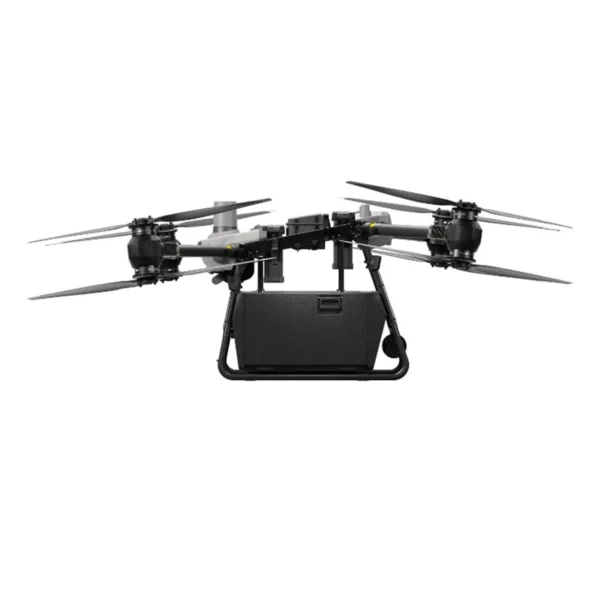 DJI FlyCart 30 Delivery Drone
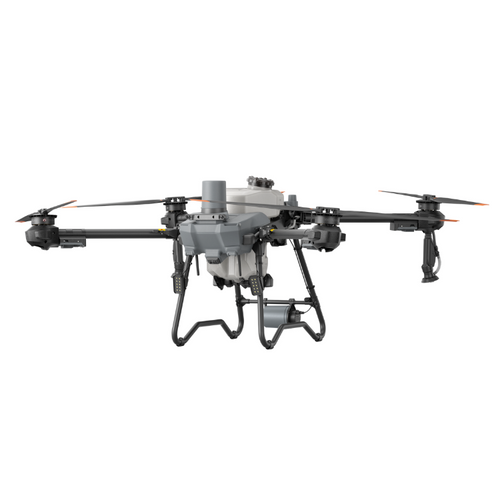 DJI Agras T25P Agriculture Drone
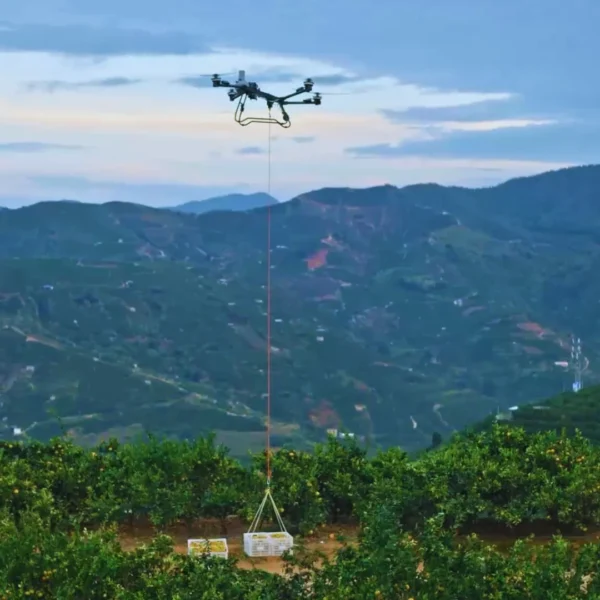 DJI Agras T70P Agriculture Drone
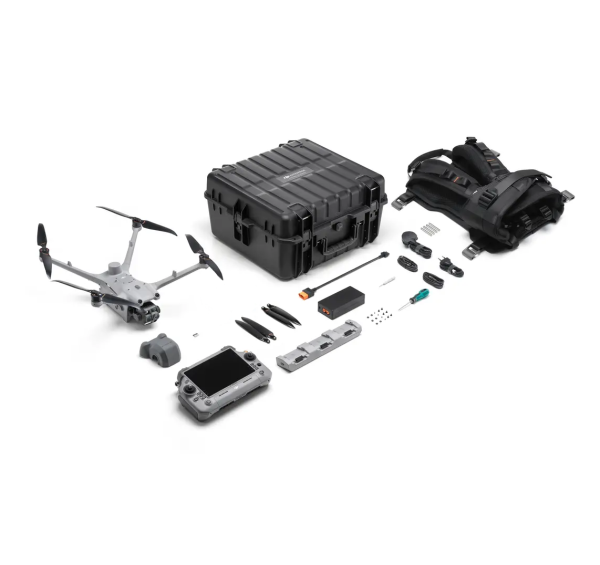 DJI Matrice 4TD Enterprise Drone