Robotics ROI Calculation for Business Buyers
 •
Robotics Research
•
Updated October 20, 2026
•
7 min read
Automation intelligence for serious technology buyers.
A practical robotics ROI calculation framework for procurement teams evaluating labor savings, throughput, deployment costs, and fleet-scale risk exposure.
A robot that demonstrates well is not necessarily a robot that earns its place in an operating budget. A credible robotics ROI calculation begins with the work to be changed, the operating conditions around it, and the full cost required to keep the system productive after delivery. For procurement teams, the objective is not to produce an optimistic payback figure. It is to establish a decision-ready business case that operations, finance, IT, safety, and leadership can review using the same assumptions.
This matters especially for AMRs, collaborative robots, quadrupeds, humanoids, inspection platforms, and autonomous ground vehicles. Their value can come from labor reduction, higher throughput, safer work, extended operating hours, better data capture, or avoided downtime. Those benefits are real, but they do not arrive in the same way for every site. The calculation must reflect the proposed configuration, facility constraints, integration scope, and support model.
Start the robotics ROI calculation with the task
Do not begin with the robot price. Begin by defining one operational task in measurable terms. A warehouse AMR project might focus on moving pallets between receiving and storage. A quadruped deployment might focus on scheduled inspection rounds in a difficult-access industrial area. A collaborative robot cell may be intended to tend a machine, package products, or complete repetitive assembly steps.
For each task, document the current baseline: units handled, travel distance, cycle time, staffing by shift, labor cost, error rate, downtime, incident history, and operating hours. The baseline should cover a representative period, not an unusually busy week or a temporary staffing shortage.
The most useful question is specific: what work will no longer be performed manually, what work will remain, and what new work will be created? A robot may eliminate walking time but still require an employee to load, unload, inspect exceptions, replenish materials, or recover from a blocked route. If those activities are not included, expected savings will be overstated.
Measure the capacity constraint
A robotics project creates financial value only when additional capacity is useful. If an AMR enables 20 percent more material movement but the next production stage is already constrained, the benefit may be lower than expected. Conversely, if labor availability limits production, a robot can protect revenue by keeping a critical flow moving.
Identify the actual bottleneck before assigning a value to throughput. That may be a packing station, a machine, a loading dock, a technician, available floor space, or even an approval process. Operations data should establish whether the project creates cost savings, revenue capacity, service-level improvement, or a combination of these outcomes.
Build the total cost of ownership
The purchase price is only one element of the investment. A product-specific quotation should separate hardware cost from the deployment items required for the intended application. This gives procurement teams a clearer comparison between direct purchase options, special-order configurations, and supplier-confirmed sourcing proposals.
A complete first-year cost model commonly includes these categories:
- Robot hardware, required controllers, batteries, chargers, end effectors, sensors, and included accessories
- Software licenses, fleet management tools, mapping, API access, and cybersecurity requirements
- Site preparation, including network coverage, charging locations, safety equipment, guarding, or floor modifications
- Systems integration with WMS, MES, ERP, access control, conveyors, machine controls, or other equipment
- Freight, customs, insurance, commissioning, operator training, and acceptance testing
- Warranty scope, preventive maintenance, replacement parts, remote support, and on-site service where applicable
Not every deployment needs all of these items. A research lab buying a single quadruped for data collection has a different cost structure than a multi-site AMR fleet integrated with warehouse systems. The point is to make exclusions visible rather than assume they are immaterial.
Also distinguish capital costs from recurring operating costs. Battery replacement, software subscriptions, connectivity, maintenance labor, and support coverage affect annual returns. A lower acquisition cost can be less attractive if it creates recurring expenses or deployment dependencies that a higher-priced alternative includes from the start.
Calculate benefits conservatively
The basic annual benefit calculation is straightforward:
Annual net benefit = Labor savings + throughput value + quality savings + safety and downtime savings – annual operating costs
The difficulty lies in assigning defensible values. Labor savings should be calculated using fully burdened labor cost, not only base hourly wages. That may include payroll taxes, benefits, overtime, contract labor premiums, recruiting cost, and supervisor time. However, labor savings should only be counted as cash savings if headcount, overtime, temporary labor, or contracted services will actually decline.
When employees are reassigned rather than removed from the cost base, classify the benefit accurately. The project may create capacity, reduce fatigue, improve retention, or allow the team to cover a second shift. These are valuable outcomes, but finance may evaluate them differently from direct cost reduction.
Throughput gains require similar discipline. Calculate the incremental units a system can reliably support, then multiply by contribution margin only when demand exists and downstream capacity can absorb the volume. Do not treat a theoretical maximum speed as production output. Use expected uptime, normal exceptions, charging cycles, traffic conditions, handoff time, and planned maintenance.
Quality, safety, and downtime benefits should be based on records where possible. If a robot reduces product damage, quantify the historical cost of damage. If an inspection robot identifies issues earlier, use maintenance data to estimate avoided failures. If a system reduces exposure to hazardous work, include documented incident costs, insurance implications, and compliance value without making unsupported claims.
Use payback, ROI, and NPV together
Different stakeholders need different measures. Payback period shows how quickly the initial investment is recovered:
Payback period = Initial investment / annual net benefit
If an implementation costs $300,000 and produces $150,000 in annual net benefit, the simple payback period is two years. This is useful for screening projects, but it does not account for changes in performance over time or the cost of capital.
Simple ROI provides a percentage view:
Annual ROI = Annual net benefit / initial investment x 100
In the same example, annual ROI is 50 percent. Use this figure carefully. It should be clear whether the calculation includes recurring operating costs, integration, training, and expected maintenance.
For higher-value systems and fleet deployments, net present value is usually the stronger decision metric. NPV discounts future cash flows to reflect the organization’s cost of capital. It is especially relevant when benefits ramp gradually, support costs change after warranty expiration, or a deployment is expected to operate for five years or more.
A useful model should show both first-year results and a three- to five-year view. That prevents a short payback estimate from masking future software, maintenance, or replacement costs.
Test assumptions before issuing a purchase order
A good business case has a base case, a conservative case, and an upside case. The conservative case should assume slower adoption, lower utilization, additional integration time, and a realistic level of human intervention. If the project only works financially under the upside case, it requires closer review.
Sensitivity analysis is particularly important for mobile and autonomous systems. Small changes in utilization can materially change returns. A robot scheduled for 16 hours per day but used for only six will not produce the expected economics, even if it performs technically as specified.
Review these assumptions with the departments that own them: operations should validate task volumes and process changes; IT should validate network, security, and integration requirements; facilities and safety teams should validate site readiness; finance should approve cost treatment and benefit recognition. Procurement should confirm configuration, condition, accessories, warranty, delivery terms, and support commitments before comparing supplier proposals.
Match the purchase method to deployment risk
For a standard platform with a clearly defined configuration, direct purchasing may be appropriate. For complex or high-value deployments, a formal quotation is often more useful because it documents the exact platform, optional equipment, lead time, warranty, and commercial terms used in the ROI model.
This is where supplier coordination has direct financial relevance. A return calculation based on the wrong battery configuration, an omitted charging station, unavailable accessories, or an unsupported integration assumption is not a reliable approval document. AI Robot Supplier supports product-specific sourcing confirmation so business buyers can evaluate the commercial details that materially affect deployment economics.
The most credible robotics investment case is not the one with the shortest spreadsheet. It is the one that clearly states what the robot will do, what it will cost to deploy and operate, which benefits are recognized as cash, and which assumptions must be proven during acceptance. That clarity gives the project team a practical path from evaluation to accountable operation.
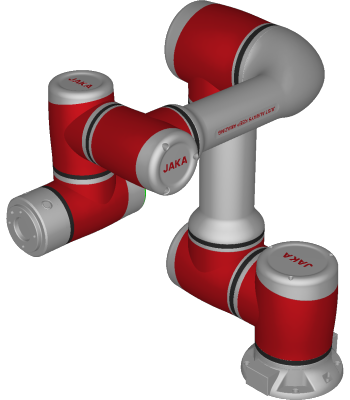 JAKA Zu 7 Collaborative Robot
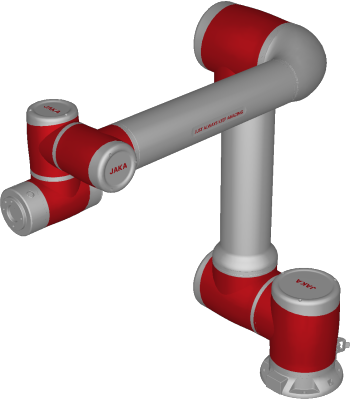 JAKA Zu 12 Collaborative Robot
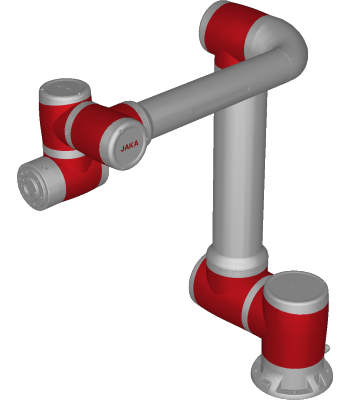 JAKA Pro 16 Collaborative Robot
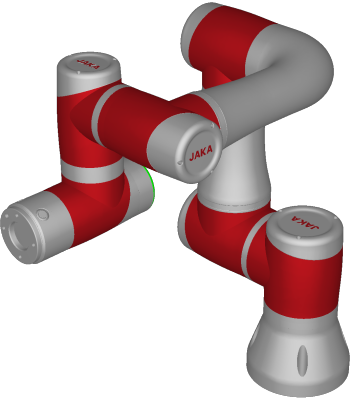 JAKA Zu 3 Collaborative Robot