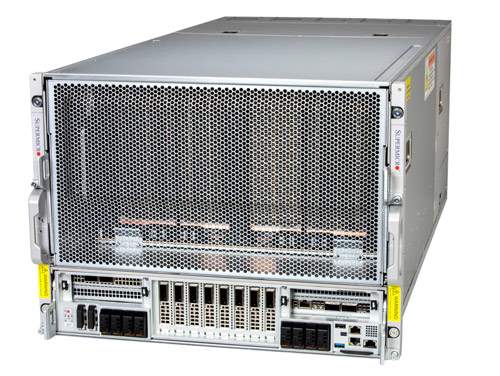
Supermicro AS-8126GS-NB3RT 8U B300 GPU Server
$192,000.00
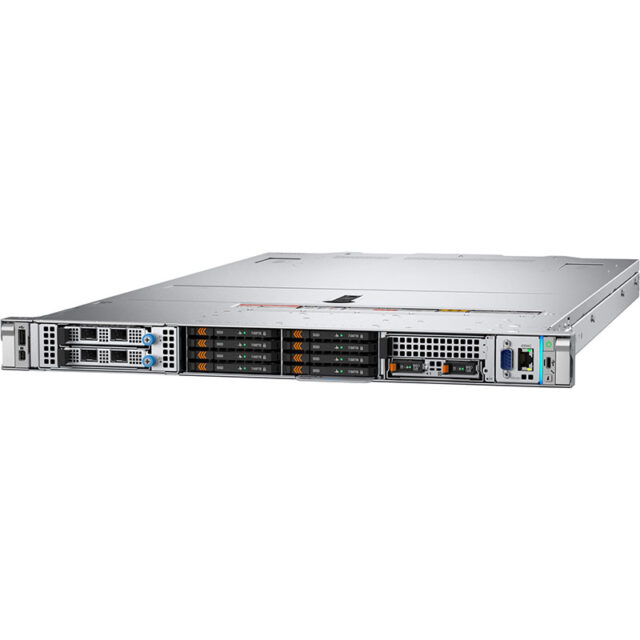
Supermicro AS-8126GS-NB3RT is an air-cooled 8U AMD server platform built around eight NVIDIA B300 SXM GPUs. Its HGX architecture combines NVLink and NVSwitch with front E1.S storage and high-speed fabric connections. Confirm the complete CPU, memory, storage and network configuration for the offered unit.
Explore Related
Related products, categories and research.
AS-8126GS-NB3RT is Supermicro’s 8U AMD server platform for the NVIDIA HGX B300 eight-GPU architecture. It brings a switched GPU fabric, front-access storage and high-speed network connections into an air-cooled rack system. This listing identifies the base server model; it does not identify the separately named preconfigured Gold Series component bundle.
AS-8126GS-NB3RT hardware reference
| Form factor | 8U rackmount, air cooled; CSE-GP807TS-R000NP chassis |
|---|---|
| Motherboard | Supermicro H14DSG-OM |
| GPU platform | NVIDIA HGX B300, eight SXM GPUs, 288GB each; 2304GB aggregate, described as 2.3TB |
| GPU fabric | Fifth-generation NVLink with NVSwitch; manufacturer lists 1.8TB/s NVLink bandwidth |
| CPU platform | Dual AMD EPYC SP5; current detailed product table lists 9005, while the manual and headline also reference 9004 |
| Host memory | 24 ECC DDR5 RDIMM slots; up to 6TB in 1DPC; speed depends on processors and memory configuration |
| Front storage | Eight hot-swap E1.S NVMe bays; two M.2 NVMe slots |
| Fabric networking | Manufacturer platform lists eight ConnectX-8 SuperNICs up to 800Gb/s; optional BlueField-3 DPU configuration must be checked |
| Power architecture | Six 6600W Titanium supplies in a 3+3 arrangement; full redundancy depends on configuration and application load |
Base model and Gold Series distinction
Supermicro lists both the base model and AS-8126GS-NB3RT-01-G2, the Gold Series version with preconfigured components. The suffix matters when comparing offers. A base-model title should not be treated as confirmation of the processors, DIMMs, drives or DPU options in the preconfigured version.
Obtain the manufacturer’s system SKU and component bill of materials together. Match the chassis identifier, motherboard and GPU platform first, then resolve the installed CPU and memory configuration. This avoids comparing two offers as equivalent when their host resources or network arrangements differ.
GPU memory and NVSwitch topology
The GPU memory total is the sum across eight devices. It is distinct from host DDR5 capacity and is not a statement that an application automatically sees one unpartitioned allocation. Model placement and the application’s parallel execution strategy determine how the available accelerator memory is used.
NVSwitch supports communication within the HGX B300 system. The external network serves a different role when jobs span several servers. Keep the local GPU topology and the inter-server fabric design as separate items in the deployment specification.
Define the workload before interpreting bandwidth figures. Training, inference and scientific computing can have different communication patterns, numerical formats and data-transfer requirements. Manufacturer interface rates do not establish measured application throughput for this offered unit, and no benchmark result is asserted here.
Processor support needs exact configuration confirmation
The manufacturer’s current page contains a distinction that should remain visible: its detailed CPU section names EPYC 9005, while its headline and system manual also mention the preceding generation. Resolve the selected processor against the applicable system revision and supported-parts documentation before committing to a build.
This is an AMD platform. An Intel Xeon configuration from a similarly named Supermicro system should not be substituted into its description. CPU generation also affects the documented memory-speed capability, so a maximum DDR5 rate should not be interpreted as the speed of every supported configuration.
Request the DIMM part numbers and population map alongside the CPU models. Capacity, memory channels and populated slots need to match the intended host workload. The platform’s capacity ceiling is different from the installed memory supplied with a particular system.
ConnectX-8 fabric and BlueField options
The platform is designed around high-speed GPU networking, but an adapter headline is only one part of a working fabric. Record the actual ConnectX-8 configuration, port arrangement, firmware and network mode, then match switches and link components to it.
Specify the transceivers or cables and their reach, connector and speed requirements. An OSFP connection does not establish that a suitable optic or cable is included. Agree on the end-to-end connection arrangement rather than relying on the server’s nominal maximum port rate.
BlueField-3 DPUs are a separate configuration decision. Confirm the installed quantity and purpose before planning offloaded services or allocating the expansion slots. Do not assume the maximum optional DPU arrangement is part of this offer.
E1.S NVMe storage and boot devices
The front bays use the E1.S storage format. A 2.5-inch drive from another server is not interchangeable merely because both devices use NVMe. Check form factor, supported part numbers and the intended storage configuration when specifying drives.
The manual describes two serviceable M.2 positions as well as the front bays. Identify the boot devices and distinguish them from the application data volumes. Available slots do not establish included drive capacities or a configured RAID arrangement.
For training, plan where datasets and checkpoints reside and how they move to the server. For inference, consider model-loading and recovery requirements. Keep the storage layout with the software image and recovery procedure so the system can be restored consistently.
Rack and power planning
The manufacturer’s chassis dimensions are 356mm high, 449mm wide and 950mm deep. Check the full installation envelope, rail compatibility, cable bend clearance and service access against the rack plan. An 8U allocation alone does not establish a suitable installation location.
Power-supply ratings are equipment ratings rather than measured operating consumption. Have the proposed component configuration, input requirements and intended redundancy checked against the facility’s electrical design. Cooling provision must likewise follow the actual load and the manufacturer’s installation requirements.
Questions before specifying the system
Is this a PCIe GPU tower or workstation?
No. It is an 8U rack platform for an eight-device SXM accelerator assembly. Preserve that distinction when comparing GPU form factors or host systems.
Does the model name establish included software and services?
No. Document operating-system and accelerator software versions, licenses, condition, accessories and service responsibilities separately. No installed software entitlement or delivery commitment is asserted here.
Manufacturer references
Consult the official product specifications and system manual for the applicable hardware revision. Compare related AI Servers for other accelerator and cooling architectures.
Related products
Recently viewed
Add AI Robot Supplier as a preferred source on Google.