Remote-controlled movement
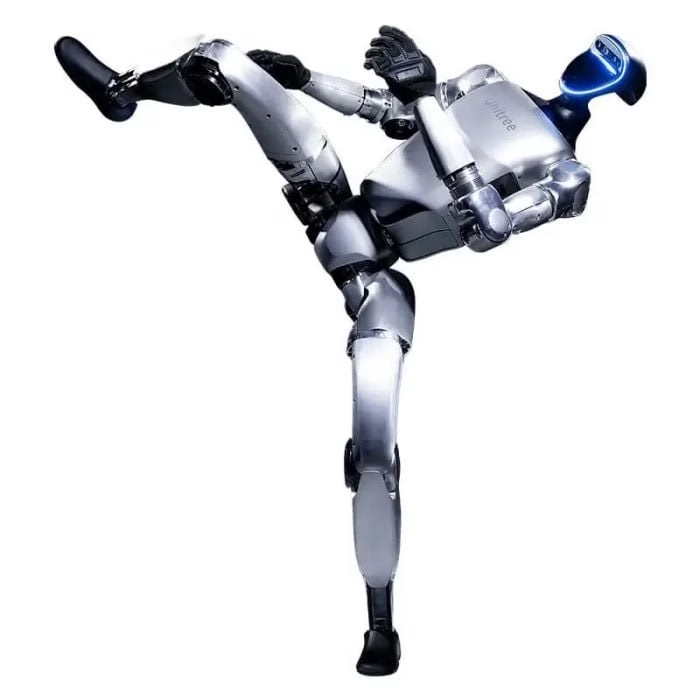
The supplied manual controller and Unitree Explore app support setup, connection, posture and manufacturer-supported motion workflows.
$11,997.00
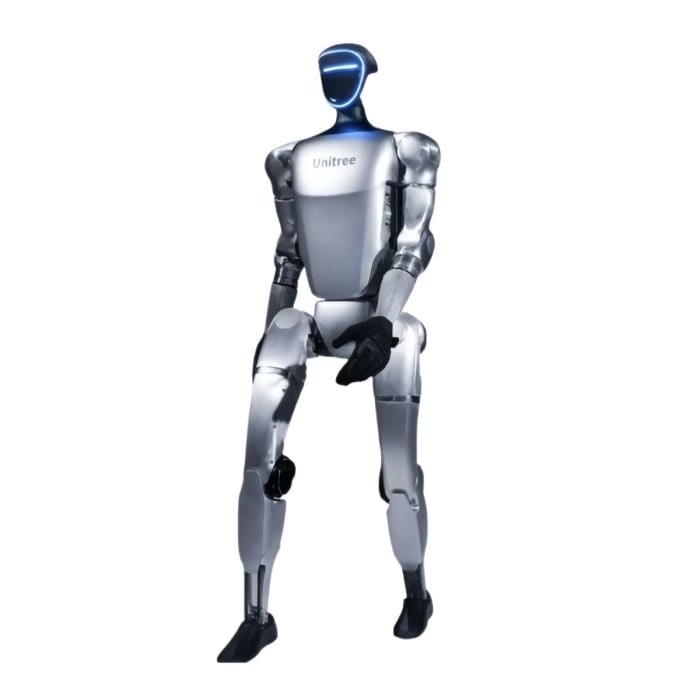
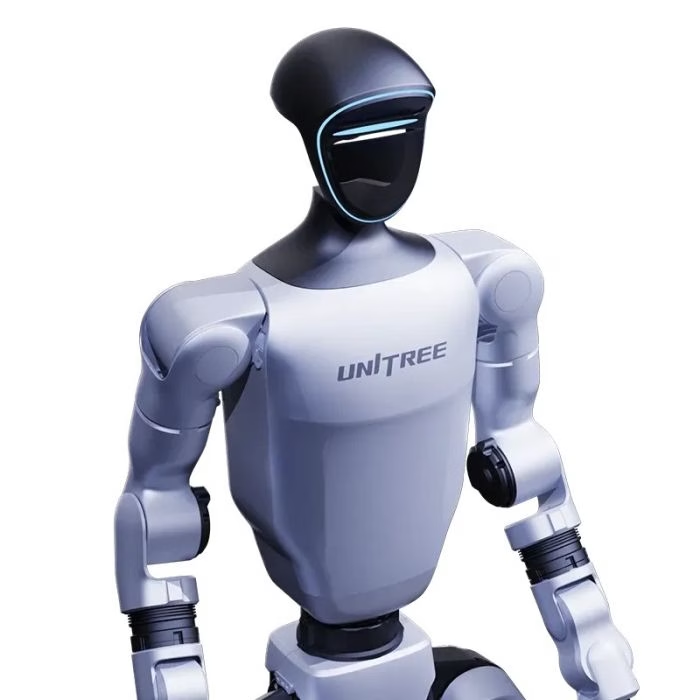
Unitree G1 Basic Humanoid Robot is a compact bipedal platform with 23 actuated DOF, 3D LiDAR plus a depth camera, approximately 35 kg operating weight and around two hours of battery life. The base G1 is built for humanoid mobility, interaction, demonstrations and platform evaluation rather than secondary development. Manufacturer model / part number: G1-Basic.
Buyers comparing a Unitree G1 for sale should distinguish this standard 23-DOF model from G1 EDU variants, which add development access, higher compute and optional extra articulation.
Related products, categories and research.
Unitree G1 Basic Humanoid Robot is the standard 23-DOF G1 configuration for buyers who want Unitree’s compact 1.32 m humanoid platform without the secondary-development package of G1 EDU. AI Robot Supplier currently lists G1 Basic at $11,997, while Unitree’s official store lists the standard G1 at $13,500 before tax, shipping, customs and import clearance.
The Unitree G1 Basic Humanoid Robot is a compact bipedal humanoid built around dynamic whole-body motion, integrated perception and a foldable transport-friendly chassis. Unitree specifies the standard G1 at 1320 × 450 × 200 mm standing, approximately 35 kg with battery and 23 actuated degrees of freedom.
For buyers searching for a Unitree G1 for sale, the most important distinction is not only price. The public $13,500 G1 sold by Unitree is the standard / Basic model: it uses an 8-core high-performance CPU, depth camera plus 3D LiDAR, fixed non-dexterous hand shapes and does not officially support secondary development.
AI Robot Supplier currently lists the Unitree G1 Basic price at $11,997. Unitree’s official store currently lists the same standard model at $13,500, quotes direct shipping between $300 and $1,200, says customers are responsible for duties and taxes, and currently marks the standard G1 as backordered.
If your project requires custom robotics software, official SDK/secondary-development workflows, higher onboard AI compute, additional waist/wrist articulation or dexterous hands, compare G1 EDU rather than purchasing Basic and assuming those capabilities are included.
The current Unitree G1 Basic Humanoid Robot price on AI Robot Supplier is $11,997. Unitree’s official online store lists the standard G1 at $13,500 before tax and shipping.
Unitree currently quotes direct shipping between approximately $300 and $1,200 and states that the customer is responsible for applicable customs duties, taxes and import clearance. The manufacturer store also currently marks G1 as backordered, so buyers should confirm actual availability and lead time before assuming a direct order will ship immediately.
The price difference between Basic and EDU is not simply a reseller markup. EDU is a materially different development product with higher torque, optional high-power compute, additional articulation, optional dexterous hands, secondary-development access and an 18-month manufacturer warranty.
The Unitree G1 Basic Humanoid Robot is Unitree’s standard compact G1 humanoid. It is designed around dynamic bipedal movement and integrated spatial sensing rather than open developer access.
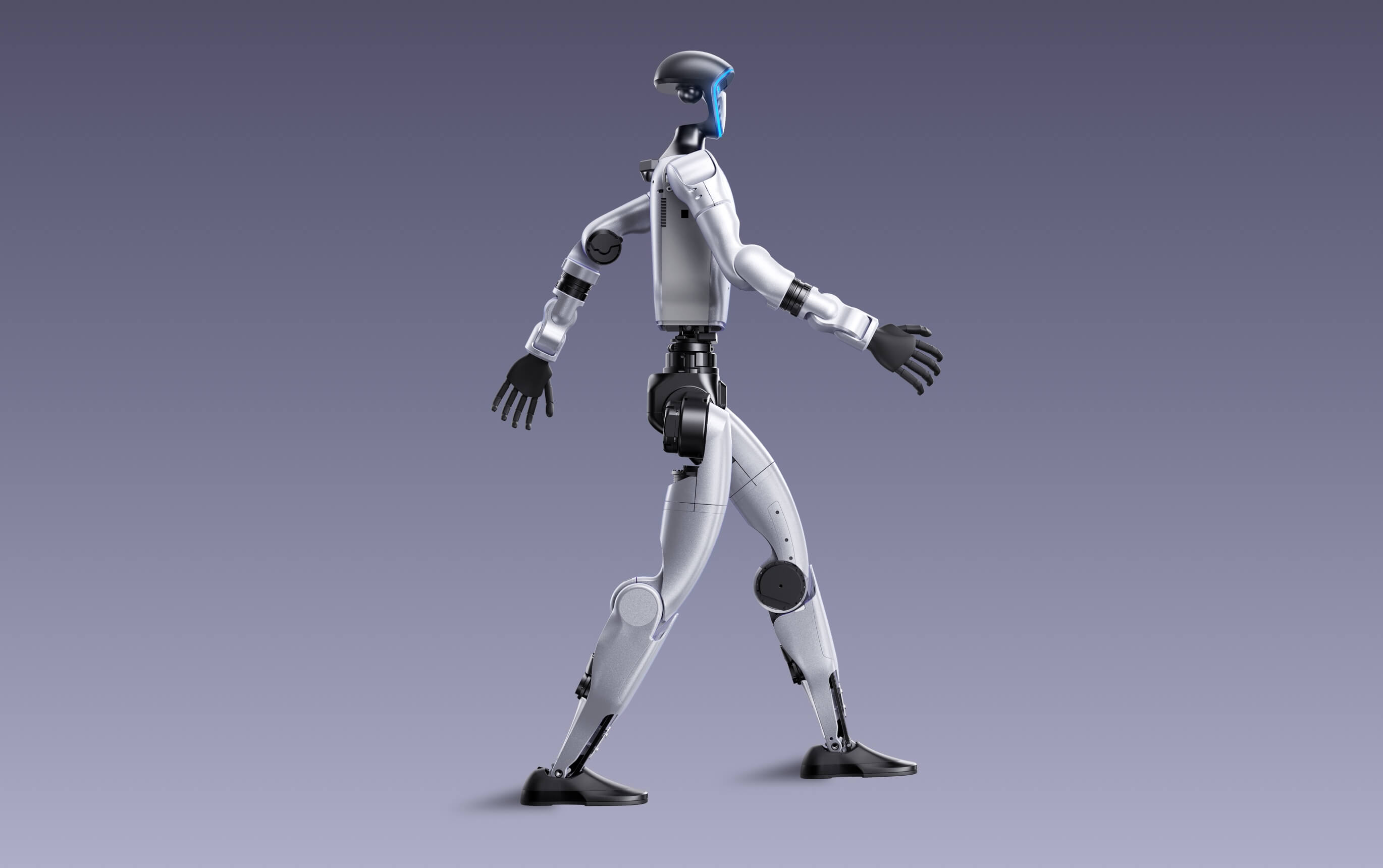
The standard body has 23 actuated joints: six per leg, five per arm and one waist joint. Unitree publishes up to 90 N·m maximum knee-joint torque and an approximately 2 kg maximum arm-load reference, with actual arm load changing substantially according to extension and posture.
The robot can fold from its 1320 × 450 × 200 mm standing envelope to approximately 690 × 450 × 300 mm. That foldability is commercially useful for storage, transport, events, classroom use and demonstration logistics.
Unitree positions G1 around dynamic motion, imitation learning, reinforcement-learning-driven behaviors and continuous OTA updates. However, the marketing story for the entire G1 family should not be confused with the exact capabilities of the standard model. Optional dexterous hands, high-compute modules and secondary development belong to EDU configurations rather than the base G1.
G1 Basic does not officially support secondary development.
The standard model uses fixed prosthetic hand shapes, not functional dexterous grippers.
Choose Basic for evaluation and demonstrations; choose EDU when custom robotics development is required.
Product appearance can change with hardware revision. Confirm the exact supplied configuration before shipment.
For the Unitree G1 Basic Humanoid Robot, this is one of the biggest gaps in competing G1 pages. Buying a humanoid robot does not mean buying a finished autonomous worker. G1 Basic is best understood as a capable factory-supported humanoid platform for supervised use—not a turnkey employee or open research robot.
The supplied manual controller and Unitree Explore app support setup, connection, posture and manufacturer-supported motion workflows.
G1 is designed for dynamic whole-body behaviors and is well suited to controlled demonstrations, exhibitions and technology presentations.
Depth sensing and 3D LiDAR provide a more substantial sensing stack than simpler visual-only humanoids.
The table follows Unitree’s current standard-G1 column rather than combining Basic and EDU figures.
| Manufacturer model / configuration | Unitree G1 / commonly sold as G1 Basic |
|---|---|
| Standing dimensions | 1320 × 450 × 200 mm |
| Folded dimensions | 690 × 450 × 300 mm |
| Weight with battery | Approx. 35 kg |
| Total actuated DOF | 23 |
| Leg DOF | 6 per leg |
| Arm DOF | 5 per arm |
| Waist DOF | 1 |
| Hand DOF | None on standard fixed/prosthetic hands |
| Maximum knee torque | 90 N·m |
| Maximum arm-load reference | Approx. 2 kg; highly posture dependent |
| Calf + thigh length | 0.6 m |
| Arm span reference | Approx. 0.45 m |
| Joint output bearing | Industrial-grade crossed-roller bearings |
| Joint motor | Low-inertia high-speed internal-rotor PMSM |
| Joint encoder | Dual encoder |
| Electrical routing | Full-joint hollow internal routing |
| Cooling | Local air cooling |
| Primary compute | 8-core high-performance CPU |
| High-power AI module | Not included on standard G1 |
| Perception | Depth camera + 3D LiDAR |
| Audio | 4-microphone array + 5 W speaker |
| Wireless | Wi-Fi 6 + Bluetooth 5.2 |
| Battery | 9000 mAh quick-release smart battery |
| Charger | 54 V / 5 A |
| Manual controller | Included |
| Battery life | Approx. 2 hours |
| OTA software updates | Supported |
| Secondary development | Not supported on standard G1 |
| Manufacturer warranty | 8 months |
| Official reference price | US $13,500 before tax and shipping |
Unitree notes that parameters can vary by configuration and operating scenario. The company also advises users to maintain sufficient safety distance because humanoid robots are structurally complex and powerful.
Unitree officially guarantees a depth camera plus 3D LiDAR on the standard G1. The current manufacturer table does not guarantee specific third-party sensor model numbers.
Some distributor packages identify hardware such as Livox MID-360 LiDAR and Intel RealSense D435i depth sensing, but buyers should confirm those exact part numbers on the supplied robot rather than copying another seller’s specification.
The robot also includes a four-microphone array, 5 W speaker, Wi-Fi 6 and Bluetooth 5.2. The Unitree Explore app provides status monitoring, network setup, calibration, motor-joint fine tuning and access to tutorials and documentation.
This sensing package is one of the strongest reasons to choose G1 over a smaller standard R1, whose base sensing architecture is different. For custom perception software, however, the EDU development tier remains the more appropriate purchase.
Unitree designs G1 around unusually large joint ranges for a compact humanoid. The standard waist yaw range is approximately ±155°, knee range 0–165°, hip pitch ±154°, hip roll −30° to +170° and hip yaw ±158°.
The robot uses industrial-grade crossed-roller bearings, low-inertia high-speed permanent-magnet synchronous motors, dual encoders, hollow electrical routing and local air cooling.
These details matter when evaluating a Unitree G1 Basic Humanoid Robot because they describe the physical platform buyers actually receive. They should not be confused with EDU-only wrist axes, optional three-axis waist configurations or dexterous hand joints.
G1 Basic uses a quick-release 9000 mAh 13-series lithium battery and a 54 V / 5 A charger. Unitree lists approximately two hours of battery life.
That figure should be treated as a manufacturer reference rather than a guarantee for every task. Dynamic movement, frequent standing transitions, audio use, sensing, temperature and future software functions can affect runtime.
The quick-release battery is valuable for demonstrations and multi-session use because organizations can plan around battery changes rather than waiting for a robot to remain connected to a charger between every session.
| Feature | G1 Basic | G1 EDU |
|---|---|---|
| Official price | $13,500 direct from Unitree | Contact sales |
| Total DOF | 23 | 23–43 depending on configuration |
| Waist DOF | 1 | 1 + optional 2 additional axes |
| Dexterous hands | No | Optional Dex3-1 + wrist axes |
| Knee torque | 90 N·m | 120 N·m |
| Arm-load reference | ~2 kg | ~3 kg |
| High-power compute | No | Optional multiple modules such as Orin |
| Secondary development | No | Yes |
| Battery | 9000 mAh | 9000 mAh |
| Runtime | ~2 h | ~2 h |
| Warranty | 8 months | 18 months |
Choose the Unitree G1 Basic Humanoid Robot when your priority is hardware evaluation, supervised demonstrations, education, event use or learning the practical realities of owning a compact humanoid without paying for a full development stack.
Choose G1 EDU when the project depends on custom software, official secondary-development access, high-power AI compute, additional joints or dexterous-hand manipulation.
Community discussions in 2026 show owners experimenting with unofficial ways to access more of the Basic platform. Those experiments are interesting but should not be confused with manufacturer-supported EDU development. A procurement decision should be based on official access, documentation and warranty—not on the assumption that a future workaround will unlock the robot.
Unitree’s G1 family expanded further in 2026. G1+ adds two head degrees of freedom, upgraded shoulder/waist/arm motors, dual visual systems, additional interaction hardware and external power support. G1 Competition adds a dedicated competition/development package with Orin NX compute, APIs, simulation support and ROS compatibility.
Those newer models do not make G1 Basic obsolete. They clarify the Basic model’s role: it remains the lowest-cost standard path into the G1 physical platform, while buyers who need more interaction hardware or developer capability should select the configuration designed for that job.
Compact humanlike form, dynamic movement and strong visual impact make G1 suitable for trade shows, innovation centers and controlled events.
Organizations can assess bipedal mobility, transport, battery workflow, sensing and humanoid operational requirements before investing in higher developer tiers.
G1 can demonstrate modern humanoid mechanics, perception, actuation and embodied-AI concepts even when low-level custom development is not required.
Useful for teams studying how humanoids could fit future workflows without immediately committing to a high-cost EDU configuration.
Remote-controlled and factory-supported behaviors can support supervised brand activations, filmed content and technology showcases.
Buyers can gain first-hand experience with transport, setup, calibration, charging, safety and maintenance before building a larger robotics program.
Unitree’s current manufacturer table lists the manual controller, 9000 mAh quick-release smart battery and 54 V / 5 A charger for the standard G1.
Standard G1 chassis with depth camera, 3D LiDAR, audio and wireless connectivity.
Quick-release smart battery with approximately two hours of manufacturer-reference runtime.
Manual controller and 54 V / 5 A charger are listed in Unitree’s standard G1 specification.
The final commercial quotation and packing list control what is actually supplied. Do not assume a development gantry, dexterous hands, Jetson compute or EDU accessories are included with G1 Basic.
This transparency is commercially important. G1 Basic is compelling because of its price and physical platform—not because it secretly includes everything available on G1 EDU.
Send the delivery country, quantity and intended use so the exact Basic configuration, current availability, freight and supplied package can be confirmed.
Unitree provides official G1 specifications plus Explore-app tutorials covering startup, shutdown, network configuration, calibration, remote-control connection, posture/movement, debug mode and packing.
Answers to the most important G1 price, capability and configuration questions.
The Unitree G1 Basic Humanoid Robot AI Robot Supplier currently lists Unitree G1 Basic at $11,997. Unitree’s official store lists the standard G1 at $13,500 before tax and shipping. Final landed cost depends on freight, duties, taxes, insurance and accessories.
Unitree’s current official table does not provide secondary-development support on the standard G1, and its store directs customization buyers to G1 EDU. Community owners experiment with unofficial access, but that should not be treated as equivalent to manufacturer-supported EDU development.
The standard G1 has 23 actuated DOF: six per leg, five per arm and one at the waist.
Unitree lists standard G1 at 1320 × 450 × 200 mm standing and about 35 kg with battery.
Unitree lists approximately two hours of battery life from the 9000 mAh quick-release battery. Real runtime varies with movement, workload and operating conditions.
Unitree officially specifies a depth camera plus 3D LiDAR. It also includes a four-microphone array, 5 W speaker, Wi-Fi 6 and Bluetooth 5.2.
No. Unitree’s standard G1 table lists no hand DOF. The Basic/standard version uses prosthetic/fixed hand shapes rather than the optional dexterous hands available on higher G1 configurations.
Unitree lists an approximately 2 kg maximum arm-load reference, but states that arm load varies greatly with arm extension and posture. It should not be treated as a fixed payload at every reach.
EDU can add higher knee torque, more joints, optional high-power compute, optional dexterous hands, secondary-development access and a longer manufacturer warranty. Basic is the lower-cost standard platform without those developer features.
Yes. Unitree’s current standard-G1 specification lists a manual controller. The final packing list should still be checked before purchase.
Availability changes. Unitree’s official store currently marks the standard G1 as backordered. AI Robot Supplier buyers should confirm current stock and delivery timing for the destination before payment.
International delivery can be arranged for approved destinations subject to freight availability, customs requirements, local regulations, insurance and final commercial terms.
Model, hand type, battery, controller and supplied hardware can be confirmed before order approval.
Price, packing scope, warranty terms and delivery responsibilities are documented before purchase.
Freight, insurance and export documentation can be coordinated for approved destinations.
Compare G1 Basic against EDU, R1, G1 Competition and H2 before committing to a platform.
Send your delivery country, quantity and intended use to confirm the current $11,997 listing, availability, freight and exact supplied package.
Tell us what you need — we respond within one business day.