NVIDIA Isaac Lab 3.0: What GTC Berlin Means for Robot Learning
 airobot_admin
•
Workstation Hardware Research
•
Updated October 25, 2026
•
14 min read
Performance intelligence for workstation buyers.
Physical AI / October 2026 news analysis NVIDIA Isaac Lab: turn robotics announcements into a practical development plan NVIDIA Isaac Lab is part of a growing robotics development stack connecting simulation, learning and physical testing. NVIDIA's GTC Berlin announcement on 21 October 2026 gives research teams…
Physical AI / October 2026 news analysis
NVIDIA Isaac Lab: turn robotics announcements into a practical development plan
NVIDIA Isaac Lab is part of a growing robotics development stack connecting simulation, learning and physical testing. NVIDIA’s GTC Berlin announcement on 21 October 2026 gives research teams and equipment buyers a timely reason to review that stack before purchasing another robot or computer.
This guide explains the update, separates training hardware from deployment hardware and outlines eight checks for building a reproducible robotics project.
Read the news analysis Discuss your development requirementsWhat NVIDIA announced at GTC Berlin
NVIDIA’s 21 October announcement expanded its Isaac robotics platform with a reference humanoid, datasets, a runtime and robot-learning developments. It placed Isaac Lab 3.0 within a broader path from data generation to robot deployment.
The announcement also identified Agile Robots’ Agile ONE SN reference humanoid, built around Isaac GR00T and Jetson Thor, with planned Halos integration. These are announced platform developments. They do not establish that an independently purchased humanoid includes the same hardware, software or support scope.
Read NVIDIA’s official GTC Berlin announcement.
For equipment buyers, NVIDIA Isaac Lab raises a practical question: what does your team need to reproduce a useful workflow on its own robot? That answer depends on the exact task, software versions, supported assets, computing environment and access to the physical platform.
Plan the project before selecting the hardware
Send the intended task, robot configuration, current computing equipment and development environment. Ask for an itemised hardware scope with compatibility assumptions identified.
Request robotics equipment guidanceIsaac Lab 3.0: understand the software architecture
The current Isaac Lab 3.0 documentation describes a modular robot-learning framework with a multi-backend architecture. It supports Isaac Sim workflows and a standalone Newton route, with supported configurations selected through task presets.
This matters because NVIDIA Isaac Lab is not one fixed workload. A task that needs photorealistic camera observations has different requirements from a task focused on state-based control. Select the supported physics, rendering and sensor configuration for the experiment rather than assuming every example uses the same setup.
The documentation also points users upgrading from earlier releases to migration guidance. Treat that as part of project planning. A working older environment may need changes before it behaves correctly on a newer release, even if installation completes successfully.
Record the framework revision, simulator or physics backend, task configuration and dependencies together. That record gives the team a reproducible starting point and helps distinguish a software migration problem from a change in the learned behaviour.
Robot simulation: define the task before scaling it
Robot simulation is most useful when the experiment has a clear question. A project might investigate whether a gripper can approach a part, whether a policy maintains balance or whether a sensor provides enough information for a handling decision.
Begin a NVIDIA Isaac Lab project with one task that can be inspected and measured. Establish what a successful episode means, which failures matter and how the environment resets. If those definitions are unclear, generating more episodes can increase the volume of ambiguous results.
Keep a small reference scene that the team can rerun after changes. Use it to inspect joint motion, contacts, observations and task completion. This is especially useful before increasing the number of environments or adding more complex visual inputs.
Separate the appearance of the scene from the behaviour it represents. A convincing render does not prove that mass, friction, actuator limits or sensor timing match the physical system. Decide which properties matter to the research question and validate those first.
Robot learning: separate training from evaluation
Robot learning needs a measure of progress that remains meaningful outside the examples used during development. Define evaluation conditions before repeatedly adjusting the policy, reward or environment to improve a training result.
For NVIDIA Isaac Lab experiments, retain a consistent evaluation set with known conditions. Record failures as well as successful episodes. A higher average reward can conceal behaviour that is unacceptable for the intended physical task.
For a manipulation example, measure whether the correct object reaches the correct destination without damage. For locomotion, define the relevant operating conditions and failure criteria. The exact measures depend on the project, but they should be understandable to the team that will use the result.
Compare changes one at a time where practical. If the robot asset, physics settings, reward and training budget all change together, it becomes difficult to identify why performance changed. Keep the experiment record clear enough for another team member to reproduce the comparison.
NVIDIA Isaac Lab hardware: development, training and deployment
Hardware selection becomes clearer when the project separates development work, training experiments and on-robot execution. One computer may support more than one role, but the purchase should identify which workloads it must complete.
| Project stage | Primary requirement | Evidence to request |
|---|---|---|
| Environment development | Load assets, inspect behaviour and debug the task. | A supported installation and a reproducible sample run. |
| Training | Run the selected workload within the project budget. | Measured throughput, memory use and useful evaluation results. |
| Deployment preparation | Export and run the intended application on the target platform. | A supported runtime, interfaces and measured application timing. |
| Physical validation | Confirm the complete robot performs the defined task. | Controlled tests, failure records and recovery procedures. |
A NVIDIA Isaac Lab purchase should not be justified by a single headline compute figure. Ask for the actual workload, selected backend, number of environments and sensor configuration used in any performance comparison.
Include the time needed to build, configure and maintain the environment. A system that runs a sample successfully may still require engineering before it supports your custom robot and task.
DGX Spark and NVIDIA Isaac Lab: follow the exact supported workflow
NVIDIA publishes a DGX Spark playbook for Isaac Sim and Isaac Lab. The version checked for this article describes building Isaac Sim from source on Linux AArch64 and running a sample learning task with a pinned software combination.
The playbook specifies Isaac Sim v6.2.0 and a particular Isaac Lab 3.0 revision. It also distinguishes that revision from an earlier early-access tag targeting another simulator version. This is an example of why exact version pairing matters more than simply requesting the latest release.
The NVIDIA DGX Spark 128GB 4TB is therefore a relevant product to evaluate for this documented development route. Confirm the supplied configuration and reproduce the required workflow before extending a sample result to a larger training workload.
The GTC announcement also discusses DGX Station workflows. DGX Station and DGX Spark are different products. A workflow described for one does not automatically establish equivalent support or performance on the other.
For NVIDIA Isaac Lab planning, request an acceptance run that matches your task rather than relying only on an installation demonstration. Record build instructions, revisions and the result so the environment can be restored later.
Jetson Thor: distinguish the developer kit from a production module
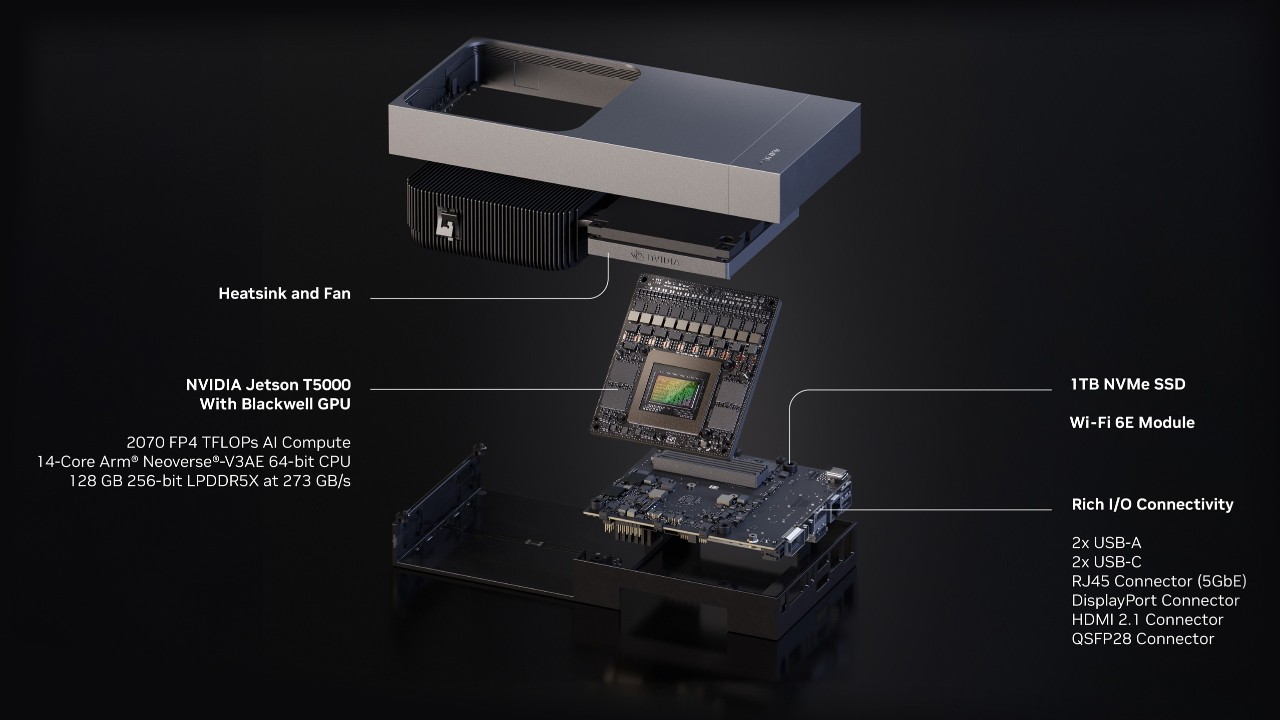
The NVIDIA Jetson AGX Thor Developer Kit is a development platform for evaluating an application. It should be assessed separately from the computer used for large simulation or training workloads.
NVIDIA’s Jetson FAQ distinguishes developer kits from production modules and states that developer kits are not intended for production use. A deployment proposal needs the appropriate module or system, carrier, power, cooling and supported software scope.
The NVIDIA Jetson T5000 module is a separate embedded-component enquiry. It is not a conventional desktop graphics card or a complete robot controller package by itself.
A NVIDIA Isaac Lab project should identify its deployment target early. Confirm how observations, policy outputs and robot commands will reach the physical system. An environment that trains successfully does not establish that its exported application already meets the target’s timing and interface requirements.
Choose the robot configuration as carefully as the computer
The NVIDIA Isaac Lab documentation includes specific robot assets, including Unitree G1 and H1 references. An available simulation asset is a useful starting point, but it does not establish that every commercial configuration has identical joints, hands, sensors or development access.
For example, review the Unitree G1 EDU Plus configuration against the exact intended task. Confirm its development interfaces, supported control route and the correspondence between the supplied hardware and the simulation model.
A NVIDIA Isaac Lab procurement discussion should include the robot’s software access as well as its physical capabilities. Ask which commands and observations are available, how faults are reported and which development activities the supplier supports for that configuration.
The Booster K1 EDU and RealMan DAP-D-65 development platform are separate research-platform references. Their inclusion here does not imply a prevalidated Isaac Lab asset or a ready deployment workflow.
If the project needs custom asset integration, obtain a defined engineering scope. Identify who supplies the model, verifies its parameters and maintains it when the physical configuration changes.
Sim-to-real robotics: plan the physical evidence
Sim-to-real robotics concerns the work needed to make a behaviour developed in simulation useful on physical hardware. The useful question is which differences affect the task and how the team will detect them.
For a NVIDIA Isaac Lab project, compare the observations and actions used during training with those available on the real robot. Check coordinate conventions, units, limits, update rates and the order of sensor values. Small interface errors can produce behaviour unrelated to the quality of the learned policy.
Start physical evaluation in a controlled setting using manufacturer-supported procedures. Define the intended operating envelope, supervision and recovery process. A successful simulated task is not evidence that the complete physical application is ready for routine operation.
Use staged tests with clear pass conditions. Begin by confirming interfaces and observations, then evaluate a limited task before adding more variation. Keep records of the configuration and outcome at each stage.
When a result differs from simulation, investigate the cause before changing several settings at once. The problem may involve the model, observations, timing, actuator behaviour or task definition. A clear experiment record makes that investigation more efficient.
8 essential NVIDIA Isaac Lab checks for better training
- Define one measurable task. State the required behaviour, successful outcome and failure conditions.
- Identify the exact robot. Match the asset to the supplied joints, tools, sensors and development interfaces.
- Pin the software combination. Record Isaac Lab, simulator or physics backend, drivers and relevant dependencies.
- Select the required observations. Identify which sensors or state values the policy needs in simulation and on hardware.
- Measure a representative workload. Check useful throughput, memory requirements and evaluation behaviour on the proposed computer.
- Confirm the deployment route. Specify runtime, target computing platform, robot interface and application timing.
- Agree physical validation. Define the controlled test, operating envelope, supervision and recovery requirements.
- Price engineering and support. Include asset preparation, integration, training, maintenance and responsibility for updates.
These checks turn a NVIDIA Isaac Lab equipment request into a reviewable project scope. They also make it easier to compare proposals that contain different combinations of robots, computers and integration work.
Request a development-equipment shortlist
Provide the task, robot configuration, intended software versions, current computer and target deployment platform. Ask which components are required now and which depend on a successful feasibility test.
Discuss your robotics development setupBuild a useful acceptance test for robot simulation
A robot simulation acceptance test should show more than an application launching. Require the proposed environment to run the intended task with the selected observations and an agreed evaluation method.
For NVIDIA Isaac Lab, retain the configuration files, asset revisions and commands needed to reproduce the result. Include a clean restart of the environment and document any manual steps required before the experiment works.
| Test area | Check | Retain as evidence |
|---|---|---|
| Installation | The supported software combination loads and runs. | Versions, build notes and a reproducible sample. |
| Robot asset | Joints, limits, observations and task behaviour match the specification. | Asset revision and validation notes. |
| Training workload | The proposed configuration fits the computing resources. | Workload definition, timings and memory measurements. |
| Evaluation | The policy meets the agreed simulated-task criteria. | Evaluation conditions, outcomes and failure cases. |
| Deployment preparation | The application runs through the intended target interface. | Runtime configuration and measured application behaviour. |
Keep a reference test after acceptance. It provides a quick way to check whether a later update changed expected behaviour before a longer training run consumes time and resources.
Budget for robot learning beyond the hardware price
Robot learning projects can require asset preparation, data handling, environment development, training experiments and physical integration. A robot or computer price covers only part of that work.
A NVIDIA Isaac Lab proposal should identify what is already supported and what requires new engineering. Separate a standard installation from a custom task, a custom robot asset and a validated physical deployment.
Ask who owns and maintains the resulting configuration. The team should be able to restore the environment, rerun a reference test and understand which updates require validation. Include training and documentation where the customer will operate the setup independently.
A staged purchase can make the evidence easier to assess. Begin with a reproducible development environment, then evaluate the custom task before expanding the computing or robot fleet. Each stage should answer a specific technical question.
Internal product links for a NVIDIA Isaac Lab project
Use these AI Robot Supplier product pages to discuss the separate equipment roles. Compatibility, included software and engineering scope must be confirmed for the intended workflow.
- NVIDIA DGX Spark 128GB 4TB for evaluating the documented local development route.
- NVIDIA Jetson AGX Thor Developer Kit for application development and target-platform evaluation.
- NVIDIA Jetson T5000 module for a separately specified embedded deployment design.
- Unitree G1 EDU Plus humanoid robot for configuration-specific development enquiries.
- Booster K1 EDU humanoid robot for an independently assessed education or research project.
- RealMan DAP-D-65 development platform for a separately scoped manipulation research environment.
Send the intended NVIDIA Isaac Lab task, software requirements, destination, quantity and target date with your enquiry. Request written confirmation of the supplied equipment, accessories, support route and integration responsibilities.
NVIDIA Isaac Lab frequently asked questions
What is NVIDIA Isaac Lab?
It is a modular framework for robot-learning workflows. The current documentation describes supported simulation backends, assets and task configurations. Select the configuration that matches your experiment and retain the exact versions used.
What changes with Isaac Lab 3.0?
The versioned documentation describes a multi-backend architecture and directs existing users to migration guidance. Review the supported task, physics and rendering combinations before upgrading a working environment or purchasing equipment around a particular example.
Is robot simulation the same as a trained robot?
No. Simulation provides an environment in which behaviour can be developed and evaluated. A physical application still needs supported interfaces, suitable target computing, validation and a defined operating and recovery process.
Can DGX Spark run an Isaac workflow?
NVIDIA publishes a DGX Spark playbook using a specific build and version combination. Follow that supported route and measure your own workload. A sample installation does not establish equivalent performance for every custom training task.
Is Jetson Thor a replacement for the training computer?
Choose the hardware by workload. Application development and on-robot execution are different requirements from running a selected simulation or training experiment. Confirm the supported route for each role rather than assuming one platform covers them all.
Can Jetson developer kits be used as production units?
NVIDIA states that its developer kits are intended for development rather than production use. A production design needs the appropriate module or system and its supporting carrier, power, cooling and software configuration.
Does a Unitree G1 simulation asset match every G1 package?
Do not assume that it does. Compare the asset with the exact robot configuration, including joints, tools, sensors and control interfaces. Confirm any changes needed before using the model as evidence for a physical experiment.
What does sim-to-real robotics require?
It requires checking the differences that affect the intended task, including observations, actions, timing and physical behaviour. Use staged tests with clear criteria and retain the hardware and software configuration associated with each result.
How much does a NVIDIA Isaac Lab setup cost?
Request an itemised proposal covering computing, robot hardware, accessories, asset preparation, environment development, integration and support. This article does not provide an unverified installed price or imply that hardware includes a complete learning application.
What should I include in a robot-learning enquiry?
Provide the task, robot configuration, software versions, required observations, current computing environment, deployment target and evaluation criteria. Include the delivery country and any training or integration services your team needs.
Official NVIDIA Isaac Lab sources
- NVIDIA’s 21 October 2026 Isaac platform announcement .
- Isaac Lab 3.0 documentation .
- NVIDIA Isaac Lab developer overview .
- DGX Spark Isaac Sim and Isaac Lab playbook .
- NVIDIA Jetson FAQ and developer-kit distinctions .
Research checked on 25 October 2026. Manufacturer announcements and software capabilities are attributed to official sources. Application examples are planning scenarios, not claimed hands-on results or guaranteed deployment outcomes.
Build a reproducible development setup
Plan your NVIDIA Isaac Lab equipment scope
Send your task, robot configuration, software requirements and deployment target. Ask AI Robot Supplier to discuss the computing, robotics and support components needed for your project.
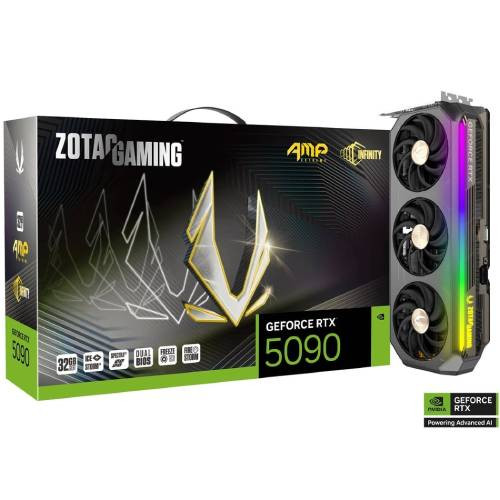 ZOTAC GAMING GeForce RTX 5090 AMP Extreme INFINITY
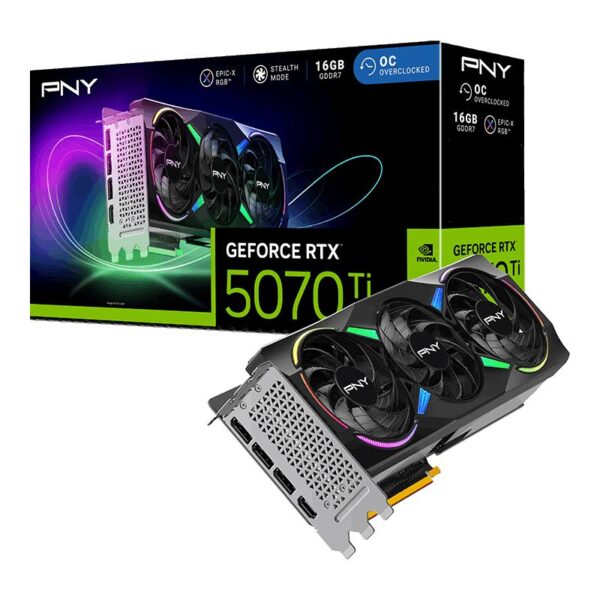 PNY GeForce RTX 5070 Ti 16GB ARGB EPIC-X RGB Overclocked Triple Fan
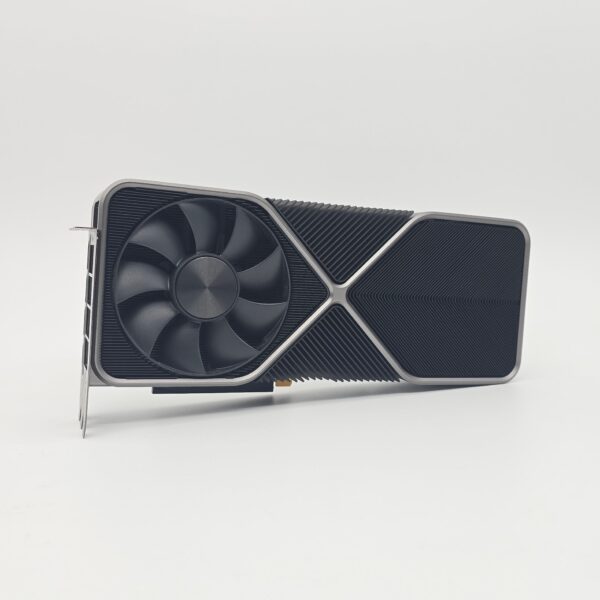 NVIDIA GeForce RTX 3090 Founders Edition 24GB
 Sapphire NITRO+ Radeon RX 7800 XT 16GB