AGIBOT’s 2026 Robot Push: A3 Ultra, X2 Edu, G2 Max and WITA-Omni as Hong Kong IPO Race Heats Up
 AI Robot Supplier Editorial Desk Limited
•
Workstation Hardware Research
•
Updated August 13, 2026
•
13 min read
AI Robot Supplier Editorial Desk Limited
•
Workstation Hardware Research
•
Updated August 13, 2026
•
13 min read
Performance intelligence for workstation buyers.
AGIBOT is accelerating its 2026 robotics strategy with the A3 Ultra, X2 Edu, G2 Max, OmniHand 3 Ultra-M and WITA-Omni, while preparing for a Hong Kong IPO. We examine the latest product launches, factory deployment data, AI developments and what they mean for buyers.
By AI Robot Supplier Editorial Desk | Published 13 August 2026
SHANGHAI — AGIBOT 2026 is becoming a story about far more than a new generation of humanoid robots.
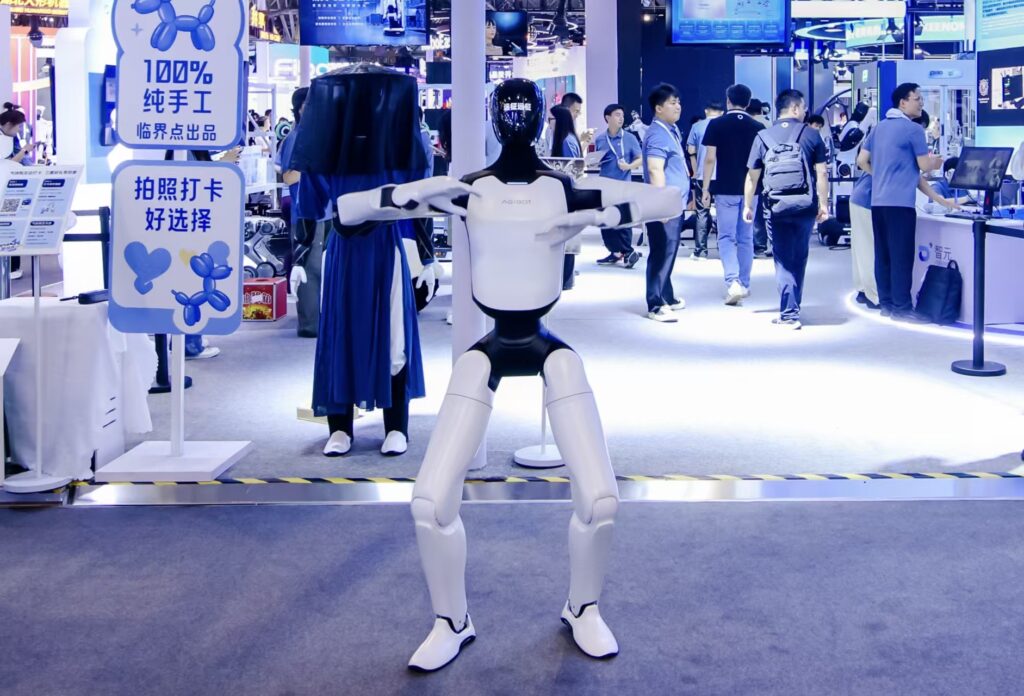
Within a matter of weeks, the Shanghai robotics company has unveiled four new robotics systems at the World Artificial Intelligence Conference, reported another major production milestone, pushed its embodied-AI software forward and begun the process toward a Hong Kong stock-market listing.
At the same time, rival Chinese robot maker Unitree is attracting extraordinary investor attention in Shanghai, adding a financial-market dimension to what was already one of technology’s fastest-moving hardware races.
For buyers, researchers and industrial users, however, the more important question is not which robotics company attracts the biggest valuation.
It is whether this new generation of machines can move from demonstrations to dependable, economically useful work.
That is where AGIBOT’s latest developments become particularly interesting.
AGIBOT 2026: four machines, four different problems
At WAIC 2026 in Shanghai on 18 July, AGIBOT introduced the A3 Ultra, X2 Edu, G2 Max and OmniHand 3 Ultra-M.
The company said more than 60 AGIBOT robots were being used around the conference venues for demonstrations, visitor guidance, information services and other functions. Its official WAIC announcement positioned the new products across service humanoids, research, industrial automation and dexterous manipulation rather than presenting them as variations of one machine. AGIBOT’s official WAIC announcement provides the primary specifications for the four systems.
That product segmentation is important.
The humanoid robotics market is often discussed as though every manufacturer is trying to build one universal machine capable of replacing a human worker anywhere.
AGIBOT’s latest portfolio suggests a more practical near-term strategy: use different robotic embodiments for different classes of work while developing a common intelligence layer that can increasingly understand, plan and interact with the physical environment.
For organisations comparing platforms, AI Robot Supplier’s broader humanoid robot catalogue provides a useful starting point for comparing different manufacturers and intended applications.
A3 Ultra targets the problem of keeping a humanoid useful for longer
The AGIBOT A3 Ultra is the most recognisably humanoid of the four launches.
AGIBOT lists the full-size robot at 1.74 metres tall and 60 kilograms, with 51 active degrees of freedom, a payload of up to 5 kilograms per arm and as much as eight hours of combined operating time. Its perception package includes 3D LiDAR, RGB-D cameras, fisheye cameras and binocular vision, while GPS, RTK and UWB are used for positioning.
AGIBOT says the robot uses NVIDIA Thor for high-level embodied-AI processing. NVIDIA describes Jetson Thor as a Blackwell-based robotics platform built to run demanding generative and physical-AI workloads at the edge. NVIDIA introduced additional Thor-based T3000 and T2000 modules in July 2026 as part of a wider push to move advanced robotics processing into compact production systems. NVIDIA’s latest Jetson Thor update provides useful independent technical context for the computing architecture behind this generation of robots.
The more commercially interesting part of the A3 Ultra specification may be its energy system.
AGIBOT says the machine supports direct charging, replaceable batteries and autonomous charging. That matters because robot uptime is a procurement issue, not merely an engineering specification.
A robot that can execute an impressive task for five minutes can generate a viral video. A robot deployed in a hotel, airport, exhibition venue, showroom or commercial building has to remain useful across an operating day.
In practical deployments, charging strategy, battery replacement, fleet scheduling, maintenance and recovery from interruptions may become almost as important as walking speed or degrees of freedom.
X2 Edu is designed for people who want to develop, not merely operate, a robot
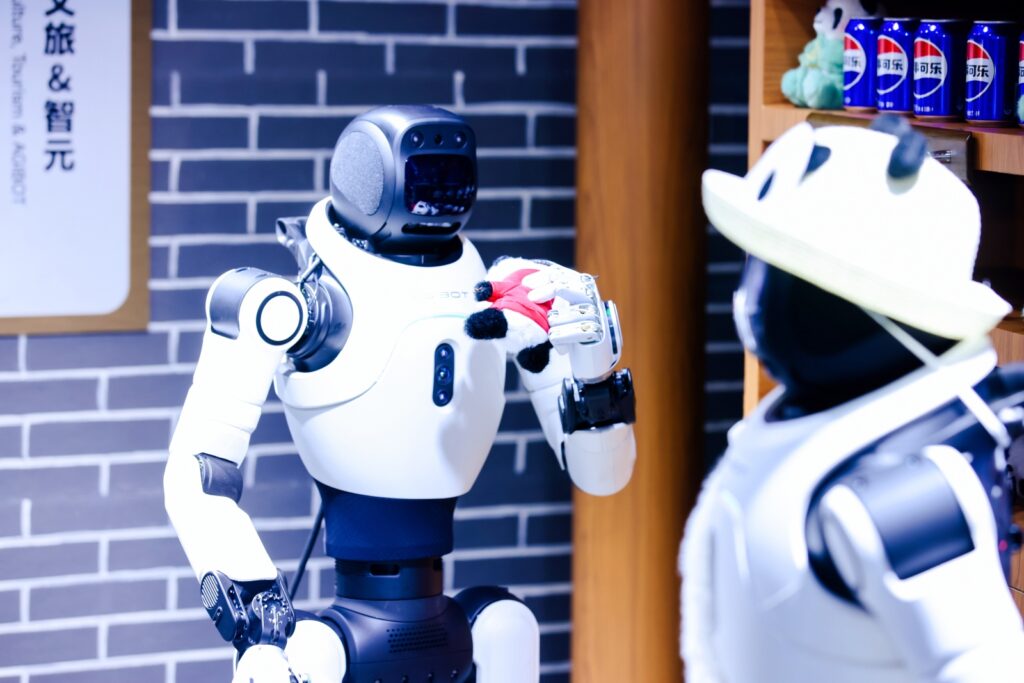
The X2 Edu addresses a different market.
AGIBOT describes it as an approximately 1.3-metre-tall humanoid development platform with 29 degrees of freedom, including seven degrees of freedom in each arm, and support for an end-effector payload of up to three kilograms.
Its more significant feature is openness.
The company says the hardware chain is modular and can be disassembled and reconfigured, while developers have access to motion-control and hardware interfaces for secondary development. Sensors, computing modules and different end effectors can therefore be integrated around the research task.
That makes X2 Edu more relevant to universities, robotics laboratories, AI researchers and engineering programmes than to buyers searching for a finished commercial service robot.
It also reflects a broader competitive battleground in humanoid robotics.
Hardware performance alone may not determine the platforms that become important. Universities and developers also care about documentation, APIs, development tools, datasets, simulation environments and the ability to modify a platform without fighting a closed architecture.
For buyers exploring other formats, AI Robot Supplier also maintains a wider robotics catalogue covering humanoids, quadrupeds and specialised robotic platforms.
G2 Max may tell us more about the immediate commercial market than a walking humanoid
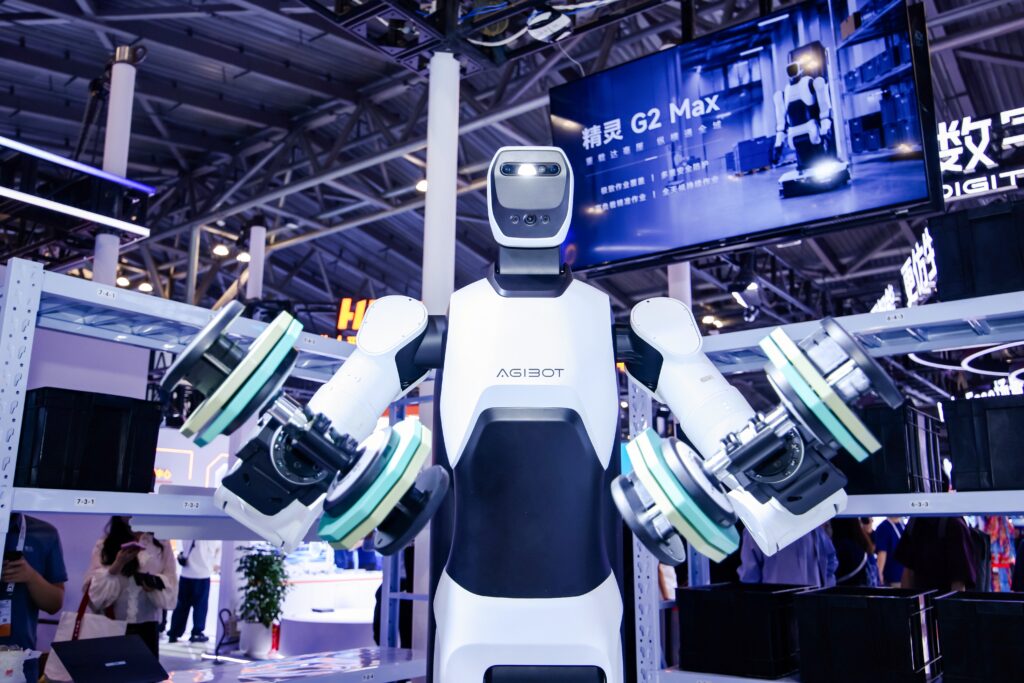
The G2 Max is arguably the most commercially revealing of AGIBOT’s new machines.
Unlike a conventional bipedal humanoid, G2 Max uses omnidirectional wheeled mobility alongside force-controlled robotic arms and adjustable working height.
AGIBOT describes it as its first heavy-payload force-controlled embodied task robot, intended for material handling, palletising and other repetitive industrial operations. The company says it is designed to work with existing factory equipment instead of forcing manufacturers to rebuild a production line around the robot.
That design is worth paying attention to.
Legs are useful when a robot needs to move through an environment designed for humans — climbing stairs, stepping over obstacles or travelling across uneven surfaces.
A factory with flat floors may not need that complexity.
Wheels can offer stability, predictable movement and lower energy requirements while the upper body still provides the manipulation and perception capabilities associated with embodied AI.
In other words, the robot that delivers the fastest commercial return may not be the robot that looks most human.
Real factories will matter more than exhibition demonstrations
AGIBOT is also trying to prove the industrial case through deployments with manufacturers.
At Longcheer Technology’s Nanchang facility, the company says G2 robots were integrated into a live tablet-production quality-inspection workflow.
According to AGIBOT, integration was completed within 36 hours, the deployment supported approximately 3,000 units per shift and the robots accumulated more than 64 hours of continuous operation, with downtime loss below 4%.
These numbers should be described carefully: they are manufacturer-reported deployment figures, not an independently audited productivity study.
That distinction is important for a serious buyer.
Nevertheless, factory deployments are much more informative than a choreographed stage demonstration because production environments expose robots to repetition, workflow timing, object-position changes, equipment interfaces and the consequences of failure.
AGIBOT also ran a six-day livestream from the Longcheer manufacturing environment in June as part of an effort to demonstrate sustained real-world operation. Its own account frames this as a shift from evaluating individual robot movements toward evaluating deployment stability and commercial usefulness. AGIBOT’s factory deployment report provides the company’s account of that test.
For procurement teams, the next questions should be even harder: How often does intervention occur? What is mean time between failures? How quickly can a task be changed? What does maintenance cost? How many technicians are needed? What happens after thousands of operating hours?
Those metrics will eventually matter more than impressive movement videos.
OmniHand 3 Ultra-M attacks one of robotics’ hardest problems
Humanoid robots may attract attention because they walk, but many economically valuable tasks depend on the hands.
The OmniHand 3 Ultra-M is AGIBOT’s latest direct-drive dexterous hand.
The company specifies 20 active degrees of freedom in a human-scale unit weighing about 630 grams. It reports a whole-hand grip capacity of up to 5 kilograms, an approximately 0.3-second typical opening or closing time and ±0.2 millimetre repeatability.
The fingertips incorporate vision-based tactile sensors, while the palm has an additional tactile array.
That is strategically important because visual perception tells a robot where an object appears to be; tactile information tells it what is happening after contact.
A general-purpose robot needs to detect whether an object is slipping, whether it has gripped too hard, whether contact occurred where expected and how force should change as the task progresses.
Manipulation remains one of the biggest differences between a robot that can navigate a room and a robot that can perform useful physical work inside it.
The newer WITA-Omni story shows AGIBOT is also competing for the robot “brain”
The hardware launches were followed by another AGIBOT announcement on 28 July.
The company said its WITA-Omni Preview multimodal model achieved an average accuracy score of 85.21% on the Daily-Omni audio-visual reasoning benchmark and ranked first in the results it cited. AGIBOT’s WITA-Omni announcement says the model led or tied for first across six of eight reported metrics.
There is an important verification point here.
Daily-Omni is a real third-party benchmark for evaluating joint audio-visual reasoning and temporal alignment. Its official research repository describes a dataset of everyday audio-visual scenarios and publishes benchmark results. However, the version of the official public repository available to search currently shows its latest visible leaderboard update dated April 27, before AGIBOT’s July announcement. The official Daily-Omni repository should therefore be checked again as the leaderboard is refreshed.
That does not mean AGIBOT’s reported score is wrong. It means premium reporting should distinguish between a result announced by a vendor and a result independently visible in the latest public benchmark record.
The underlying direction is important either way.
Robotics competition is moving from motors, joints and sensors into multimodal intelligence: systems that must simultaneously understand speech, environmental sound, video, human movement and context before deciding how to act.
That is what turns a robot from a remotely controlled machine into something closer to an autonomous physical agent.
AGIBOT says production has now reached 15,000 robots
On 28 June 2026, AGIBOT announced that its 15,000th robot had rolled off the production line.
The milestone machine was a G2 industrial embodied-task robot. AGIBOT says it moved through earlier milestones of 1,000, 5,000 and 10,000 robots after the company was founded in 2023. The official production announcement provides the company’s production timeline.
Shipment and production figures should not automatically be treated as the same thing.
But the milestone demonstrates why manufacturing capability has become part of the humanoid-robotics competition.
Producing a sophisticated prototype is one challenge. Producing thousands of systems with consistent components, quality control, software support, spare parts and field-service capability is another.
Independent market data also shows how quickly this sector has expanded. An IDC-linked report said roughly 18,000 humanoid robots were shipped globally in 2025, with AgiBot ranked first at approximately 5,200 units under IDC’s methodology. Other market trackers have reported somewhat different totals and vendor shipment estimates, illustrating why methodology matters when comparing industry rankings.
The Hong Kong IPO process adds another race: access to capital
AGIBOT’s technology expansion is happening alongside a potentially significant financial development.
Reuters reported on 24 July 2026 that AgiBot had initiated the process for a Hong Kong initial public offering, citing China’s Securities Times. Reuters had previously reported on the company’s listing plans, potential valuation and appointed banks. Reuters’ report on the AgiBot IPO process is an important independent source for this part of the story.
As of 13 August, investors should not treat a final listing date, final valuation or offering size as confirmed unless they appear in formal filings or company announcements.
But the timing is notable because rival Unitree has just demonstrated how intense investor demand for humanoid robotics has become.
Reuters reported on 10 August that Unitree’s roughly $900 million Shanghai IPO was more than 8,000 times oversubscribed by retail investors. The offering priced Unitree at more than 60 billion yuan and a very high multiple of its prior-year earnings, while some investors and analysts warned that widespread commercial adoption remains uncertain. Reuters’ latest Unitree IPO report provides useful context for the capital-market environment AGIBOT is entering.
That combination — enormous investor expectations and an industry still proving its commercial economics — may become one of the defining tensions in robotics over the next several years.
AGIBOT is also moving outward from China
AGIBOT’s 2026 strategy is not confined to its domestic market.
At its UK Partner Conference in London in June, the company highlighted European commercial deployment and introduced a UK Robot-as-a-Service model, while showing products including its A3 platform.
AGIBOT described the event as part of a longer-term European expansion strategy covering education, commercial services, logistics and other applications. AGIBOT’s UK partner conference report gives details of that strategy.
A Robot-as-a-Service model could prove particularly important.
Large upfront capital expenditure remains one of the barriers to adoption of advanced robotics. Rental or service-based models can allow businesses to test a workflow before committing to large-scale ownership.
The ultimate question, however, remains economics.
If a robot costs more to deploy, supervise, integrate and maintain than the value of the work it performs, technical sophistication will not be enough.
How the four WAIC systems compare
| Platform | Primary role | Mobility/form | Key reported specification | Likely buyer |
|---|---|---|---|---|
| A3 Ultra | Commercial/service humanoid | Full-size biped | 51 active DoF; 5 kg per arm; up to 8-hour combined operation | Enterprises, venues, service operators |
| X2 Edu | Education and R&D | Compact humanoid | 29 DoF; modular architecture; open development interfaces | Universities, laboratories, developers |
| G2 Max | Industrial task execution | Omnidirectional wheeled platform | Force-controlled arms; adjustable height; replaceable/autonomous charging | Factories, automation integrators |
| OmniHand 3 Ultra-M | Dexterous manipulation | Robotic hand | 20 active DoF; up to 5 kg whole-hand grip; tactile sensing | Robotics developers, teleoperation and manipulation teams |
The comparison reveals something easy to miss in individual product announcements.
AGIBOT is not merely adding more humanoid models.
It is assembling pieces of a broader embodied-AI stack: mobile bodies, manipulation hardware, development platforms, multimodal models, datasets and industrial deployments.
That may prove more strategically important than any one robot.
What buyers should verify before ordering a humanoid or embodied-AI robot
Buyers should resist selecting a robot based only on video demonstrations or headline specifications.
Runtime needs to be evaluated under the actual task load. Payload needs to include the end effector and object being manipulated. Autonomy should be separated from teleoperation. Charging strategy, networking, SDK access, safety procedures, spare parts and local technical support should all be confirmed.
The buyer should also ask what happens when the robot fails.
Can an operator recover it remotely? Is field servicing possible? What parts are considered consumables? How long does replacement take? Can existing staff create new workflows, or is the manufacturer required every time the task changes?
Those questions help distinguish a robotics purchase from a technology demonstration.
Companies evaluating different platforms can browse AI Robot Supplier’s humanoid robots, quadruped robots and wider robot catalogue to compare available equipment.
Related AGIBOT systems listed by AI Robot Supplier include the AGIBOT D1 Pro intelligent quadruped robot dog and AGIBOT D1 MaxPro quadruped robot dog.
Product configurations, availability, software support and regional supply conditions should always be confirmed before ordering.
What comes next for AGIBOT?
There are four developments worth watching closely.
The first is the Hong Kong IPO process. A formal prospectus could provide far more detail about revenue, R&D spending, customers, manufacturing economics and commercial risks than marketing announcements currently reveal.
The second is delivery of the new WAIC platforms. Announcements are only the beginning; pricing, lead times, configurations and real customer deployments will determine their commercial significance.
The third is the evolution of WITA-Omni and AGIBOT’s wider intelligence stack. Better multimodal reasoning matters only if improvements translate into more reliable physical behaviour.
The fourth is deployment data.
The industry urgently needs more independently verifiable information about uptime, task success, intervention rates, maintenance, safety and return on investment.
Those numbers will ultimately decide whether humanoid robotics becomes a major industrial platform or remains concentrated in research, demonstrations and carefully controlled workflows.
The bigger picture
AGIBOT’s recent activity captures the unusual stage the humanoid robotics industry has reached.
Hardware is improving quickly. Manufacturing volumes are increasing. AI models are becoming more capable. Investors are assigning enormous valuations to companies operating in the sector.
But the central question has not changed.
Can these machines perform useful physical work reliably enough, for long enough and cheaply enough to justify deployment?
AGIBOT’s A3 Ultra, X2 Edu, G2 Max, OmniHand 3 Ultra-M, factory experiments and WITA-Omni development suggest the company is attempting to answer that question from several directions at once.
The coming months should reveal whether those pieces can be converted into repeatable commercial systems.
For buyers, that is the development worth watching most closely.
 ZOTAC GAMING GeForce RTX 5090 AMP Extreme INFINITY
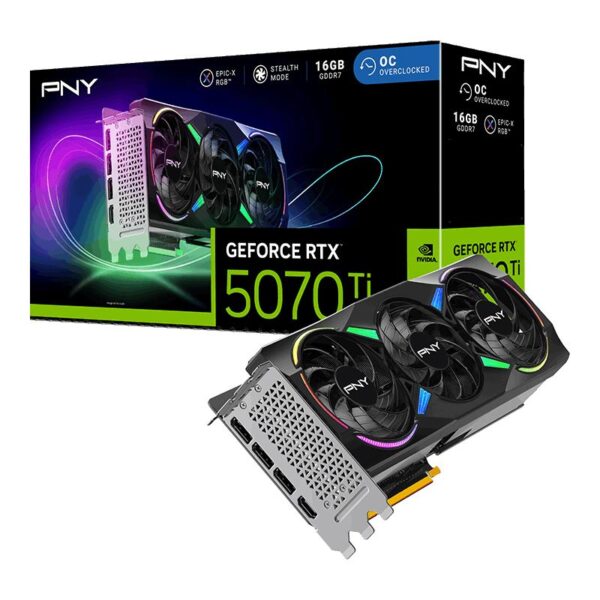 PNY GeForce RTX 5070 Ti 16GB ARGB EPIC-X RGB Overclocked Triple Fan
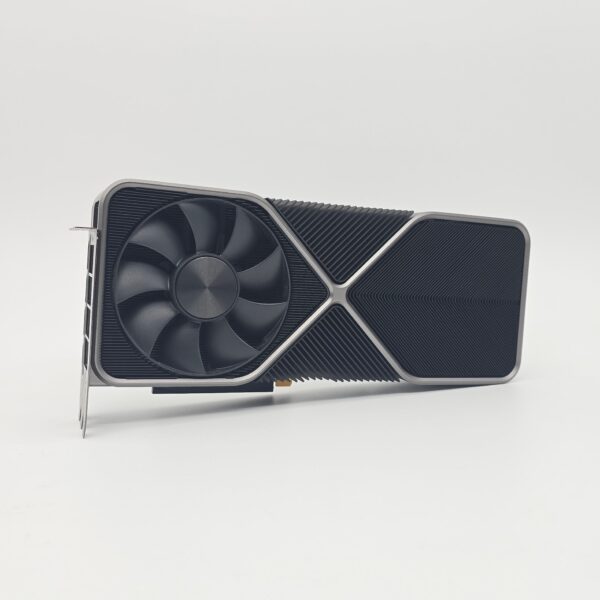 NVIDIA GeForce RTX 3090 Founders Edition 24GB
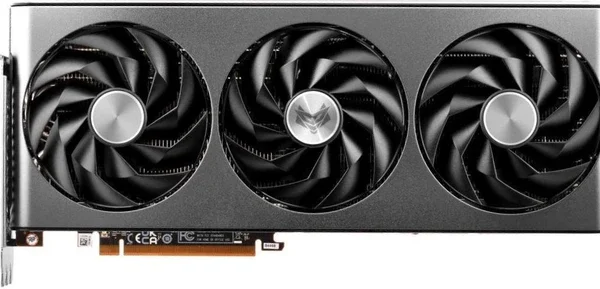 Sapphire NITRO+ Radeon RX 7800 XT 16GB