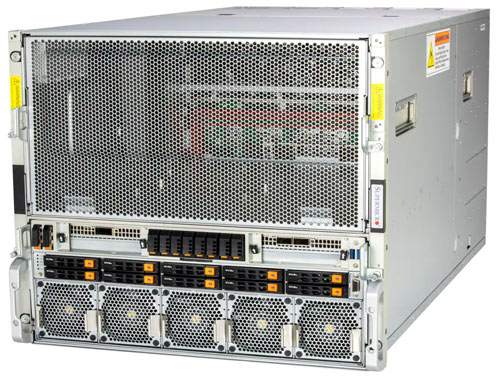
Supermicro SYS-610U-TNR 1U Ultra SuperServer
$270,000.00
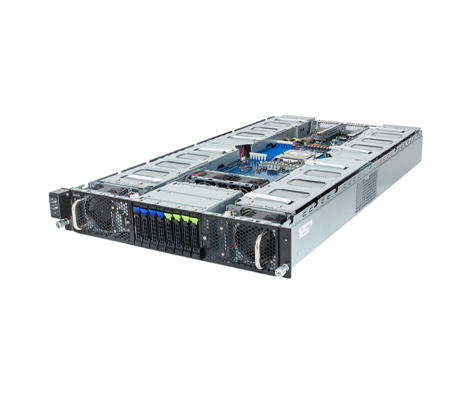
Supermicro SYS-610U-TNR is a 1U Ultra server using dual 3rd Gen Intel Xeon Scalable processors and the X12DPU-6 motherboard. It offers 32 DDR4 DIMM slots, hybrid front storage and PCIe 4.0 expansion. Network cards, drive support and accelerator compatibility depend on the configured hardware; confirm the exact build.
Explore Related
Related products, categories and research.
Supermicro SYS-610U-TNR is a 1U Ultra rack server built around two 3rd Gen Intel Xeon Scalable processors. Its X12DPU-6 motherboard uses DDR4 memory and PCIe 4.0 expansion. The model number is an identifier, not a chassis height: this is a one-rack-unit server, not a “610U” system or a 10U HGX GPU platform.
This listing uses seller SKU ARS-SRV-SUPERM-610UTNR1UULTRA-0291. Supermicro lists applications including virtualization, cloud computing, software-defined storage and enterprise services. The installed processors, DIMMs, drives and network cards determine how an individual build fits those roles.
Supermicro SYS-610U-TNR specifications
| Feature | Manufacturer platform information |
|---|---|
| Chassis | 1U rackmount; approximately 437 × 43 × 754 mm (width × height × depth) |
| Motherboard and chipset | X12DPU-6; Intel C621A |
| Processor platform | Dual Socket P+ LGA-4189; 3rd Gen Intel Xeon Scalable |
| CPU limit | Up to 40 cores per CPU; supported air-cooled CPUs up to 270 W TDP |
| Memory slots | 32 DIMM slots; ECC DDR4 RDIMM/LRDIMM support |
| DRAM capacity | Up to 8 TB in the detailed specification; speed depends on supported configuration |
| Expansion | PCIe 4.0 x16 positions with full-height and low-profile arrangements; verify risers |
| Front storage | 4 hybrid NVMe/SAS/SATA bays; confirm drive format, backplane and controller |
| Network choices | Optional 10GbE RJ45 or SFP+ arrangements; a no-NIC option is also listed |
| Management | Dedicated 1GbE BMC LAN port |
| Cooling and power | Up to 8 heavy-duty 40 mm fans; redundant Titanium supplies rated up to 1200 W |
Published limits describe a supported platform rather than the inventory of this offer. Confirm exact processor models, memory population, risers, controllers and network devices before using those limits in a system design.
DDR4 memory and persistent-memory options
The X12 platform uses DDR4 RDIMM or LRDIMM memory. It should not be described using the DDR5 specifications of newer Supermicro models. Select approved modules for the installed processors and follow the documented population rules.
Supermicro also lists support for Intel Optane persistent memory 200 series. That is an additional supported technology, not evidence that persistent-memory modules are installed. The manufacturer’s DRAM, persistent-memory and combined-capacity statements describe different configurations and should not be merged into one guaranteed allocation.
A quotation should identify ordinary DRAM and any persistent-memory devices separately, including their quantities and operating arrangement. Software requirements may differ when an application uses persistent memory. Confirm that environment before treating the option as useful application capacity.
For virtualization or database work, memory capacity is only one part of sizing. Include the host software, active working sets and recovery requirements. No measured database, virtual-machine or application performance result is asserted for the offered unit.
Four hybrid bays: format and interface checks
The manufacturer’s exact-model materials contain conflicting drive-format labels: the feature summary refers to 3.5-inch bays, while the detailed bay entry says 2.5-inch. Confirm the chassis carriers and supported drive arrangement from the system record or installation documentation instead of relying on either abbreviated label alone.
NVMe, SAS and SATA support also depends on the configured backplane, controllers and cables. A hybrid-bay description does not establish that any of those interfaces can be used without the relevant parts. Specify the intended drive model and storage path together.
Controller RAID capability is separate from a configured array. Confirm what hardware and software provide RAID for the chosen drive type, how the disks are arranged and what usable capacity remains. A list of supported RAID levels does not establish the logical configuration of a delivered system.
Optional networking and the no-NIC configuration
Supermicro lists multiple network choices, including copper 10GBASE-T, SFP+ 10GbE and a no-NIC option. The model name therefore does not prove that a particular workload-network connection is installed.
Record the adapter model, port count and connector type in the inventory. RJ45 copper and SFP+ interfaces need different external components. Confirm the switch connection and any optics or cables against the installed adapter, not merely an advertised link speed.
The dedicated BMC management port serves a different purpose from application networking. Its presence should not be treated as a substitute for the network interfaces required by the operating system’s workloads. Plan management access and production traffic separately.
PCIe 4.0 and supported accelerators
Expansion positions have different physical allowances, and the manufacturer’s summary and detailed layout describe riser-dependent positions. Match each card to the actual riser inventory, electrical connection, length, height and cooling requirements.
Supermicro publishes supported PCIe GPU options for this platform, but that is not a claim that GPUs are included with this offer. It is also not a basis for describing the server as an eight-GPU HGX system. Check the approved card list and the configured power and thermal limits for any intended accelerator.
The server can be evaluated for supported compute, network or storage expansion, but compatibility needs the complete card and chassis arrangement. A PCIe generation match alone does not establish mechanical fit or supported operation.
Input voltage and rack installation
The power table derates supply output at lower input voltage: it lists 800 W at 100–127 V AC and up to 1200 W at 200–240 V AC. The power plan should therefore identify the available input and the installed hardware load rather than relying solely on the highest supply rating.
Redundancy must also be checked against the supported build and operating conditions. The number or rating of supplies does not establish typical consumption. Use manufacturer installation information for power cords, input requirements, airflow and maintenance.
A 1U chassis still requires adequate cabinet depth and service clearance. Confirm rail compatibility, cable routing and the access needed for hot-swap components. Unit condition, included drives, rack hardware and software or support entitlements need a specific statement in the offer.
Exact-model questions
Is SYS-610U-TNR a 610U chassis?
No. It is a 1U Ultra rack server.
Does it use DDR5 or AMD EPYC?
No. The documented platform uses 3rd Gen Intel Xeon Scalable processors and DDR4 memory.
Are 10GbE ports guaranteed by the model name?
No. Supermicro lists optional network configurations and a no-NIC option. Confirm the delivered adapter.
Official resources
Consult Supermicro’s exact-model specification and the SYS-610U-TNR manual. Browse related Networking & AI Infrastructure, or send the required memory, storage and network arrangement through the configuration enquiry page.
Related products
Recently viewed
Add AI Robot Supplier as a preferred source on Google.