Super Intelligence Robot: SI & Humanoid Robots 2026
 airobot_admin
•
Workstation Hardware Research
•
Updated September 23, 2026
•
17 min read
airobot_admin
•
Workstation Hardware Research
•
Updated September 23, 2026
•
17 min read
Performance intelligence for workstation buyers.
Super Intelligence Robot is an emerging search term at the intersection of a new U.S. political label for artificial intelligence and the fast-growing market for humanoid and physical-AI robots. On September 22, 2026, President Donald Trump told the United Nations General Assembly that U.S. government documents…
Super Intelligence Robot is an emerging search term at the intersection of a new U.S. political label for artificial intelligence and the fast-growing market for humanoid and physical-AI robots. On September 22, 2026, President Donald Trump told the United Nations General Assembly that U.S. government documents would refer to artificial intelligence as “Super Intelligence,” or “SI.” The announcement did not mean that today’s robots suddenly became scientifically “superintelligent.” It created a new naming layer around technologies already known as AI, embodied AI and physical AI.

Super Intelligence Robot: Quick Answer
A Super Intelligence Robot can be used as a practical description for a robot that combines advanced machine intelligence with a physical body capable of sensing, reasoning and acting in the real world. In current robotics language, the closest established concepts are physical AI, embodied AI, vision-language-action models and general-purpose robotics. In traditional AI research, however, “superintelligence” has a narrower meaning: intelligence that exceeds human capabilities. No commercially demonstrated humanoid robot has been established as possessing that level of general superhuman intelligence.
Why “Super Intelligence” Became a Major Technology Term in September 2026
During his September 22, 2026 address to the United Nations General Assembly, President Trump said that artificial intelligence would be “hereinafter officially called Super Intelligence” in the U.S. terminology he was announcing. The White House published the remark in its official summary of the speech, and Reuters reported that Trump said U.S. government documents would begin using “super intelligence” instead of artificial intelligence.
The wording matters for search because the term Super Intelligence is now being used in two different ways. The first is the new U.S. political and administrative label for AI announced by Trump. The second is the much older technical concept of superintelligence in AI research.
Those meanings should not be blurred. A Super Intelligence Robot in the new terminology may simply mean an advanced robot using what the industry has historically called artificial intelligence. A true superintelligent robot, in the traditional research sense, would imply cognitive performance beyond human capabilities across important domains. That has not been demonstrated in a commercial robot today.
What Is a Super Intelligence Robot?
A Super Intelligence Robot is best understood today as an advanced physical robot that combines AI-driven perception, reasoning, planning and control with the ability to perform actions in the real world. Depending on the machine, that can include cameras, depth sensors, LiDAR, microphones, tactile sensors, force feedback, onboard AI compute, autonomous navigation, dexterous hands and software models that translate human instructions into physical tasks.
The idea is not limited to humanoids. A Super Intelligence Robot could be a bipedal humanoid, a quadruped robot dog, an autonomous mobile robot, an industrial manipulator, a mobile manipulator or another intelligent machine. The common feature is the connection between advanced machine intelligence and physical action.
This is why the robotics industry increasingly uses terms such as physical AI and embodied intelligence. NVIDIA describes physical AI as intelligence for machines that perceive, reason and act in the real world. Google DeepMind describes embodied reasoning as the ability for robots to understand physical environments, plan multi-step tasks and translate digital reasoning into real-world action.
Super Intelligence Robot vs AI Robot vs Superintelligence
| Term | Practical meaning in 2026 | What it does not automatically mean |
|---|---|---|
| AI Robot | A robot using artificial intelligence for perception, language, planning, autonomy or control. | It does not imply human-level general intelligence. |
| Super Intelligence Robot | An emerging phrase that can describe an advanced robot under the new SI terminology, especially when AI is embodied in a physical machine. | It does not prove that the robot is superhuman or autonomous in every task. |
| Superintelligent Robot | In strict research usage, a hypothetical robot or system whose intelligence broadly exceeds human capabilities. | This capability has not been established for commercial humanoid robots today. |
| Physical AI Robot | A machine that combines AI with sensing, reasoning and action under real-world physical constraints. | It may still be narrow, task-limited or supervised. |
| Embodied AI Robot | An AI system operating through a physical body and learning or acting through interaction with an environment. | Embodiment alone does not equal AGI or superintelligence. |
Why the Super Intelligence Robot Idea Matters for Humanoid Robotics
Humanoid robots are one of the clearest ways to understand the Super Intelligence Robot concept because they place machine intelligence inside a body designed to operate in spaces built for people. Doors, stairs, tools, shelves, factory workstations, warehouses and homes are all shaped around human dimensions and movements. A humanoid platform can potentially use many of those environments without requiring every workplace to be rebuilt around the machine.
The hardware alone is not enough. The next wave of robotics depends on the intelligence layer: models that can interpret scenes, understand instructions, choose actions, recover from mistakes and adapt to unfamiliar situations. Google DeepMind’s Gemini Robotics work is explicitly focused on whole-body intelligence, dexterity and embodied reasoning. NVIDIA’s robotics ecosystem is similarly focused on physical AI models, simulation, robot learning and deployment to real hardware.
This transition helps explain why buyers searching for a Super Intelligence Robot should look beyond promotional language and examine the actual computing, sensing, software and development stack of the robot.
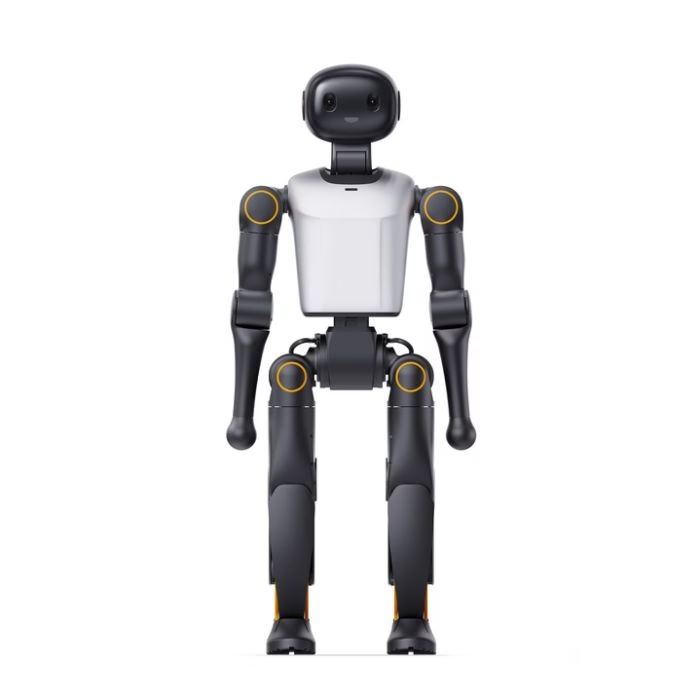
How a Super Intelligence Robot Works
A modern Super Intelligence Robot can be thought of as a stack of systems rather than one single AI model. The robot first needs to sense the environment. Cameras, LiDAR, depth sensors, microphones, encoders, inertial sensors and tactile or force sensors provide raw information about objects, people, surfaces, motion and the robot’s own body.
The perception layer converts those signals into useful representations. A robot may detect objects, estimate depth, recognize people, map a room, understand speech or identify where its hands and feet are relative to the environment.
The reasoning and planning layer decides what should happen next. A natural-language instruction such as “take the blue container from the table and place it on the second shelf” requires more than object recognition. The robot must identify the container, determine a safe route, choose a grasp, plan arm and body motion, avoid collisions and verify that the task was completed.
The control layer converts the plan into motor commands. This is where physical AI becomes fundamentally different from a chatbot. A text model can produce a plausible answer even if the wording is imperfect. A physical robot must respect balance, torque, friction, reach, payload, battery limits and the safety of nearby people and equipment.
The best current robotics systems increasingly connect these layers with vision-language-action models, world models, reinforcement learning, simulation and real-world data. The goal is not simply to make a robot “talk intelligently,” but to make intelligence reliable enough to produce useful physical behavior.
What Technologies Define a Super Intelligence Robot?
1. Multimodal perception
Cameras, depth sensing, LiDAR, microphones and other sensors help the robot understand people, objects and spaces.
2. Embodied reasoning
The robot must reason about geometry, sequence, cause and effect, object relationships and real-world constraints.
3. Vision-language-action models
VLA models connect visual input and language instructions with actions that a robot can execute.
4. Whole-body control
Humanoids need coordinated control of legs, torso, arms, hands and balance rather than isolated motion.
5. Dexterous manipulation
Hands, grippers and force control determine whether a robot can handle tools and objects rather than only navigate.
6. Onboard AI compute
GPUs and edge AI modules can run perception, planning and control with lower latency and less dependence on cloud connectivity.
7. Simulation and digital twins
Robots can learn and test behaviors in simulation before those behaviors are deployed to real machines.
8. Safety systems
Physical machines require limits, emergency controls, collision handling, safe motion and application-specific operating procedures.
Video: Humanoid Robotics Moving Toward Physical Intelligence
The following official Unitree Robotics demonstration shows the type of dynamic control now possible on modern humanoid platforms. Athletic movement is not the same as general intelligence, but it demonstrates how quickly the physical side of the Super Intelligence Robot stack is advancing.
Video: Unitree Robotics — “World’s First Side-Flipping Humanoid Robot: Unitree G1.”
Examples of Robots That Show the Direction of Super Intelligence Robotics
No current product should be presented as proven artificial superintelligence. But several available humanoid platforms show how the building blocks of a future Super Intelligence Robot are being assembled today.
Unitree G1
The Unitree G1 is a compact humanoid family used for demonstrations, education and robotics development. Development-oriented G1 EDU configurations add software access and higher-compute options. The platform is relevant because it combines bipedal mobility, perception hardware and a development ecosystem in a relatively compact format. Buyers can compare current configurations in the Unitree robot price and model guide.
Unitree H2
The Unitree H2 humanoid robot is a full-size platform with 31 actuated degrees of freedom on the standard model, human-scale proportions and approximately three hours of battery runtime according to the current product documentation. The standard H2 should be distinguished from H2 EDU when secondary development and higher AI compute are required.
Booster K1 EDU
The Booster K1 EDU humanoid robot is positioned for education, research and robotics development. Platforms like K1 EDU demonstrate an important part of the Super Intelligence Robot market: lower-cost humanoids that allow universities and developers to experiment with embodied intelligence instead of starting with an industrial-scale machine.
Unitree R1
The Unitree R1 is another compact humanoid platform. The standard R1 and R1 EDU should be treated as different buying propositions because the EDU line is the route for secondary development configurations. This distinction illustrates why software access matters as much as appearance when evaluating an intelligent robot.
Industrial and warehouse robots
The Super Intelligence Robot idea also extends beyond humanoids. Autonomous mobile robots, picking systems, quadrupeds and industrial robots increasingly combine perception, navigation, fleet software and AI. Buyers focused on logistics can compare warehouse robots and AMRs, while the broader robots for sale category covers humanoids, robot dogs, industrial robots and other autonomous platforms.
Super Intelligence Robot for Sale: What Can You Actually Buy Today?
People searching for a Super Intelligence Robot for sale should separate what is commercially available from what remains a future research goal. You can already buy advanced humanoid development robots, robot dogs, autonomous mobile robots, collaborative robots and intelligent service robots. What you cannot responsibly assume is that a commercial robot possesses open-ended human-level or superhuman intelligence.
Current humanoid robots for sale range from compact education platforms below $10,000 to larger development, service and industrial systems costing tens of thousands of dollars or more. Some enterprise humanoids are quotation-based because final cost depends on configuration, compute, dexterous hands, batteries, software, freight, integration and support.
For a buyer, the useful question is therefore not “Is this robot superintelligent?” but “What tasks can this exact configuration perform, what development access is included, and what evidence supports those capabilities?”
How Much Does a Super Intelligence Robot Cost?
There is no standardized Super Intelligence Robot price because the phrase describes an emerging category rather than a single product class. Current humanoid pricing provides a useful market reference.
| Approximate price band | Typical robot class | Common use |
|---|---|---|
| Below $10,000 | Compact education and entry development humanoids | Teaching, demonstrations, early robotics development |
| $10,000–$25,000 | Advanced compact and mid-size platforms | Embodied AI, research, interaction and developer projects |
| $25,000–$60,000 | Higher-spec development and full-size robots | Manipulation research, enterprise pilots and advanced R&D |
| $60,000–$100,000+ | Premium service, industrial and highly capable humanoids | Commercial interaction, specialist development and industrial evaluation |
| Request quotation | Enterprise and industrial systems | Manufacturing, warehousing, integration and customized projects |
These bands are market references, not universal manufacturer prices. Exact cost can change with model version, hands, AI compute, LiDAR, batteries, accessories, software licensing, warranty, shipping and destination. For current examples, compare the 2026 humanoid robot price guide.
What to Check Before Buying a Super Intelligence Robot
A serious Super Intelligence Robot comparison should be based on measurable specifications and documented software access. Before purchasing, verify the following:
- Exact model and edition: Basic, EDU, Pro and industrial configurations can differ substantially.
- Degrees of freedom: More joints can improve flexibility, but control quality and software support matter too.
- AI compute: Confirm the actual onboard processor, GPU or accelerator included in the quoted configuration.
- Vision and sensing: Check RGB cameras, depth cameras, LiDAR, IMU, microphones, tactile sensors and force feedback.
- Hands and manipulation: Fixed hands, grippers and dexterous hands support very different tasks.
- SDK and APIs: Confirm whether secondary development is allowed and which interfaces are documented.
- ROS / ROS 2 support: Verify the actual level of integration rather than assuming compatibility from marketing language.
- Runtime and batteries: Check battery life under the intended workload and whether spare or quick-swap batteries are available.
- Safety: Verify emergency stop functions, operating limits, safe work zones and application-specific safety requirements.
- Warranty and support: Confirm warranty length, spare parts, remote support, documentation and repair procedures in writing.
Super Intelligence Robot Use Cases
The long-term value of a Super Intelligence Robot will depend on whether intelligence can be converted into reliable physical work. The most important near- and medium-term use cases include the following.
Manufacturing
Humanoids and mobile manipulators may assist with material movement, machine tending, inspection, component handling and repetitive tasks in environments designed around human workers. Industrial deployment requires much more than a successful demo: repeatability, uptime, safety, cycle time and integration determine whether the robot creates value.
Warehousing and logistics
Warehouses already use AMRs and specialized automation at scale. More capable physical AI could allow robots to perform less structured picking, unloading, pallet handling and multi-step material workflows. A Super Intelligence Robot in logistics would be valuable when it can adapt to changing inventory and layouts without extensive reprogramming.
Research and education
Universities and robotics labs are among the most practical buyers of advanced humanoids today. Development platforms can be used for locomotion, reinforcement learning, computer vision, manipulation, human-robot interaction and embodied AI research.
Service and hospitality
Future service robots may combine navigation, speech, visual understanding and manipulation. Current systems can already handle narrower reception, delivery and interaction roles, while general-purpose physical assistance remains a harder engineering problem.
Home robotics
Home environments are highly variable. A useful household Super Intelligence Robot would need reliable object manipulation, navigation around people, understanding of natural-language instructions and the ability to handle unfamiliar situations safely. This remains a major frontier for the industry.
Physical AI Is the Bridge Between Digital Intelligence and Robots
The strongest technical foundation for the Super Intelligence Robot idea is physical AI. NVIDIA’s 2026 robotics work describes physical AI systems as machines that perceive, reason and act in real time. Google DeepMind’s Gemini Robotics 2 similarly focuses on intelligence that can control different robot bodies, perform dexterous tasks, reason about physical spaces and execute multi-step plans.
This is the critical difference between digital and embodied intelligence. A language model can describe how to move a box. A robot must locate the box, judge its size and weight, reach it, grasp it without slipping, maintain balance, avoid people and obstacles, carry it to the destination and confirm completion. Every step is constrained by physics.
As world models, simulation, VLA models, edge compute and robot hardware improve together, the distance between digital AI and physical action is shrinking. That convergence is likely to define the practical meaning of Super Intelligence Robot for many buyers even if researchers continue to reserve “superintelligence” for a much stronger hypothetical capability.
Will SI Replace AI in Robotics?
It is too early to know whether SI will replace AI in everyday global technology language. President Trump announced the terminology for U.S. documents and expressed hope that it would spread more broadly. Reuters and other news organizations reported the announcement, but private companies, researchers, international standards bodies and governments outside the United States are not automatically required to adopt the terminology.
For that reason, robotics buyers and publishers should understand both vocabularies. Search behavior may include Super Intelligence Robot, SI robot and Super Intelligence humanoid robot, while the industry continues using AI robot, physical AI, embodied AI, humanoid robot and vision-language-action model.
From an SEO perspective, the new phrase is valuable because it sits on top of an existing and rapidly growing robotics market. From a technical perspective, the established terminology should remain visible so readers can distinguish political branding from scientific definitions.
AI vs SI vs AGI vs ASI: The Terms Explained
| Acronym | Term | Meaning |
|---|---|---|
| AI | Artificial Intelligence | The broad field of machine systems performing tasks associated with intelligence. |
| SI | Super Intelligence | In Trump’s September 2026 announcement, a new U.S. label intended to replace “artificial intelligence” in government documents. |
| AGI | Artificial General Intelligence | A debated hypothetical form of AI with broad, general capabilities across many intellectual tasks. |
| ASI | Artificial Superintelligence | A hypothetical level of AI that surpasses human intelligence across important capabilities. |
A buyer should therefore not assume that an SI Robot is automatically an ASI robot. Under the new political terminology, SI can function as a rebranding of AI, while ASI remains the stronger technical concept of intelligence beyond humans.
The Future of the Super Intelligence Robot
The next decade of robotics is likely to be shaped by the convergence of better AI models, faster edge computing, cheaper sensors, stronger actuators, improved batteries, simulation and much larger datasets of physical interaction. The result will be robots that can perform a broader range of tasks with less task-specific programming.
The most important milestone for a future Super Intelligence Robot is not a name change. It is the transition from impressive demonstrations to reliable, repeatable work in unpredictable real environments. That requires progress in manipulation, reasoning, safety, energy efficiency, learning, hardware reliability and human-robot interaction.
If the SI terminology becomes widely adopted, the phrase Super Intelligence Robot may become a commercial shorthand for the machines that bring advanced intelligence into the physical world. If the terminology does not spread globally, the same technology trend will continue under names such as physical AI, embodied AI and intelligent robotics.
Either way, the underlying direction is clear: intelligence is moving from screens and servers into machines that can see, move, manipulate objects and operate in human environments.
Explore Super Intelligence Robot Platforms
Compare current humanoid robots, development platforms, robot dogs and autonomous systems available for research, business and professional deployment.
Frequently Asked Questions About Super Intelligence Robot Technology
What is a Super Intelligence Robot?
A Super Intelligence Robot is an emerging term for a physical robot that combines advanced machine intelligence with sensing, reasoning and real-world action. Under the September 2026 U.S. terminology announcement, “Super Intelligence” or SI may also be used as a new label for AI. The phrase does not by itself prove that a robot has superhuman intelligence.
Did President Trump rename AI to Super Intelligence?
On September 22, 2026, President Trump told the United Nations General Assembly that U.S. documents would use “Super Intelligence” instead of “Artificial Intelligence.” The White House published the statement in its official summary, and Reuters reported the announcement. Whether the terminology becomes common outside U.S. government usage remains uncertain.
Is Super Intelligence the same as artificial superintelligence?
No. In Trump’s 2026 usage, Super Intelligence is intended as another name for AI. In established technical usage, artificial superintelligence refers to hypothetical AI whose capabilities surpass humans. Those meanings should be kept separate.
Do Super Intelligence Robots exist today?
Advanced AI-enabled robots exist today, including humanoids, robot dogs, AMRs and intelligent industrial systems. However, no commercial Super Intelligence Robot has been established as possessing broad superhuman general intelligence in the traditional scientific sense.
Can I buy a Super Intelligence Robot?
You can buy advanced humanoid and physical-AI platforms today. Available systems include education and research humanoids, development robots, robot dogs, autonomous mobile robots and industrial robots. Buyers should compare documented capabilities rather than relying on the new SI label alone.
How much does a Super Intelligence Robot cost?
A Super Intelligence Robot does not have one standard price. Compact humanoids can begin below $10,000, while advanced development, service and industrial humanoids can cost tens of thousands of dollars or more. Enterprise systems may require a quotation.
What is the difference between a Super Intelligence Robot and a humanoid robot?
Humanoid describes body form; Super Intelligence describes the intelligence layer or the new SI terminology. A humanoid can have limited intelligence, and an intelligent physical AI system does not need to have a human-shaped body.
What should I look for when buying an SI robot?
Check the exact model, onboard AI compute, sensors, degrees of freedom, hands or grippers, SDK, API access, ROS support, runtime, payload, safety controls, warranty, spare parts and technical support. The exact configuration is more important than the marketing label.
Research Sources
- The White House — President Trump at the United Nations, September 22, 2026
- Reuters — U.S. to refer to AI as “super intelligence”
- White House Economic Report 2026 — technical discussion of AGI and superintelligence
- Google DeepMind — Gemini Robotics
- NVIDIA — Physical AI and robotics, March 2026
- WIRED — Video of the September 22, 2026 Super Intelligence remarks
Last updated: September 23, 2026. Prices, terminology and robot configurations can change. Verify the exact product specification and commercial quotation before purchase.
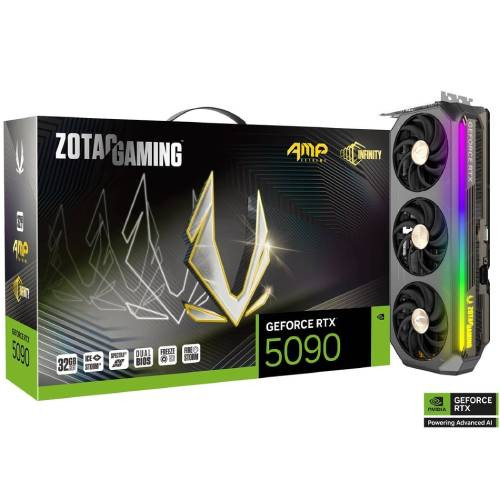 ZOTAC GAMING GeForce RTX 5090 AMP Extreme INFINITY
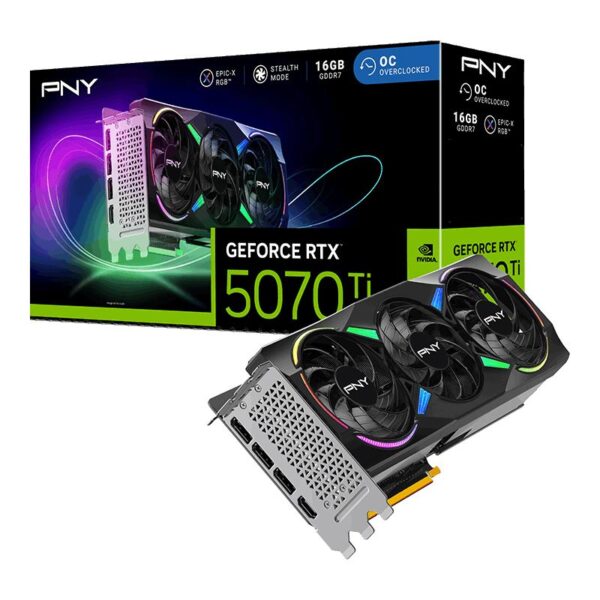 PNY GeForce RTX 5070 Ti 16GB ARGB EPIC-X RGB Overclocked Triple Fan
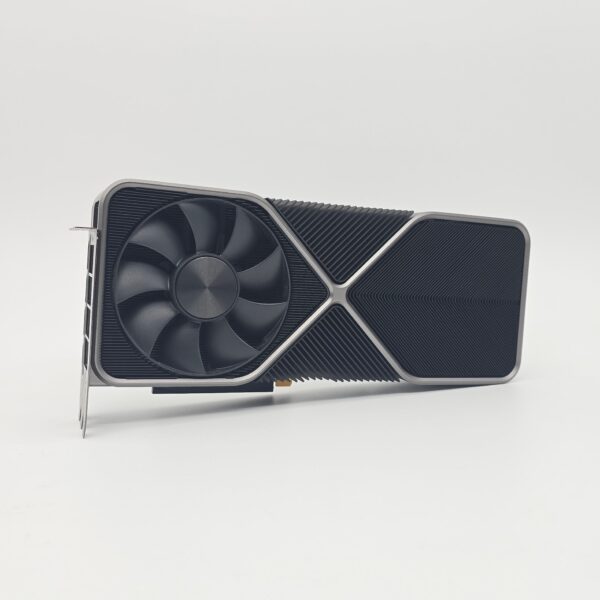 NVIDIA GeForce RTX 3090 Founders Edition 24GB
 Sapphire NITRO+ Radeon RX 7800 XT 16GB