AGIBOT X2 Ultra: Powerful 300+ Robot Deployment 2026
 airobot_admin
•
Workstation Hardware Research
•
Updated September 24, 2026
•
14 min read
airobot_admin
•
Workstation Hardware Research
•
Updated September 24, 2026
•
14 min read
Performance intelligence for workstation buyers.
Robotics Industry Analysis • Updated September 24, 2026 AGIBOT X2 Ultra buyers now have a useful new reference point for thinking about commercial humanoid deployment. AGIBOT and Chimelong Group have launched the first phase of a project with more than 300 AGIBOT robots working across entertainment,…
Robotics Industry Analysis • Updated September 24, 2026
AGIBOT X2 Ultra buyers now have a useful new reference point for thinking about commercial humanoid deployment. AGIBOT and Chimelong Group have launched the first phase of a project with more than 300 AGIBOT robots working across entertainment, education, visitor services and hotel operations at Chimelong Spaceship Park in Zhuhai, China.
The announcement matters because it shifts the conversation away from a single robot performing a polished demonstration and toward a harder question: what does it take to operate hundreds of embodied-AI machines in a real commercial destination where connectivity, charging, coordination, safety, privacy and service continuity all matter at the same time?
For organizations comparing the AGIBOT X2 Ultra humanoid robot with other service and research platforms, the Chimelong deployment is not proof that one particular model will fit every application. AGIBOT has not publicly identified the exact model mix of all 300-plus robots. It does, however, provide a valuable example of the infrastructure and operating discipline required when robots move from isolated pilots to fleet-scale deployment.
Key takeaways for robot buyers
- AGIBOT says more than 300 robots are being integrated across seven visitor and operational scenarios at Chimelong.
- The deployment uses dedicated 5G-A connectivity and centralized multi-robot coordination.
- Operational safeguards include network security, privacy protection, charging and fire-safety measures.
- AGIBOT also marked its 20,000th robot production milestone at the launch.
- For AGIBOT X2 Ultra buyers, the biggest lesson is that sensors and AI compute are only part of the purchasing decision; fleet software, charging, networking, maintenance and safety planning determine whether a commercial deployment can scale.
What happened at the AGIBOT and Chimelong launch?
On September 24, 2026, AGIBOT and Chimelong Group announced the first phase of what the companies describe as a large-scale embodied-AI deployment at Chimelong Spaceship Park. According to AGIBOT’s official announcement, more than 300 robots are being integrated into guest-facing and operational activities rather than being confined to a single demonstration zone.
The deployment covers seven core scenarios: live entertainment, science education, guided tours, retail service stations, AI companion experiences, hotel services and sports competitions. AGIBOT says visitors can see robots perform martial arts, gymnastics and tai chi, interact with robots through games and manipulation challenges, receive directions and exhibit information, and encounter robots in hotel and companion-service roles.
The launch also coincided with AGIBOT’s 20,000th robot production milestone. That manufacturing figure does not tell buyers how many units of any individual AGIBOT model have been delivered, nor does it establish uptime or return on investment. It does show that the company is moving beyond small-volume prototypes and is now discussing deployments in terms of hundreds of robots at a single destination.
For a procurement team, that distinction is important. Ordering one humanoid robot for a lab is primarily a hardware, software and support decision. Ordering dozens or hundreds of robots becomes a systems-engineering project involving site networking, fleet coordination, energy management, staff training, maintenance workflows, spares and operating procedures.
Why a 300-plus robot deployment matters to commercial buyers
The headline number is interesting, but the underlying operating architecture is more useful. AGIBOT says the project combines dedicated connectivity, multi-robot coordination and operational safeguards. AGIBOT, Chimelong and China Mobile established a dedicated 5G-A network intended to support responsive interaction and stable connectivity across high-traffic areas. Centralized coordination is used to manage robots across park and hotel environments.
That is a useful reminder that a humanoid robot is not an island. A commercial robot may need cloud or edge connectivity, software updates, fleet monitoring, content synchronization, incident reporting and remote intervention. The more robots a business deploys, the more important these supporting systems become.
The project also explicitly addresses network security, privacy protection, charging and fire safety. Those subjects rarely appear in short robot demonstration videos, yet they are exactly the issues enterprise buyers encounter once a robot is placed around customers, employees or valuable equipment.
What the AGIBOT X2 Ultra teaches buyers about commercial deployment
The Chimelong release does not state that the AGIBOT X2 Ultra is one of the 300-plus deployed units, so buyers should not treat the theme-park announcement as an X2 Ultra case study. The X2 Ultra is nevertheless highly relevant to the same service-robotics market because AGIBOT officially positions the platform for roles such as exhibition guidance, in-store reception, culture-and-tourism interaction, and research and education.
On the hardware side, the manufacturer’s X2 documentation lists the AGIBOT X2 Ultra at approximately 1.31 metres tall and about 39 kg, with 30 actuated degrees of freedom. The platform includes 3D LiDAR, an RGB-D camera, front stereo RGB cameras, a rear RGB camera and an interactive RGB camera. It also includes a 4G/5G communications module.
For developers, AGIBOT documents an NVIDIA Jetson Orin NX development computing unit rated at 157 TOPS, alongside its motion-control and interaction compute. The developer documentation lists Ubuntu 22.04 LTS, ROS 2 Humble, Python 3.8 or later and C++17 among the supported development environment requirements. That makes the AGIBOT X2 Ultra materially different from a closed entertainment prop: it is also a secondary-development platform for organizations building their own perception, interaction and task workflows.
| AGIBOT X2 Ultra area | Officially documented specification | Why a commercial buyer should care |
|---|---|---|
| Body | Approx. 1.31 m, approx. 39 kg, 30 DoF | Impacts transport, placement, human interaction, mobility and site planning. |
| Perception | 3D LiDAR, RGB-D, front stereo RGB, rear RGB and interactive RGB cameras | Supports mapping, obstacle awareness, environmental perception and interaction applications. |
| AI compute | NVIDIA Jetson Orin NX development unit, 157 TOPS | Relevant to local AI workloads, perception pipelines and secondary development. |
| Connectivity | Wi-Fi, Bluetooth and 4G/5G module | Important for remote management, telemetry and connected service applications. |
| Battery | Approx. 500 Wh; approx. 2 hours at 0.5 m/s walking in the manufacturer’s stated condition | Runtime assumptions must be tested against the buyer’s actual workload and duty cycle. |
| Charging | Direct charging, swappable battery and optional automatic charging dock | Charging strategy becomes increasingly important as fleet size grows. |
| Development | Secondary development supported | Allows qualified teams to build custom workflows instead of relying only on factory demonstrations. |
Evaluating the AGIBOT X2 Ultra for your organization?
Compare the current X2 Ultra listing, review configuration requirements and request a destination-specific B2B quotation. Confirm the supplied hardware revision, end effectors, charging accessories, software scope, warranty and delivery terms before purchase.
AGIBOT X2 Ultra vs X2: the differences that matter
A buyer attracted by the Chimelong story should still choose the robot according to the actual task rather than the size of the deployment. AI Robot Supplier currently lists the AGIBOT X2, AGIBOT X2 Pro and AGIBOT X2 Ultra, giving buyers several configurations to compare.
According to AGIBOT’s current official specifications, the standard X2 has 25 degrees of freedom, lacks the Ultra’s 3D LiDAR and RGB-D camera, and does not include the Orin NX high-performance board. The AGIBOT X2 Ultra increases the total to 30 degrees of freedom, adds the richer perception stack, adds 4G/5G capability and supports secondary development.
For a controlled presentation or basic interaction requirement, buyers may not need every development feature. For research, autonomous navigation, advanced perception or customized commercial workflows, however, the added sensor and compute resources of the AGIBOT X2 Ultra can be much more relevant.
The correct question is therefore not “which model is the most advanced?” It is “which configuration matches the job, the integration team and the operating environment?” Buying capabilities that will never be used increases cost. Buying a platform without the sensors, interfaces or development access required by the project can be even more expensive because it may force a later replacement.
Six infrastructure questions before deploying a humanoid-robot fleet
- How will the robots connect? Map Wi-Fi, private cellular or 5G coverage, roaming behaviour, bandwidth, latency and network redundancy. The Chimelong project uses dedicated 5G-A connectivity, but another site may require a different architecture.
- How will the fleet charge? Calculate actual duty cycle, charging time, battery swaps, charging-dock locations and peak electrical demand. A two-hour manufacturer runtime statement does not automatically translate into two hours of productive service for every workload.
- Who monitors the fleet? Define dashboards, alerts, remote intervention, content management, software updates and escalation procedures before scaling from a pilot to dozens of units.
- What happens when a robot stops? Buyers need spare-parts plans, service response, trained personnel, recovery procedures and a clear method for safely removing a disabled robot from a public area.
- How is data handled? Cameras, microphones and connected AI services can raise privacy and cybersecurity requirements. Data collection, retention, access control and local regulation should be reviewed before deployment.
- Which tasks are actually measurable? Define KPIs such as visitor interactions, guidance completion, service response time, task success rate, uptime or staff hours saved. A robot project should be evaluated against operational outcomes rather than novelty alone.
Where commercial humanoid robots can create value
Visitor guidance and reception
AGIBOT’s own X2 Ultra positioning includes exhibition guide and in-store receptionist scenarios. A buyer considering those roles should evaluate speech quality, language support, navigation reliability, screen or display requirements, accessibility, crowd behaviour and the ability to escalate to a human employee when the robot cannot answer a question.
Tourism and entertainment
The Chimelong project demonstrates why tourism is an interesting early market for embodied AI. Robots can be part of performances, interactive education, guided experiences and branded attractions where customer engagement itself has value. That is different from a factory robot, where the primary metric may be units produced per hour.
Education and research
The AGIBOT X2 Ultra is also relevant to universities, robotics laboratories and developers because AGIBOT provides secondary-development support and detailed AimDK documentation. Research buyers should confirm software access, firmware version, supported APIs, ROS 2 requirements, sensor interfaces and whether optional end effectors are required for the intended work.
Retail and hospitality
Retail and hotel deployments can combine greeting, information, guided navigation and promotional interaction. These applications are highly visible, so reliability, appearance, content quality and staff operating procedures matter as much as raw compute. Buyers should also consider whether the robot will operate continuously, during defined event windows or only under staff supervision.
AGIBOT X2 in motion: official manufacturer video
The following official AGIBOT video demonstrates the X2 platform performing high-dynamic human-motion sequences. It is useful for understanding the platform’s motion capability, but demonstration footage should not be treated as proof that every motion, task or environment is supported by every commercial configuration.
Video source: official AGIBOT YouTube channel. Buyers should verify which functions are included or supported in the exact delivered configuration.
What the 300-robot announcement does not prove
Large deployments make good headlines, but serious procurement requires separating disclosed facts from assumptions. AGIBOT’s announcement does not provide public figures for fleet uptime, maintenance frequency, labour savings, operating cost per robot, return on investment or service-level agreements.
It also does not identify the complete model mix of the 300-plus robots. For that reason, AI Robot Supplier does not claim that the AGIBOT X2 Ultra itself is among the Chimelong units based solely on the September 24 announcement.
This distinction matters. A commercial buyer should use the Chimelong project as evidence that AGIBOT is working on fleet-scale deployment and the supporting infrastructure around it. The buyer should still validate the exact X2 Ultra configuration independently against the intended use case.
Manufacturer demonstrations are particularly useful for understanding the direction of the technology. Procurement decisions should additionally rely on specifications, acceptance criteria, support terms, warranty, site testing and a pilot where appropriate.
AGIBOT X2 Ultra buyer checklist for 2026
Confirm these items before placing an order
- Exact model and hardware revision: X2, X2 Pro or AGIBOT X2 Ultra.
- Degrees of freedom: confirm the supplied mechanical configuration.
- Perception package: LiDAR, RGB-D and camera configuration.
- Compute: confirm the development computer and memory/storage configuration supplied.
- End effectors: confirm whether OmniHand, OmniPicker or other optional hardware is required and included.
- Charging: direct charger, spare/swappable batteries and optional automatic charging station.
- Connectivity: Wi-Fi, Bluetooth and cellular configuration for the destination country.
- Development access: AimDK, APIs, ROS 2 environment and required technical documentation.
- Operating environment: floor conditions, temperature, crowds, stairs, doorways, lighting and restricted zones.
- Safety: emergency procedures, supervision, cybersecurity, privacy and local compliance requirements.
- Warranty and support: written coverage, exclusions, response process and spare-parts availability.
- Delivery: quantity, destination, export packing, customs responsibility, freight, insurance and commissioning requirements.
Should a business buy one robot first or plan a fleet?
For most organizations, the sensible starting point is not a 300-robot order. It is a controlled pilot with measurable objectives. A pilot can test navigation, interaction quality, network coverage, charging patterns, integration effort, staff acceptance and maintenance requirements before capital is committed to a larger rollout.
A larger order becomes easier to justify when the organization has a repeatable task, an operating model, known support requirements and data from the pilot. The Chimelong project highlights what fleet scale can look like, but it should not encourage buyers to skip the validation stage.
Organizations with an internal robotics team may use the AGIBOT X2 Ultra as a development platform before broader deployment. Organizations buying primarily for reception, demonstration or tourism should instead focus on the available application package, support, content management and operator workflow.
Compare AGIBOT humanoid robots before you buy
AI Robot Supplier supports international B2B procurement for professional robotics. Review the AGIBOT X2 Ultra listing, compare other X2 configurations and request a written quotation defining the exact supplied scope.
The bigger picture: from robot demonstrations to robot operations
The most important part of AGIBOT’s Chimelong announcement is not a dance routine or a single interaction. It is the attempt to make hundreds of robots part of the normal operating environment of a large tourism destination.
That changes the questions buyers should ask. The first generation of humanoid-robot purchasing often focused on height, walking speed, degrees of freedom and impressive demonstrations. Those specifications still matter. At commercial scale, however, procurement expands to include fleet coordination, network reliability, battery management, remote support, cybersecurity, privacy, spare parts, training and service continuity.
The AGIBOT X2 Ultra illustrates this transition well. Its LiDAR, RGB-D perception, multi-camera layout, cellular connectivity, Orin NX development compute and secondary-development support make it a much more capable platform than a simple scripted attraction. But those features only become valuable when they are matched with the right task and integrated into a well-designed operating system.
AGIBOT’s 300-plus robot deployment therefore gives buyers something more useful than another futuristic prediction: a current example of the infrastructure questions that appear once embodied AI moves into public commercial environments.
Related AGIBOT research and products
- AGIBOT X2 Ultra – current product listing, specifications and quotation
- AGIBOT X2 – compare the standard X2 configuration
- AGIBOT X2 Pro – compare the intermediate configuration
- Humanoid robots for sale – compare professional platforms
- Robots for sale – humanoid, industrial, AMR and quadruped platforms
- AGIBOT 2026 guide – A3 Ultra, G2 Max, WITA-Omni and company developments
Frequently asked questions
How many AGIBOT robots are being deployed at Chimelong?
AGIBOT says more than 300 robots are being integrated into the first phase across entertainment, education, visitor services, retail, companion experiences, hotels and sports-related activities.
Is the AGIBOT X2 Ultra confirmed as one of the 300 Chimelong robots?
No. The September 24 announcement does not publicly identify the complete model mix. The deployment is relevant to X2 Ultra buyers because it shows the wider fleet, connectivity, charging and safety requirements of commercial embodied-AI operations, but it should not be presented as a confirmed X2 Ultra installation without model-specific evidence.
What is the AGIBOT X2 Ultra?
The AGIBOT X2 Ultra is a compact humanoid robotics platform intended for interaction, service, tourism, education, research and secondary development. AGIBOT documents 30 degrees of freedom, LiDAR, RGB-D and multiple RGB cameras, 4G/5G connectivity and an NVIDIA Jetson Orin NX development compute unit.
Does the AGIBOT X2 Ultra support ROS 2 development?
AGIBOT’s AimDK documentation lists Ubuntu 22.04 LTS and ROS 2 Humble in its development prerequisites, together with Python 3.8 or later and C++17. Buyers should verify the documentation and firmware version supplied with their exact robot.
How long does the AGIBOT X2 Ultra battery last?
AGIBOT lists an approximately 500 Wh battery and approximately two hours of operation when walking at 0.5 m/s under its stated condition. Actual runtime will vary with motion, compute load, interaction, accessories, temperature and other operating factors.
Can businesses buy the AGIBOT X2 Ultra internationally?
AI Robot Supplier lists the AGIBOT X2 Ultra for professional procurement. International availability, freight, import requirements, warranty and delivery terms should be confirmed in the written quotation for the destination country.
What should a company test before ordering multiple humanoid robots?
Test the intended task, navigation environment, interaction quality, network coverage, charging cycle, remote management, integration requirements, safety procedures, privacy controls, service support and measurable business KPIs before scaling beyond a pilot.
Primary sources
AGIBOT — Chimelong large-scale embodied AI deployment announcement, September 24, 2026
AGIBOT — official X2 series product specifications
AGIBOT AimDK — X2 technical and secondary-development documentation
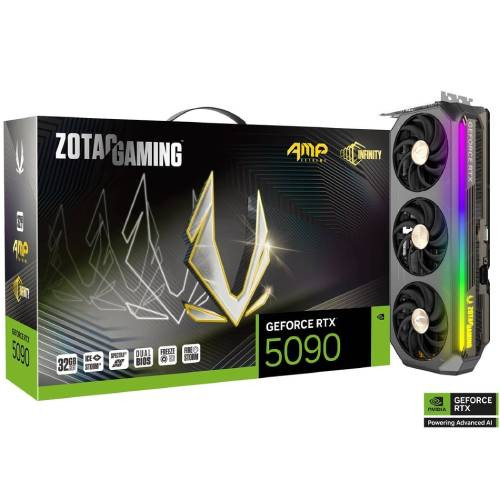 ZOTAC GAMING GeForce RTX 5090 AMP Extreme INFINITY
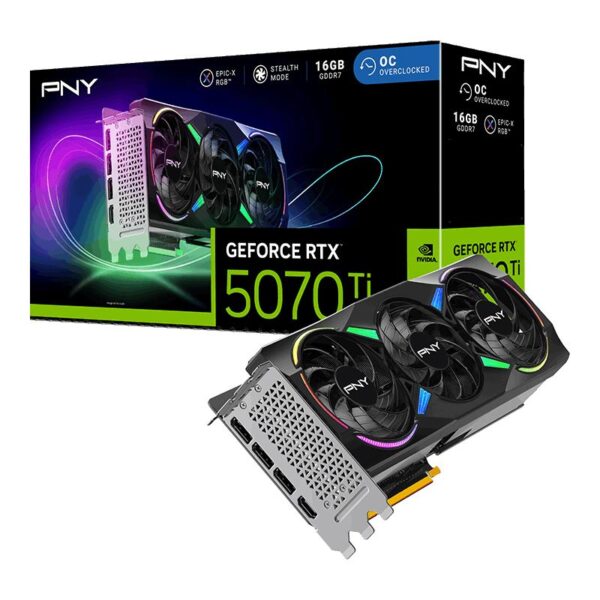 PNY GeForce RTX 5070 Ti 16GB ARGB EPIC-X RGB Overclocked Triple Fan
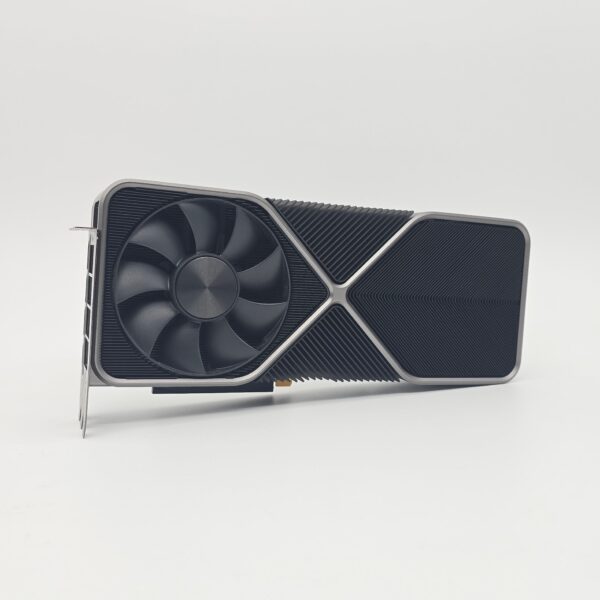 NVIDIA GeForce RTX 3090 Founders Edition 24GB
 Sapphire NITRO+ Radeon RX 7800 XT 16GB