10 Best Humanoid Robots for Warehouses & Factories in 2026: Prices, Capabilities & Buying Guide
 airobot_admin
•
Workstation Hardware Research
•
Updated August 31, 2026
•
13 min read
airobot_admin
•
Workstation Hardware Research
•
Updated August 31, 2026
•
13 min read
Performance intelligence for workstation buyers.
Best humanoid robots for warehouses and factories in 2026: leading platforms for logistics, manufacturing, research and industrial automation. Last updated: August 31, 2026 The best humanoid robots for warehouses in 2026 are moving beyond prototypes into real manufacturing, logistics and industrial applications. This guide compares leading…
Last updated: August 31, 2026
The best humanoid robots for warehouses in 2026 are moving beyond prototypes into real manufacturing, logistics and industrial applications. This guide compares leading humanoid platforms, commercial deployments, capabilities, prices, applications and the most important checks businesses should make before buying.
Quick Answer: What Is the Best Humanoid Robot for Industrial Use in 2026?
There is no single humanoid robot that is best for every industrial application.
UBTECH Walker S2 is one of the strongest choices for continuous smart-factory operation because of its industrial architecture and autonomous battery-swapping system. Agility Robotics Digit has some of the strongest evidence of sustained commercial warehouse work, while AGIBOT G2 has demonstrated high-throughput precision manufacturing.
Figure 03 and Apptronik Apollo remain important emerging platforms for flexible manufacturing, while Unitree G1 is particularly attractive for universities, AI laboratories, developers and industrial R&D teams looking for a more accessible humanoid development platform.
Businesses evaluating currently available platforms can browse the AI Robot Supplier humanoid robot catalogue .
The International Federation of Robotics identifies logistics, warehousing and manufacturing among important areas for AI-powered robotics. Reliability, cycle time, energy consumption, safety, maintenance and productivity remain critical tests of commercial viability.
Best Humanoid Robots for Warehouses: From Demonstrations to Real Factory Work
For years, humanoid robots were impressive machines looking for a practical application.
That is changing.
Factories and warehouses were originally designed around human workers: doors, stairs, shelves, carts, bins, tools, conveyor heights and workstations generally assume a human-sized operator.
A humanoid robot can potentially work within those existing environments rather than forcing a factory to redesign every process around fixed automation.
That does not mean humanoids will replace industrial arms, cobots or autonomous mobile robots.
The more realistic industrial model combines:
Industrial arms + cobots + AMRs/AGVs + machine vision + humanoid robots + AI software.
Humanoids become particularly interesting where a company needs a mobile machine capable of moving through human-designed environments and performing different physical tasks with the same platform.
Commercial deployments are beginning to produce more useful evidence.
Agility Robotics says Digit has moved more than 100,000 totes in commercial operation at GXO’s Flowery Branch logistics facility.
Figure reported that Figure 02 accumulated more than 1,250 hours of runtime, loaded more than 90,000 parts and contributed to production of more than 30,000 BMW X3 vehicles before Figure 03 entered BMW’s Spartanburg plant.
AGIBOT has also reported industrial G2 deployments with production throughput, cycle-time and success-rate measurements.
These are more meaningful indicators for buyers than videos of robots dancing or performing a single carefully rehearsed task.
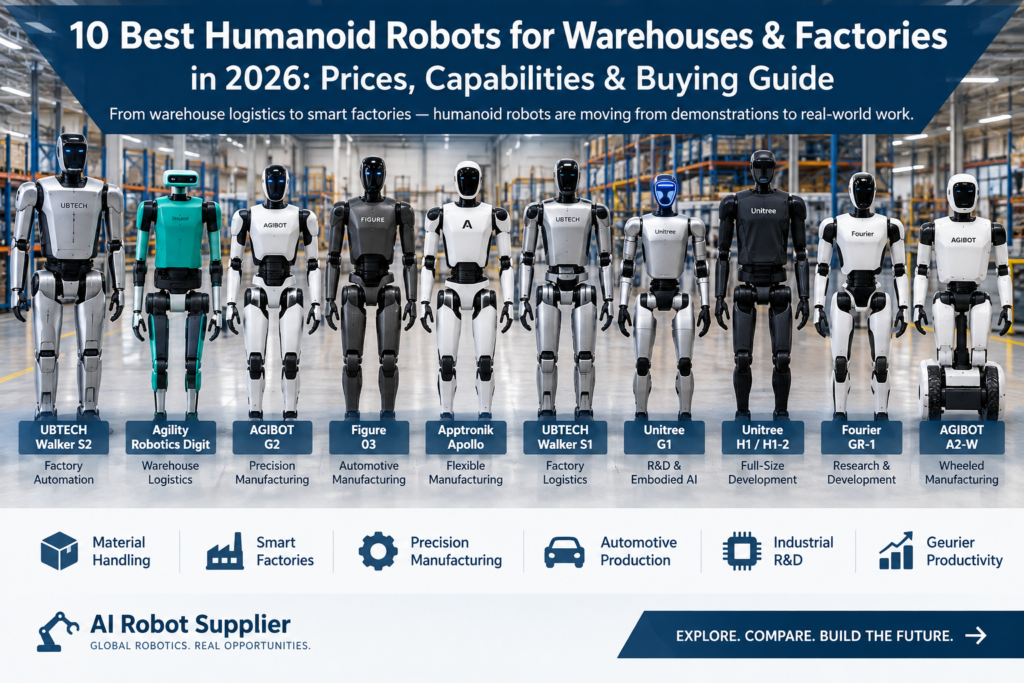
10 Best Humanoid Robots for Warehouses and Factories in 2026
| Rank | Humanoid Robot | Best For | Commercial Status |
|---|---|---|---|
| 1 | UBTECH Walker S2 | Continuous factory automation | Commercial industrial platform |
| 2 | Agility Robotics Digit | Warehouse material handling | Commercially deployed |
| 3 | AGIBOT G2 | Precision manufacturing | Live industrial deployment |
| 4 | Figure 03 | Flexible automotive manufacturing | Factory deployment |
| 5 | Apptronik Apollo | Manufacturing & logistics | Commercial scaling |
| 6 | UBTECH Walker S1 | Factory logistics & automotive pilots | Industrial deployment |
| 7 | Unitree G1 | Robotics R&D & embodied AI | Commercially available |
| 8 | Unitree H1 / H1-2 | Full-size humanoid development | Commercially available |
| 9 | Fourier GR-1 | Research & development | Mass-produced platform |
| 10 | AGIBOT A2-W | Flexible wheeled manufacturing | Commercial industrial platform |
1. UBTECH Walker S2 — Best Overall Industrial Humanoid Robot
UBTECH Walker S2 is one of the most industrially focused humanoid robots available in 2026.
Rather than concentrating on entertainment or demonstrations, UBTECH designed the Walker family around manufacturing, material handling, inspection, assembly and factory logistics.
One of the S2’s most important features is its autonomous battery-swapping system.
UBTECH says Walker S2 can autonomously replace its battery in approximately three minutes. Its dual-battery architecture is intended to reduce the downtime associated with battery-powered humanoids.
UBTECH also demonstrates Walker robots performing parcel handling, inspection, bolt tightening, assembly, sorting and material movement.
View UBTECH Walker S2 at AI Robot Supplier →
Why Walker S2 Ranks Highly
Its biggest advantage is not simply that it looks human.
UBTECH is addressing practical production problems including manipulation, navigation, energy management, production-line integration and continuous operation.
Best suited for: smart factories, automotive manufacturing, inspection, component movement and repetitive industrial workflows.
2. Agility Robotics Digit — Best Proven Warehouse Humanoid
If the priority is evidence of real warehouse work, Agility Robotics Digit is difficult to ignore.
Digit was designed specifically around logistics and material handling.
Agility states that Digit can carry approximately 35 lb (15.9 kg) and operate for up to four hours depending on deployment conditions.
More importantly, Digit has moved beyond proof-of-concept demonstrations.
GXO and Agility entered a multi-year commercial agreement following an earlier pilot, and Digit subsequently passed the milestone of more than 100,000 totes moved.
For warehouse operators, this is much more useful than asking whether a robot can simply walk.
Buyers need to know:
- How many units can it move?
- How consistently can it perform?
- What happens after thousands of cycles?
- Can it work with existing automation?
Best suited for: tote handling, warehouse transfer operations, distribution centres and repetitive material movement.
3. AGIBOT G2 — Best for High-Throughput Precision Manufacturing
AGIBOT G2 is especially interesting because its manufacturer has published concrete industrial performance figures.
AGIBOT announced deployments of G2 robots on consumer-electronics production lines where the robots performed precision loading and unloading.
Reported measurements included:
- Up to 310 units per hour
- Approximately 19–20 seconds per operation
- More than 99% success rate
- Approximately 3,000 units per shift
- Deployment within approximately 36 hours
- 24/7 operation capability
G2 uses an industrial mobile architecture, allowing engineering resources to focus strongly on manipulation, precision, uptime and task execution.
Best suited for: electronics production, quality-control stations, machine tending, precision loading/unloading and repetitive manufacturing.
4. Figure 03 — Best Emerging General-Purpose Factory Humanoid
Figure has become one of the most closely watched companies in humanoid robotics.
Its work with BMW has given the industry one of the clearer examples of humanoid robots progressing from testing toward production environments.
Figure reported that its previous-generation Figure 02 accumulated more than 90,000 parts loaded and more than 1,250 hours of operation before Figure 03 entered BMW’s Spartanburg facility.
Figure is also increasing manufacturing capacity, an important factor for companies evaluating whether humanoid platforms can eventually scale beyond pilots.
Best suited for: automotive manufacturing, factory logistics, flexible material handling and general-purpose industrial manipulation.
5. Apptronik Apollo — Best for Flexible Manufacturing Workflows
Apptronik’s Apollo is designed around environments already built for people, including factories and warehouses.
Manufacturing use cases include kitting, delivering components to production lines, loading and unloading equipment, machine monitoring and movement of materials between workcells.
This versatility represents the central promise of humanoid automation: one platform that can potentially be adapted to multiple physical tasks.
Best suited for: line-side supply, kitting, machine tending, flexible manufacturing and materials movement.
6. UBTECH Walker S1 — Industrial Humanoid for Factory Pilots
Walker S1 remains relevant for organizations evaluating UBTECH’s industrial humanoid ecosystem.
UBTECH describes Walker S1 as combining large-model task planning, semantic navigation and whole-body motion control.
It has also been positioned to collaborate with AMRs and AGVs through smart-manufacturing systems.
View UBTECH Walker S1 at AI Robot Supplier →
Best suited for: industrial pilots, automotive factories, material handling and smart-factory integration.
7. Unitree G1 — Best Value Humanoid for Robotics R&D
Not every organization needs a six-figure production humanoid.
Sometimes the objective is to develop software, train models, test manipulation, create teleoperation systems or conduct embodied-AI research.
That is where Unitree G1 becomes particularly interesting.
Unitree’s official specifications describe a platform of approximately 35 kg with different motor and development configurations.
The platform is positioned around imitation learning, reinforcement learning, robotics software development and embodied AI.
This makes the G1 attractive to universities, AI laboratories, robotics startups and manufacturers building internal physical-AI capabilities.
AI Robot Supplier currently provides several Unitree G1 configurations.
Compare Unitree G1 EDU Configurations
- Unitree G1 Basic Humanoid Robot
- Unitree G1 EDU Ultimate E U7 — research-oriented configuration with Revo 2 Basic Hands.
- Unitree G1 Ultimate C U5 — 41-DOF configuration with bilateral five-finger hands and NVIDIA Jetson Orin NX compute.
The important distinction is that G1 should not automatically be compared with Digit or Walker S2 as though they perform the same job.
G1 is especially compelling as a development platform.
Best suited for: universities, AI labs, reinforcement learning, teleoperation, humanoid software development, manipulation research and industrial R&D.
August 2026 Unitree update
Unitree G1 EDU Security & Firmware Advisory
Buyers evaluating Unitree G1 EDU configurations should now include cybersecurity and firmware lifecycle management in their procurement checks.
Security advisories published in August 2026 identify certain Unitree G1 EDU firmware versions through version 1.5.2 in connection with CVE-2026-76639 and CVE-2026-76640.
The published advisories specifically identify the G1 EDU family. They should not be interpreted as evidence that every standard G1, H1, H2 or other Unitree platform is affected.
Existing operators and prospective buyers should confirm the exact model, firmware version, current security updates and network requirements before deployment.
Read the Unitree G1 EDU Security Alert: CVE-2026-76639 & CVE-2026-76640 →
Manufacturer security resource: Unitree Security Center
8. Unitree H1 / H1-2 — Best for Full-Size Humanoid Mobility Development
The Unitree H1 family sits above G1 in physical size and performance.
Unitree describes H1 as a full-size general-purpose humanoid with 3D LiDAR and depth-camera perception.
These platforms are particularly interesting for organizations studying full-size locomotion, perception and humanoid control.
Industrial buyers should nevertheless distinguish between mobility capability and production capability.
Manufacturing ROI ultimately depends on whether a robot can execute useful tasks safely, consistently and at the required cycle time.
Best suited for: advanced locomotion, robotics research, industrial R&D and full-size humanoid experimentation.
9. Fourier GR-1 — Best Mass-Produced Research Humanoid
Fourier’s GR-1 is another important platform in commercially accessible humanoid robotics.
The platform is designed around human-scale motion, manipulation and embodied-AI development.
For companies building proprietary humanoid applications, development platforms such as GR-1 can provide an opportunity to start collecting integration experience and task data now.
Best suited for: universities, robotics research, AI development, human-robot interaction and experimental industrial applications.
10. AGIBOT A2-W — Best Wheeled Humanoid for Flexible Manufacturing
Not every humanoid robot needs legs.
For many warehouses and factories, wheels are mechanically simpler and more energy-efficient.
AGIBOT A2-W combines a humanoid-style upper body with a wheeled mobile base for flexible manufacturing and manipulation.
This architecture can make economic sense in factories that require:
- reliable navigation;
- human-style manipulation;
- long operating hours;
- rapid deployment;
- high precision;
- and integration with existing equipment.
Best suited for: flexible manufacturing, loading and unloading, logistics transport, machine interaction and production-line manipulation.
Which Humanoid Robot Should Your Business Buy?
The answer should start with the task, not the robot.
A company should not decide “we want a humanoid robot” and then search for work for it.
Instead, define the process that needs automation.
- Warehouse tote movement: consider commercially proven material-handling platforms such as Digit.
- Continuous smart-factory work: evaluate Walker S2 and industrial wheeled humanoids.
- Precision electronics manufacturing: AGIBOT G2 deserves consideration.
- Flexible automotive manufacturing: Figure 03, Walker and Apollo are important candidates.
- AI and robotics research: Unitree G1, Unitree H1 and Fourier GR-1 may provide a better development path.
AI Robot Supplier also lists modular systems such as the Astribot S1-U Upper Body Humanoid Robot and Dobot Atom D .
7 Things to Check Before Buying an Industrial Humanoid Robot
-
Payload and manipulation capability
Can the robot physically handle the objects required by the task? -
Task success rate
Can it complete the task consistently across hundreds or thousands of cycles? -
Cycle time
Can it perform quickly enough for the production requirement? -
Runtime and charging strategy
Does battery life match shift requirements, and can batteries be swapped? -
Software and SDK access
Can your engineering team actually integrate and program the system? -
Safety, firmware and cybersecurity
Connected robots should be reviewed for safety systems, network architecture, firmware updates and security-support procedures. -
Total deployment cost
Consider integration, tooling, freight, customs, training, software, maintenance, spare parts and downtime — not just purchase price.
For a broader procurement checklist, read How to Buy Industrial Robots Internationally in 2026 .
You may also want to compare humanoid automation with existing systems in Cobots vs. Industrial Arms: Which Fits Your Line? .
How Much Do the Best Humanoid Robots for Warehouses Cost in 2026?
Humanoid robot prices vary dramatically.
Development platforms can start in the low tens of thousands of dollars, while advanced industrial systems can reach six figures depending on the configuration, software, hands, sensors, compute and integration requirements.
At the time this guide was updated, AI Robot Supplier listings included reference prices such as:
- Unitree G1 Basic: approximately $11,997
- UBTECH Walker S1: approximately $22,500
- UBTECH Walker S2: approximately $129,101
Prices change. Enterprise buyers should request a written quotation covering the exact configuration, freight, customs requirements, lead time and destination.
The more important calculation is often not:
“How much does the robot cost?”
but:
“How much useful work can this system reliably perform over its operating life?”
Are Humanoid Robots Ready to Replace Factory Workers?
Not generally.
The strongest evidence in 2026 points toward humanoids automating specific repetitive tasks, not immediately replacing entire occupations.
The likely near-term model involves humans and several different kinds of robots working together.
- Humans handle judgment, exceptions and supervision.
- Industrial robots handle extremely fast repetitive manufacturing.
- Cobots support collaborative workcells.
- AMRs move materials.
- Humanoids increasingly fill gaps where environments were designed around people.
Related Humanoid Robot Research
Frequently Asked Questions
What is the best humanoid robot for warehouses in 2026?
Agility Robotics Digit is one of the strongest warehouse-focused options because it has documented commercial logistics deployments. Walker S2 and other industrial humanoids are also strong candidates depending on the workflow.
What is the best humanoid robot for factories?
UBTECH Walker S2 is one of the strongest industrial options because of its factory-focused architecture and battery-swapping approach. AGIBOT G2, Figure 03 and Apollo are also important platforms.
What is one of the most affordable humanoid development robots?
Unitree G1 is among the more accessible full humanoid development platforms and is particularly interesting for robotics research, AI development and education.
Are Unitree G1 EDU robots affected by security advisories?
Security advisories published in August 2026 identify certain G1 EDU firmware versions through version 1.5.2 in connection with CVE-2026-76639 and CVE-2026-76640.
Buyers should verify their exact model and firmware rather than assuming every Unitree platform is affected.
Read the complete Unitree G1 EDU security report.
Can humanoid robots work 24 hours a day?
Some industrial systems are designed around strategies intended to reduce charging downtime, including autonomous battery swapping. Actual continuous operation still depends on maintenance, application, battery strategy, safety and operational requirements.
Are humanoid robots better than industrial robot arms?
Not necessarily. Industrial arms remain superior for many high-speed, high-payload and repetitive production processes. Humanoids become more interesting where mobility and compatibility with human-designed environments matter.
Can humanoid robots work with AMRs and AGVs?
Yes. Hybrid automation involving humanoids, AMRs, AGVs, industrial arms and factory-management systems is likely to be an important industrial direction.
Can businesses buy humanoid robots internationally?
Yes, but availability, export requirements, freight, customs, warranty and technical support vary by manufacturer and destination.
Final Verdict: Best Humanoid Robots for Warehouses and Factories
The humanoid robotics market in 2026 is no longer defined only by impressive laboratory demonstrations.
Commercial deployment is beginning.
- Digit is moving products in warehouses.
- Figure has operated inside BMW manufacturing.
- UBTECH is expanding industrial Walker applications.
- AGIBOT is reporting measurable production-line performance.
- Apptronik is developing Apollo for real manufacturing workflows.
- Unitree is making humanoid development accessible to more engineering teams.
Businesses should nevertheless resist buying a humanoid robot simply because the technology is attracting attention.
The most important question remains:
Which robot can perform a clearly defined task reliably enough to deliver a measurable return on investment?
That should determine the purchase.
Source & Procurement Note
Technical specifications and deployment information in this guide are based on manufacturer and industry information from organizations including the International Federation of Robotics, UBTECH Robotics, Agility Robotics, Figure, Apptronik, AGIBOT, Unitree Robotics and Fourier.
Specifications can change rapidly. Industrial buyers should confirm the final configuration, payload, runtime, software access, firmware, documentation, certifications and lead time before purchase.
AI Robot Supplier provides product information and procurement support across humanoid robotics, industrial automation and AI infrastructure.
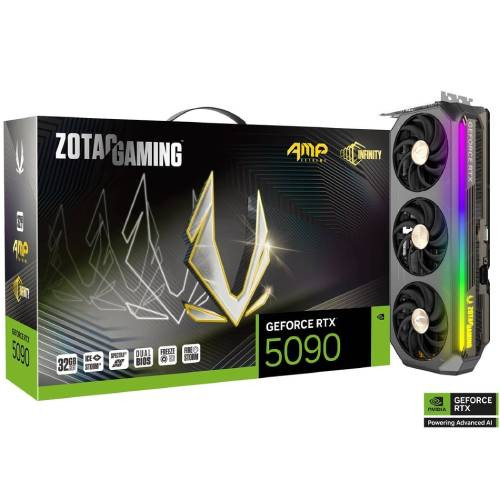 ZOTAC GAMING GeForce RTX 5090 AMP Extreme INFINITY
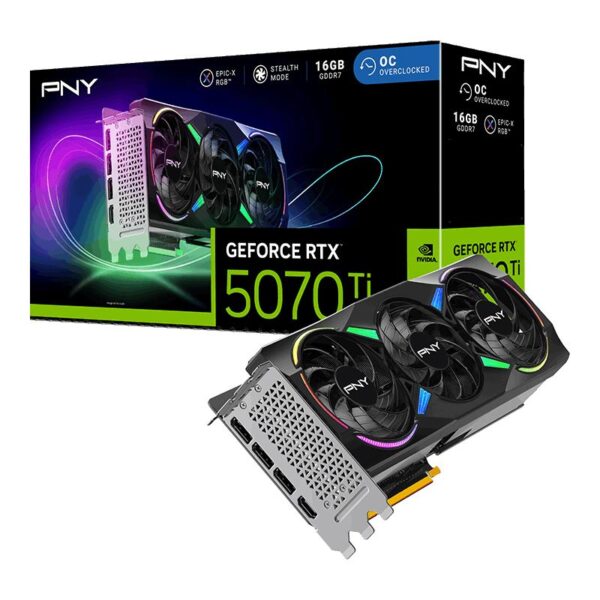 PNY GeForce RTX 5070 Ti 16GB ARGB EPIC-X RGB Overclocked Triple Fan
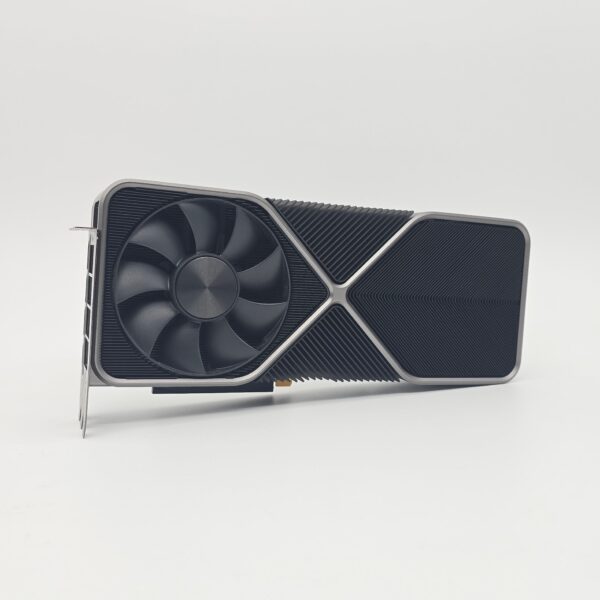 NVIDIA GeForce RTX 3090 Founders Edition 24GB
 Sapphire NITRO+ Radeon RX 7800 XT 16GB