Unitree Robotics IPO 2026: G1, H1, H2 and R1 Explained as Shanghai Listing Nears
 airobot_admin
•
Workstation Hardware Research
•
Updated September 14, 2026
•
11 min read
airobot_admin
•
Workstation Hardware Research
•
Updated September 14, 2026
•
11 min read
Performance intelligence for workstation buyers.
September 2026 market update Unitree Robotics IPO 2026: What Changed After the Shanghai Debut Unitree Robotics IPO 2026 is no longer a story about an approaching listing. Unitree has already made its Shanghai market debut, and the market reaction has become one of the most important…
September 2026 market update
Unitree Robotics IPO 2026: What Changed After the Shanghai Debut
Unitree Robotics IPO 2026 is no longer a story about an approaching listing. Unitree has already made its Shanghai market debut, and the market reaction has become one of the most important robotics stories of 2026.
Reuters reported that Unitree’s shares initially surged to roughly five times the IPO price before falling about 45% from their post-listing peak. The volatility has also become part of a wider debate about how quickly humanoid-robot companies should enter public markets and how investors should value businesses that still operate in a young, fast-changing technology sector.
For robot buyers, however, the more useful question is not whether Unitree’s share price rises or falls tomorrow. It is whether Unitree’s commercial momentum is translating into stronger products, broader support, clearer product segmentation and more capable humanoid robots for universities, laboratories, integrators and businesses.
The Unitree Robotics IPO 2026 confirms that humanoid robotics has moved further into mainstream commercial and capital markets. Unitree now sells a humanoid range that stretches from the sub-$5,000 R1 Air through the G1, H2 and H1 classes, but buyers still need to distinguish carefully between standard versions and EDU/development configurations.
Reuters’ September 2026 report on Unitree’s post-IPO volatility provides the latest market context.
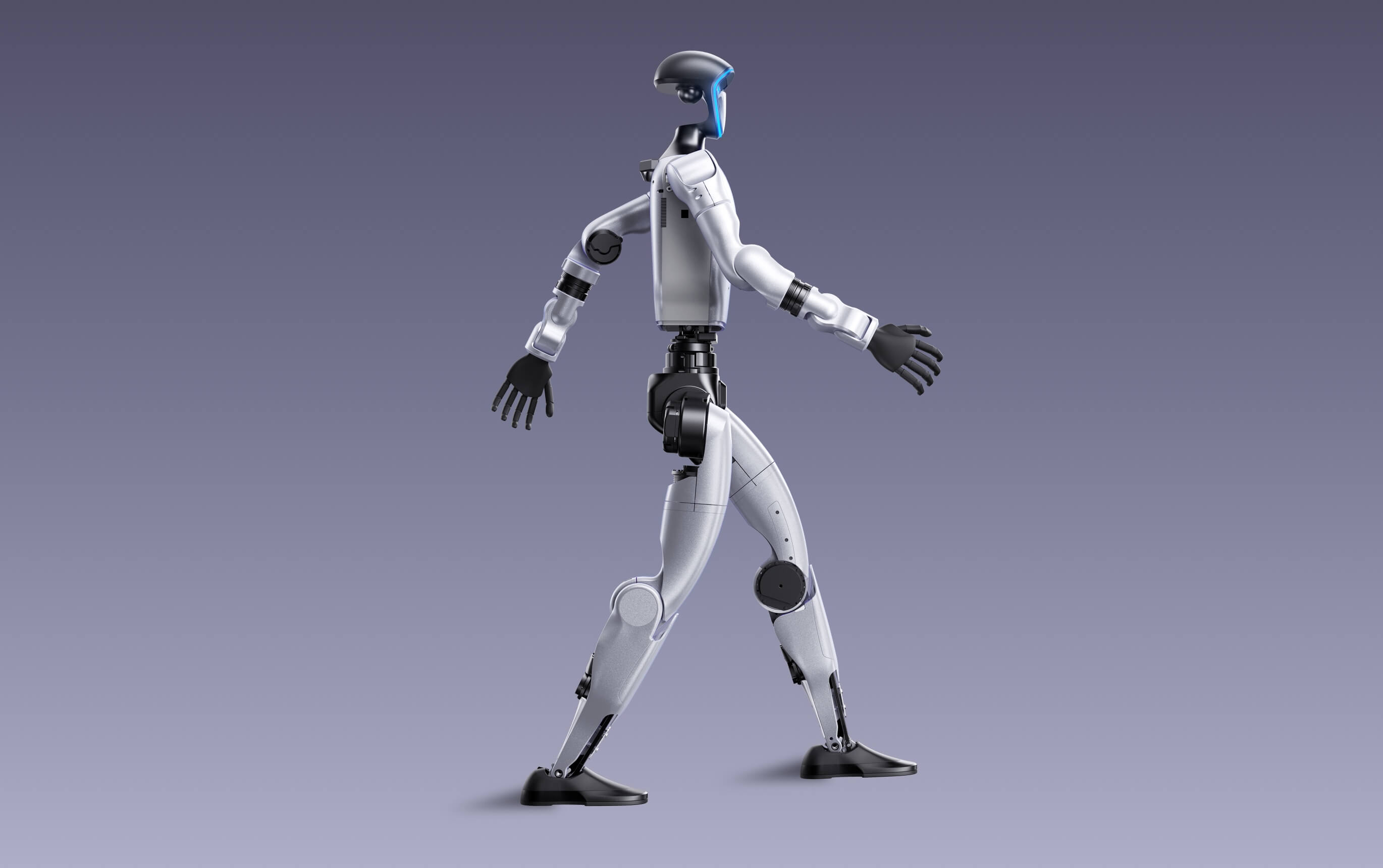
Unitree Robotics IPO 2026 Update: From Record Demand to Volatile Trading
Unitree’s public-market story developed quickly. In August, Reuters reported that the Shanghai STAR Market offering had been more than 8,000 times oversubscribed by retail investors. The IPO price was 150.80 yuan per share, and the company raised roughly US$905 million by selling around 10% of its equity.
The excitement reflected more than conventional IPO demand. Unitree had already become one of the best-known Chinese robotics brands internationally, first through quadruped robots and later through increasingly accessible humanoids such as G1 and R1.
By September, the story had changed. Reuters reported that Unitree shares had fallen about 45% from their post-listing peak after an initial surge of roughly fivefold. The report also said Chinese regulators were raising the bar for other humanoid-robot companies seeking public listings, with increased attention to recurring revenue, loss reduction and real technological differentiation.
That does not mean the commercial robotics opportunity disappeared. It means the market is beginning to demand proof that humanoid companies can turn impressive demonstrations into repeatable products, revenue, software support and useful customer deployments.
Why this matters beyond investors
The Unitree Robotics IPO 2026 puts greater attention on the same questions professional robot buyers should already be asking: Which models are actually available? Which configurations support secondary development? What does the battery last? What sensors and compute are included? What warranty applies? What does the delivered system really cost after freight, tax, customs and accessories?
Why the Unitree Robotics IPO 2026 Matters to Robot Buyers
Unitree was founded in Hangzhou in 2016 and first became internationally recognized through high-performance quadruped robots. Humanoid robotics has since become a central part of the company’s product strategy.
Reuters reported before the IPO that Unitree generated about 1.7 billion yuan in 2025 revenue, was profitable and generated more than 40% of sales overseas. Those points help explain why Unitree attracted so much attention compared with many humanoid startups that are still primarily development-stage businesses.
But public-market success and robot-purchase suitability are different questions. A buyer should not purchase a G1, R1, H2 or H1 merely because Unitree is a public company. The correct model depends on the intended use, software access, manipulation requirements, working environment, battery strategy, support expectations and budget.
This is where Unitree’s expanding model range becomes commercially important. The manufacturer now covers several price and capability tiers rather than relying on a single humanoid platform.
Unitree Humanoid Robot Prices 2026: R1 vs G1 vs H2 vs H1
Official Unitree listings now create a broad humanoid price ladder. The table below uses current manufacturer-listed reference prices where available. Tax, freight, customs, accessories and development configurations can materially change final procurement cost.
| Model | Official reference price | Approx. weight | Positioning | Development note |
|---|---|---|---|---|
| Unitree R1 Air | From $4,900 | About 27 kg | Lowest-cost R1 entry | No official secondary-development support |
| Unitree R1 | $5,900 | About 29 kg | Compact interactive humanoid | EDU is the development-oriented version |
| Unitree G1 | $13,500 | About 35 kg | Mid-range humanoid platform | G1 EDU supports secondary development |
| Unitree H2 | $29,900 | About 70 kg | Full-size 1.82 m humanoid | H2 EDU supports secondary development |
| Unitree H1 | Around $90,000 listed | About 47 kg | High-performance full-size humanoid | Confirm exact configuration with seller |
Manufacturer reference pricing checked in September 2026. Final quotations can differ by region, configuration, accessories, shipping, tax and customs.
Compare Unitree humanoid robots for sale
Browse current Unitree configurations, compare development versions and request destination-specific quotations.
Unitree R1 Price and Positioning: The Lower-Cost Entry Point
R1 is strategically important because it lowers the cost of entering Unitree’s humanoid ecosystem. The official R1 page lists R1 Air from $4,900 and the standard R1 at $5,900, with R1 EDU sold through quotation.
Unitree specifies R1 Air at about 27 kg with 20 degrees of freedom, while the standard R1 is about 29 kg with 26 degrees of freedom. The development-oriented R1 EDU can reach 26–40 degrees of freedom depending on configuration and supports optional higher-compute modules such as NVIDIA Orin.
Official specifications list approximately one hour of battery life across the R1 family. The important purchase distinction is software access: the manufacturer marks secondary development for R1 EDU, not the standard consumer versions.
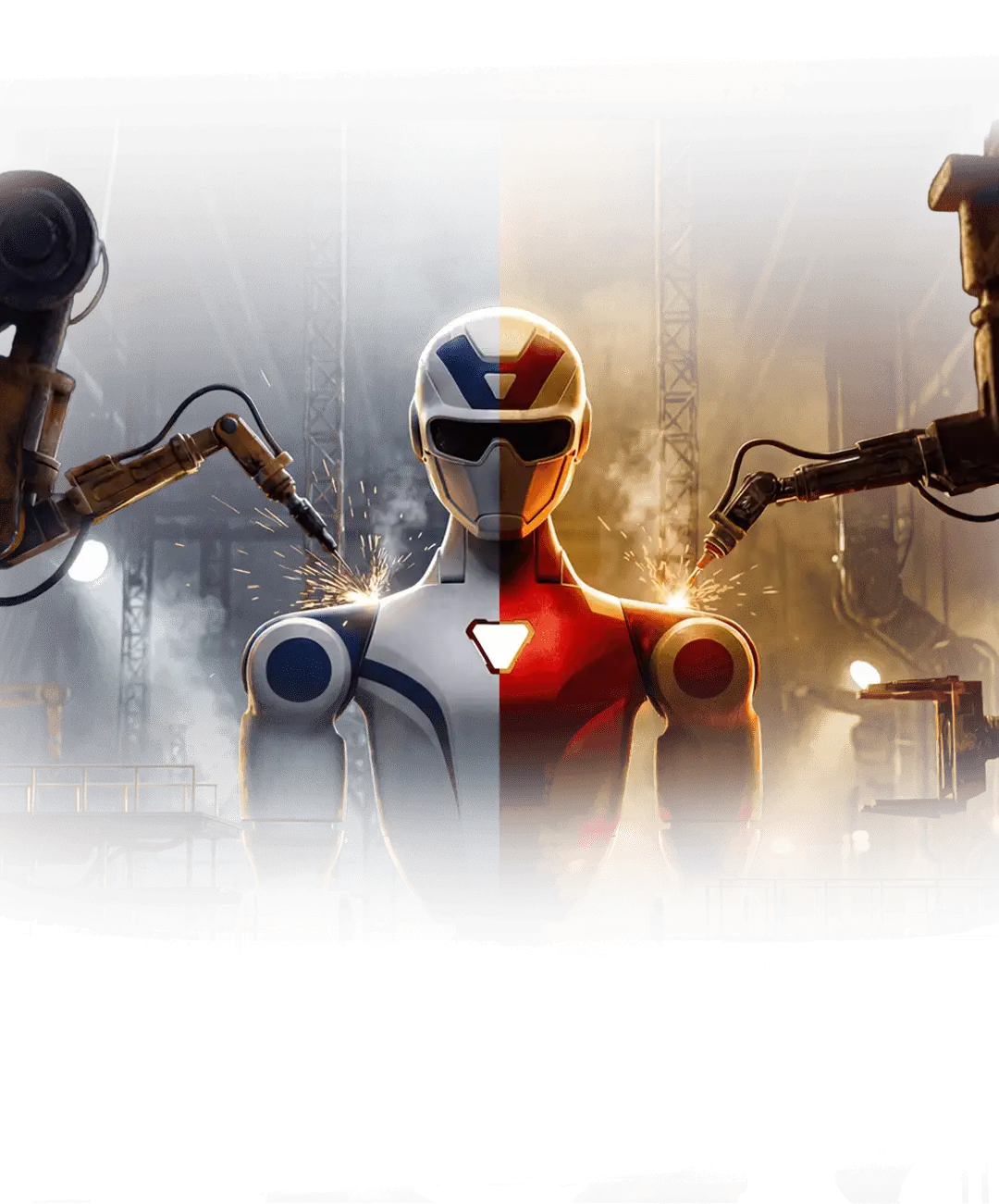
For buyers, this creates a straightforward decision: choose R1 Air or R1 for lower-cost demonstrations and general platform use; evaluate R1 EDU when SDK access, ROS workflows, custom AI compute or secondary development are essential.
View Unitree R1 Basic or compare the development-oriented Unitree R1 EDU U2.
Unitree G1 Price 2026: Why Basic and EDU Are Not the Same Purchase
The Unitree G1 remains one of the most commercially important humanoid platforms in the company’s lineup. Unitree currently lists the standard G1 at $13,500 before tax and shipping.
Official specifications list the standard G1 at about 35 kg, 23 degrees of freedom, approximately two hours of battery life, a depth camera, 3D LiDAR, Wi-Fi 6, Bluetooth 5.2 and a quick-release 9,000 mAh battery. G1 EDU expands the platform to as many as 43 degrees of freedom depending on configuration and adds official secondary-development capability.
This difference matters commercially. Buyers who primarily want a mobile humanoid for demonstrations or platform evaluation should not automatically pay for a high-end EDU configuration. Conversely, research teams that need custom software, additional AI compute, dexterous hands or robotics-development workflows should not assume the $13,500 standard G1 provides the same development access.
Current AI Robot Supplier G1 paths
- Unitree G1 EDU Ultimate E U7 — development-oriented configuration.
- Unitree G1 Ultimate C U5 — five-finger manipulation and NVIDIA Jetson Orin NX compute.
- Unitree G1 Depth Camera — perception accessory.
- Unitree G1 Remote Controller — operator-control accessory.
Professional buyers should also review the published G1 EDU cybersecurity advisories relevant to certain firmware versions rather than treating cybersecurity as an afterthought.
Unitree H2 Price 2026: Full-Size Humanoid at $29,900
Unitree H2 moves into a different physical class. Unitree lists H2 at $29,900 before tax and shipping, while H2 EDU is quote-only.
The current official specification describes H2 as approximately 1.82 m tall and about 70 kg with battery. It has 31 total degrees of freedom, maximum leg-joint torque of 360 N·m, approximately 15 kg peak arm payload under stated conditions, a 15 Ah / 0.972 kWh battery and roughly three hours of battery life.
Unitree also describes a 2,070-TOPS compute option in the H2 platform story. Buyers should be careful, however, not to assume that every H2 quotation includes the same compute or development hardware. The standard H2 does not carry the same secondary-development positioning as H2 EDU.
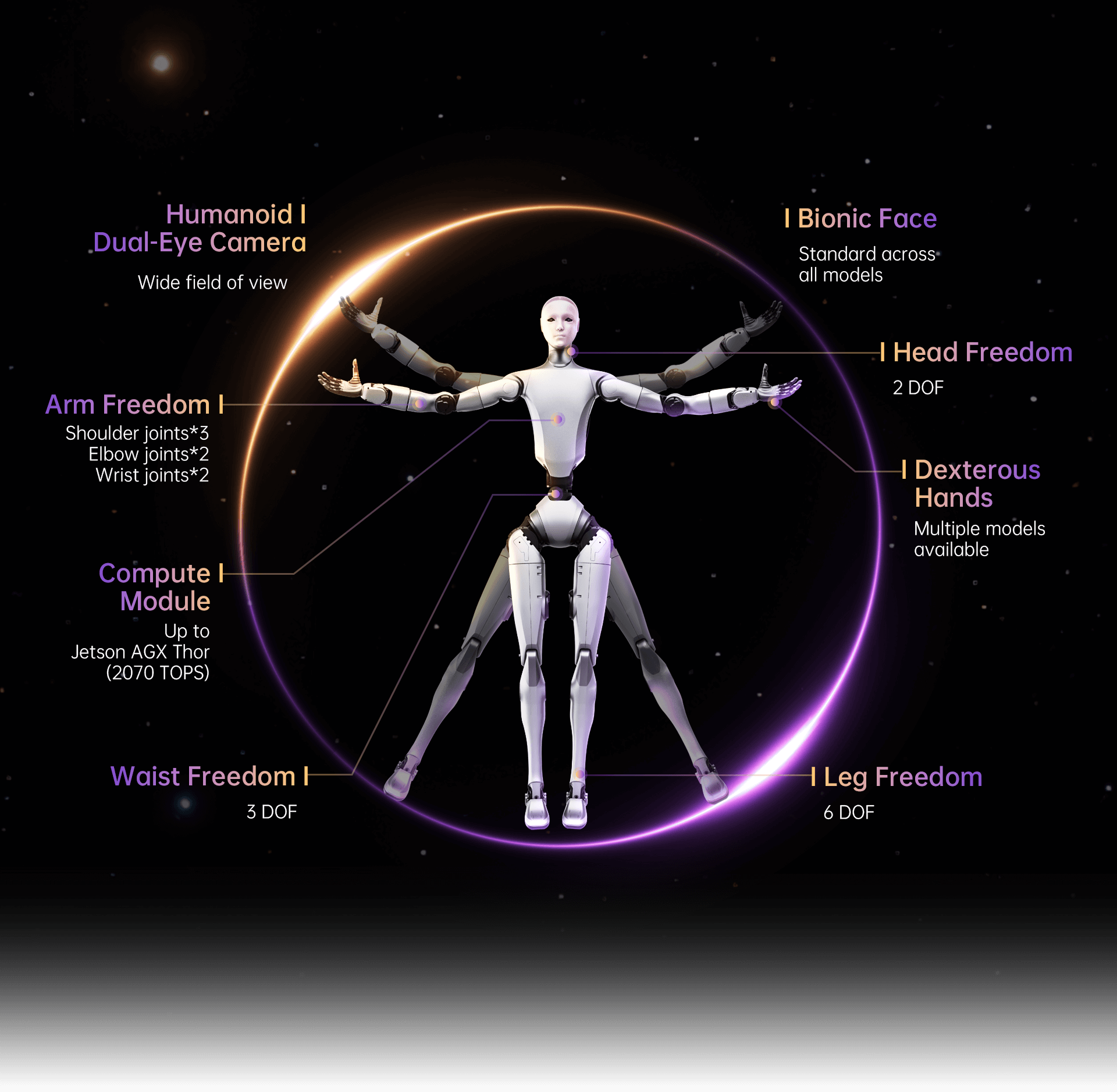
AI Robot Supplier currently has commercial pages for both the standard H2 and H2 EDU. Because H2 configurations are more complex and expensive than R1 or basic G1, businesses should request an exact written configuration rather than relying on family-level specifications alone.
Unitree H1: High-Performance Full-Size Humanoid
H1 remains a high-performance full-size platform in Unitree’s lineup. Unitree’s official H1 information lists a height of about 180 cm, weight around 47 kg, moving speed of approximately 3.3 m/s, potential mobility above 5 m/s and perception using 3D LiDAR plus a depth camera.
The official store currently displays H1 at around $90,000 while instructing buyers to contact Unitree for the real price. That should be interpreted as a reference listing rather than a universal delivered cost.
For most buyers, the key H1 question is no longer whether the robot can perform impressive locomotion. It is whether the exact H1 configuration, support model and integration plan justify the substantially higher investment compared with G1 or H2.
Standard vs EDU: The Most Important Unitree Buying Distinction
One of the biggest mistakes in humanoid procurement is comparing robots only by headline price. Unitree repeatedly separates standard configurations from EDU/development versions.
| Family | Standard version | EDU version | Buyer implication |
|---|---|---|---|
| R1 | Lower-cost platform use | Secondary development, optional higher compute | Choose EDU for custom robotics development |
| G1 | 23 DOF, no official secondary development | 23–43 DOF and secondary development | Do not assume the $13.5K G1 equals G1 EDU |
| H2 | Platform capability | Custom development capability | Confirm EDU if integration is the main goal |
This distinction should influence search behavior too. A buyer searching “Unitree G1 price” may be looking at a $13,500 base platform while a university searching for “G1 EDU price” is often evaluating a fundamentally different procurement package.
Official Unitree G1 Video
Official Unitree Robotics video. Pricing shown in older manufacturer videos may differ from current 2026 listings; current manufacturer pricing should be checked separately.
What Buyers Should Verify Before Purchasing a Unitree Humanoid Robot
The Unitree Robotics IPO 2026 may increase awareness of the brand, but serious procurement still depends on model-level due diligence.
Humanoid procurement checklist
- Exact model and version: Air, standard, EDU or specialist configuration
- Actual degrees of freedom and end-effector configuration
- Secondary-development, SDK, ROS and API requirements
- Included AI compute and whether NVIDIA hardware is part of the quote
- LiDAR, cameras, microphones and other sensing hardware
- Battery capacity, real expected runtime and spare-battery availability
- Controller and charger inclusion
- Dexterous-hand model and tactile capability where required
- Warranty period for the exact configuration
- Firmware lifecycle and security-update process
- Shipping method, customs, import taxes and destination requirements
- Training, installation, commissioning and after-sales support
For research buyers, development access can be more important than headline locomotion. For commercial buyers, reliability, support, replacement parts and the ability to complete the target task repeatedly can matter more than the robot’s maximum running speed.
What the Unitree Robotics IPO 2026 Says About the Humanoid Market
The strongest lesson from the listing is not that every humanoid manufacturer deserves a high valuation. It is that humanoid robotics has become large enough to attract public-market capital, regulatory scrutiny and far more demanding questions about revenue and commercial deployment.
That shift is healthy for buyers. The market is moving beyond judging robots purely by viral demonstrations. Manufacturers increasingly need to demonstrate product segmentation, serviceability, support, cybersecurity, software ecosystems and real-world usefulness.
Unitree’s current portfolio shows that segmentation clearly. R1 lowers the entry price. G1 provides a compact but more capable mid-range platform. H2 brings full-size form and significantly more payload and compute. H1 remains a higher-cost performance platform. EDU versions add a separate layer for research and custom development.
The result is that “Which Unitree robot is best?” is the wrong question. The better question is: Which Unitree configuration matches the task, software requirements and total deployment budget?
Related Unitree Buying Guides and Products
Frequently Asked Questions About Unitree Robotics IPO 2026
Has Unitree Robotics already gone public in 2026?
Yes. The Unitree Robotics IPO 2026 has already moved from the pre-listing stage to public trading in Shanghai. Reuters reported that the shares initially surged sharply and later fell about 45% from their post-listing peak.
Why was the Unitree IPO important?
Unitree became the first general-purpose robotics company to list on mainland China, according to Reuters. The listing also highlighted the scale of investor interest in humanoid and embodied-AI companies.
How much does Unitree G1 cost in 2026?
Unitree currently lists the standard G1 at $13,500 before tax and shipping. G1 EDU pricing depends on configuration and is handled through sales quotation.
How much does Unitree R1 cost?
Unitree currently lists R1 Air from $4,900 and standard R1 at $5,900 before tax and shipping. R1 EDU is quote-based.
How much does Unitree H2 cost?
Unitree currently lists the standard H2 at $29,900 before tax and shipping. H2 EDU requires a quotation.
Does the cheapest Unitree version support custom development?
Not necessarily. Unitree distinguishes standard and EDU configurations. For R1, G1 and H2 families, the EDU versions are the development-oriented products. Buyers should confirm SDK, ROS and secondary-development requirements before purchasing.
Where can businesses buy Unitree robots?
Businesses can compare available Unitree humanoid and quadruped configurations through AI Robot Supplier and request a quotation based on destination country, required configuration and quantity.
Need a Unitree humanoid quotation?
Compare R1, G1, H2 and other Unitree configurations, then request a destination-specific quotation with the exact development, compute, hand and accessory package required.
Sources and Further Reading
- Reuters — Unitree post-IPO volatility and tighter humanoid IPO scrutiny, September 2026
- Reuters — Unitree’s Shanghai IPO demand and debut context, August 2026
- Unitree — G1 official specifications
- Unitree — R1 official specifications
- Unitree — H2 official specifications
- Unitree — H1 official specifications
This article is a source-based market and buyer analysis, not investment advice and not a hands-on laboratory review. Product specifications and prices can change; confirm the exact quotation and manufacturer documentation before purchasing.
 ZOTAC GAMING GeForce RTX 5090 AMP Extreme INFINITY
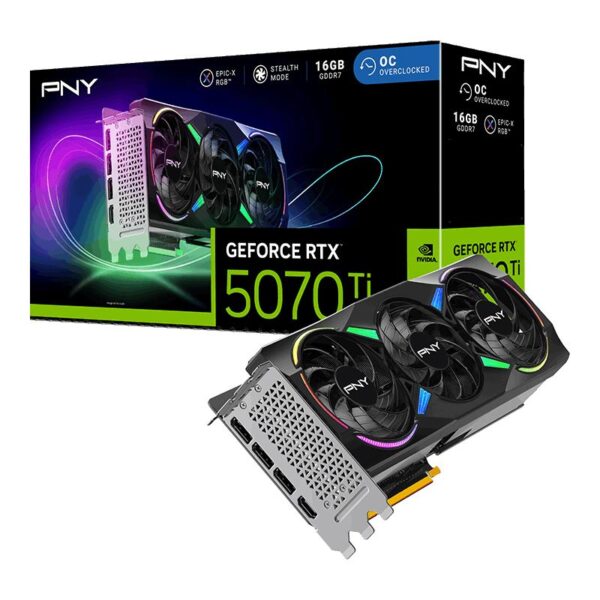 PNY GeForce RTX 5070 Ti 16GB ARGB EPIC-X RGB Overclocked Triple Fan
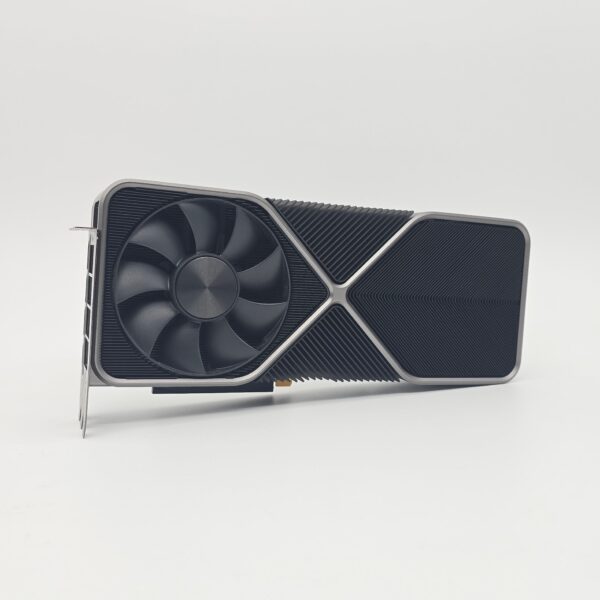 NVIDIA GeForce RTX 3090 Founders Edition 24GB
 Sapphire NITRO+ Radeon RX 7800 XT 16GB